Score: score unavailable
Участник
Участник
0.000.00
One famous student has collected a college degree.
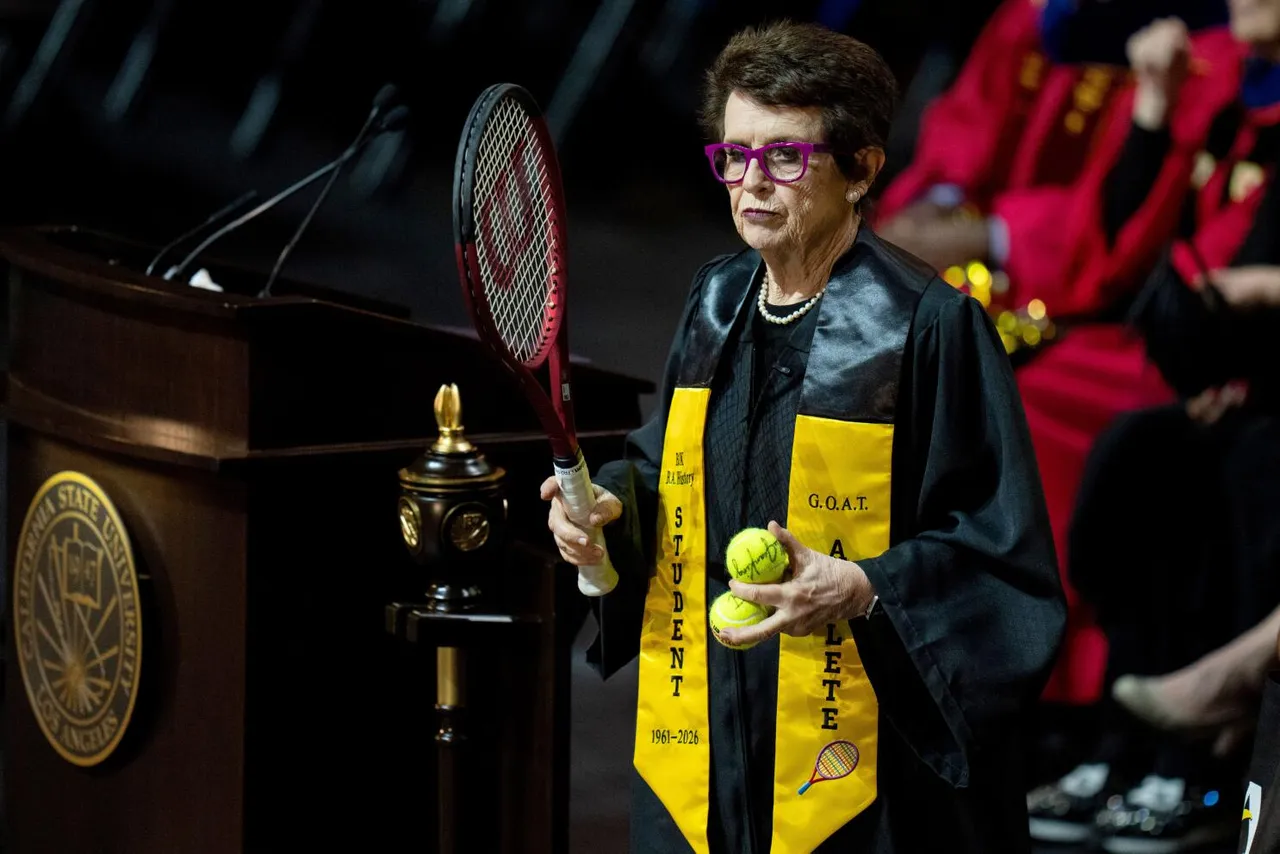
The story of Billie Jean King and higher education is remarkable precisely because there is nothing belated about it. Almost everything about it is character. King did not suddenly decide to get a degree in retirement. She simply spent too much of her life in a reality where something always seemed more important than formally finishing college: tennis, the fight for equal prize money, the creation of women’s professional sport, endless public work. Only now has that circle finally closed. In May 2026, King, already 82 years old, received her bachelor’s degree in history from Cal State Los Angeles — 65 years after first enrolling there in 1961.
The most powerful part of this story is not the date on the diploma, but the long, almost stubborn road that led to it. King entered college in a completely different America: one without modern opportunities for women in sport, without today’s familiar idea that a great female athlete could comfortably combine a professional career with полноценное higher education. Later, she admitted that it had always mattered to her not merely to say “I went to college,” but to actually earn the degree. That thought followed her for decades. At one point she left to compete in Australia, became world No. 1, won 39 Grand Slam titles, reshaped women’s tennis forever — and still the unfinished business of that diploma remained somewhere inside her like a personal debt.
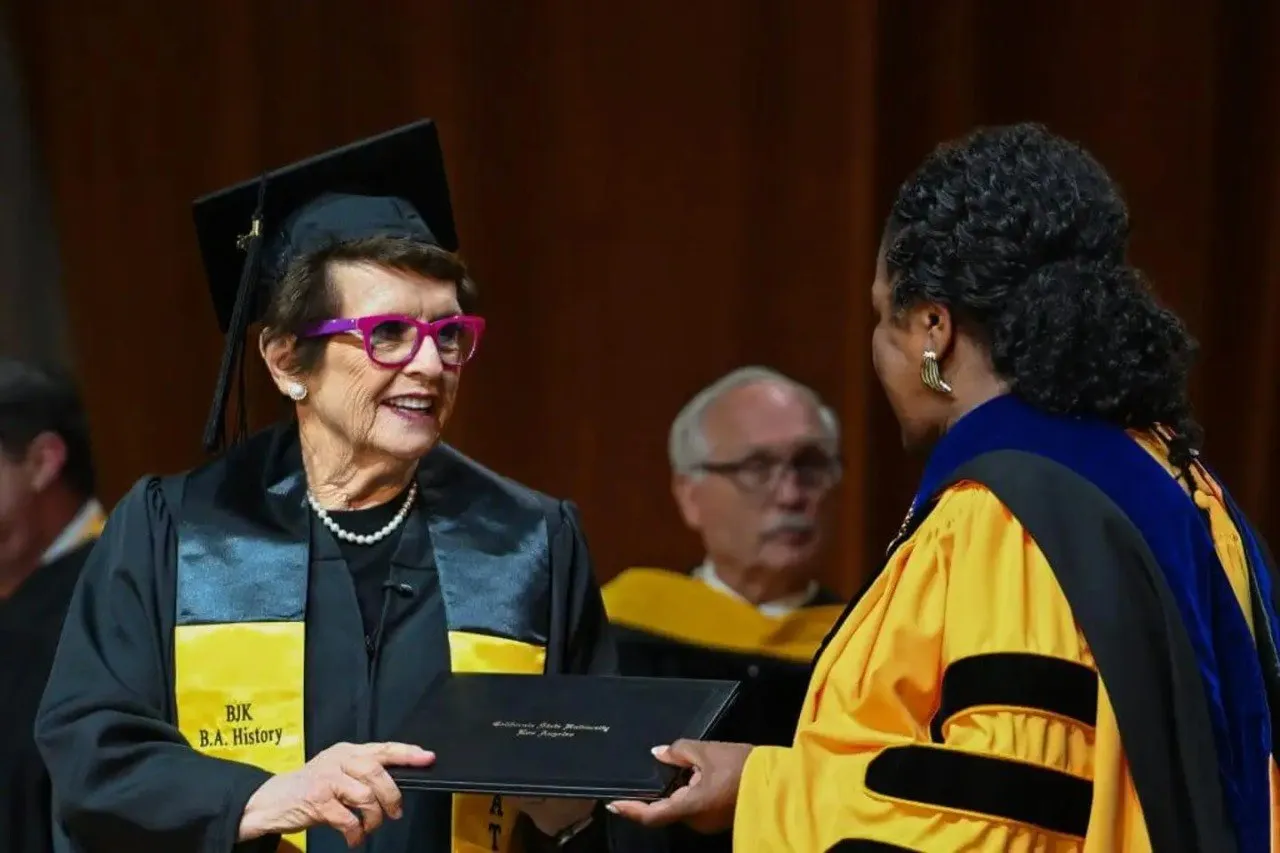
There is something deeply Billie Jean about that logic. Her entire life has essentially been built around finishing things that the system expected to remain unfinished. Women’s tennis was not supposed to receive equal pay — she forced the issue through. Women in sport were not supposed to demand more space, more power, more influence — she demanded all of it. Her biography seems to follow one guiding principle: if something remains incomplete, if there is an obstacle somewhere, you go back and finish the job. That is why returning to school did not feel like a sentimental gesture. It felt like another expression of the same discipline she has carried her whole life. King became the first person in her family to graduate from college, and at the ceremony she also served as a commencement speaker.
There is something beautiful, too, in the fact that the moment did not become a sterile academic ritual. King received her diploma at the Shrine Auditorium alongside roughly 6,000 graduates, then celebrated it in her own style — smashing signed tennis balls into the crowd with a racket. Even there, she refused to become merely a symbol of discipline. She seasoned the moment with a little live-wire mischief, as if reminding everyone that education does not have to look dry and ceremonial when it belongs to someone who has spent a lifetime loving competition, gesture and energy. After the ceremony, she put it simply: it is never too late, regardless of age or circumstance.
That is probably why King’s story resonates so strongly. Not because an 82-year-old legend finally resolved a formal issue. But because, once again, she showed that even after a life already filled with greatness, revolution, legacy and immortality, a person can still care deeply about finishing what once had to be postponed. For Billie Jean King, the diploma was not an accessory to a great life. It was one more piece of evidence of how she built that life: never abandoning things completely, never believing anything is “too late,” and never allowing unfinished business to linger longer than necessary.
In her case, the road to higher education took not four years, but six and a half decades. But honestly, that feels exactly like the kind of journey that suits her.