Score: score unavailable
Участник
Участник
0.000.00
The world of tennis rememberes different clay court types: from european red classics to U.S. green and Madrid blue.
World tennis has seen clay courts in all kinds of shades: from Europe’s red-clay classic to America’s green stuff and Madrid’s blue dream.
The Charleston Open is the oldest women-only tennis tournament in the United States. It has been held in South Carolina since 1973. Although the event has changed addresses within the state several times, it has left South Carolina only for a couple of editions in the mid-1970s, when it moved to Florida. The main problem for the Charleston Open is its place in the calendar. It comes immediately after the powerful Indian Wells–Miami 1000 double. As a result, the WTA’s biggest stars have regularly skipped the local green clay courts in recent years.
Before the tour’s many reorganisations, great champions won here: Steffi Graf with four titles, Martina Navratilova with four, Serena Williams with three, Gabriela Sabatini with two, Justine Henin with two, Martina Hingis with two, and Mirra Andreeva’s current coach Conchita Martinez with two. The tournament’s queen is considered to be 18-time Grand Slam champion Chris Evert, who lifted the trophy eight times.
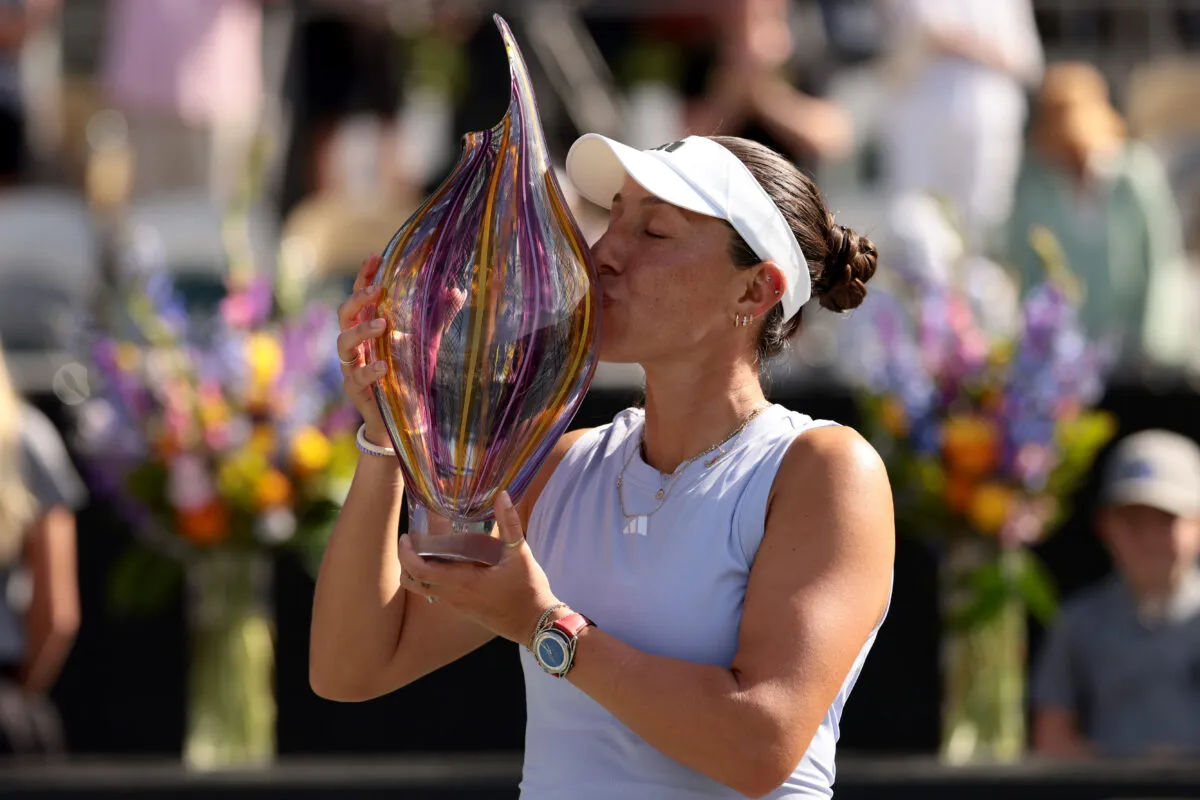
Last year in Charleston, no one could match Jessica Pegula, the daughter of billionaire Terry Pegula, who owns a number of sports assets, including the NHL’s Buffalo Sabres and the NFL’s Buffalo Bills. The tournament in South Carolina, as well as the Cincinnati Open, belongs to another tennis-linked billionaire: Ben Navarro. His daughter Emma has already been inside the world’s top 10, reached the US Open semi-finals and the Wimbledon quarter-finals in 2024, and last season played in the quarter-finals at the Australian Open. In the end, even the WTA recognised her rise and gave her the 2024 Most Improved Player award. The only problem is that Emma has not yet been at her best at her father’s tournaments: her peak is a Charleston quarter-final in 2025.
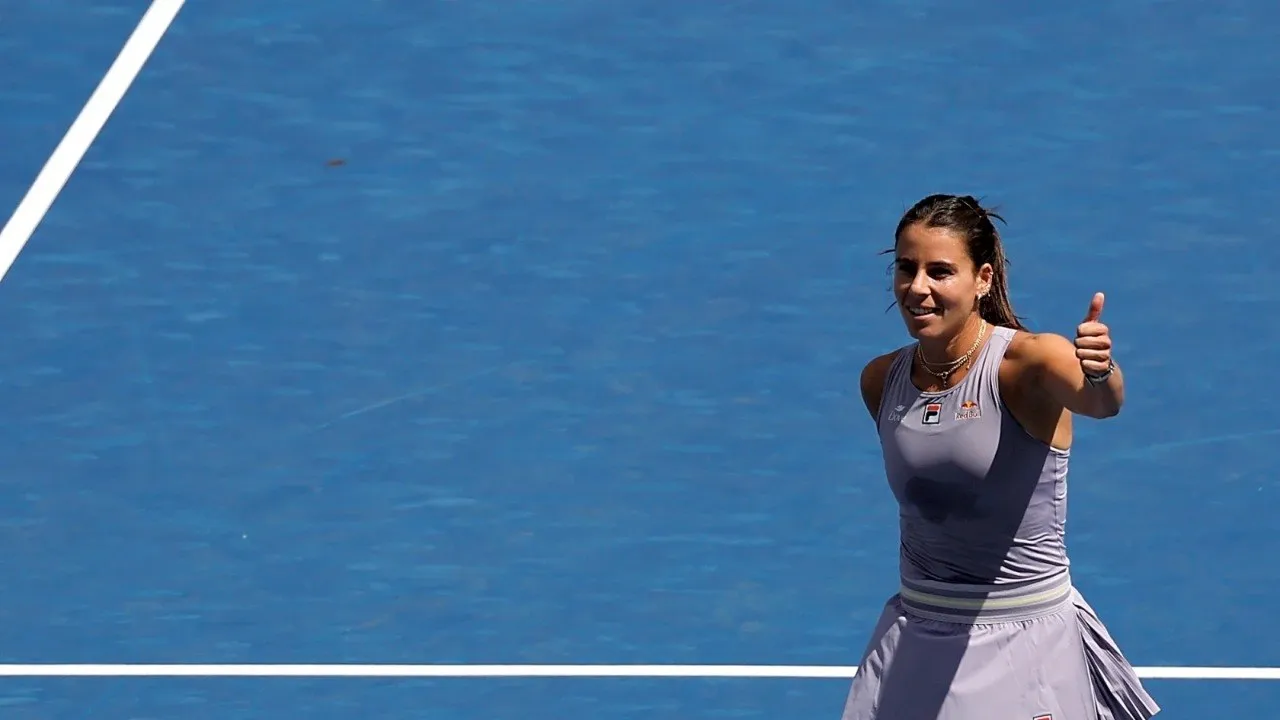
Shortly before this year’s tournament, Ben Navarro announced that the Charleston Open was increasing its prize money to a record two and a half million dollars. It is the first time a women-only 500-level event has matched the prize-money level of men’s tournaments in the same category. True, in terms of attracting superstars, the move has not helped yet. The only top-10 player in the draw is the defending champion Pegula.
The tournaments in Charleston and Bogota open the clay-court swing, which will run until early June and then return for another couple of weeks in mid-July. And while in Colombia the surface has the familiar terracotta colour of clay, in the United States they have their own classic: green. American clay was born almost a hundred years ago in Charlottesville thanks to the work of the Har-Tru company. The main ingredient in this distinctive surface is amphibolite stone from the local mountain range. In a way, it was an American answer to Europe, which at the time was using crushed brick.
According to Har-Tru representatives, the angular shape of their stone helps the particles lock together tightly and keeps the surface uniform, while the hardness of the stone makes it durable. Many players note that green clay is something between a hard court and traditional European clay. The courts across the Atlantic are firmer, the bounce is fairly predictable, and the balls move faster. For players’ bodies, it is an ideal way to ease the transition from the quick hard courts on which they spend the first three months of the season to the slower clay that dominates until summer.
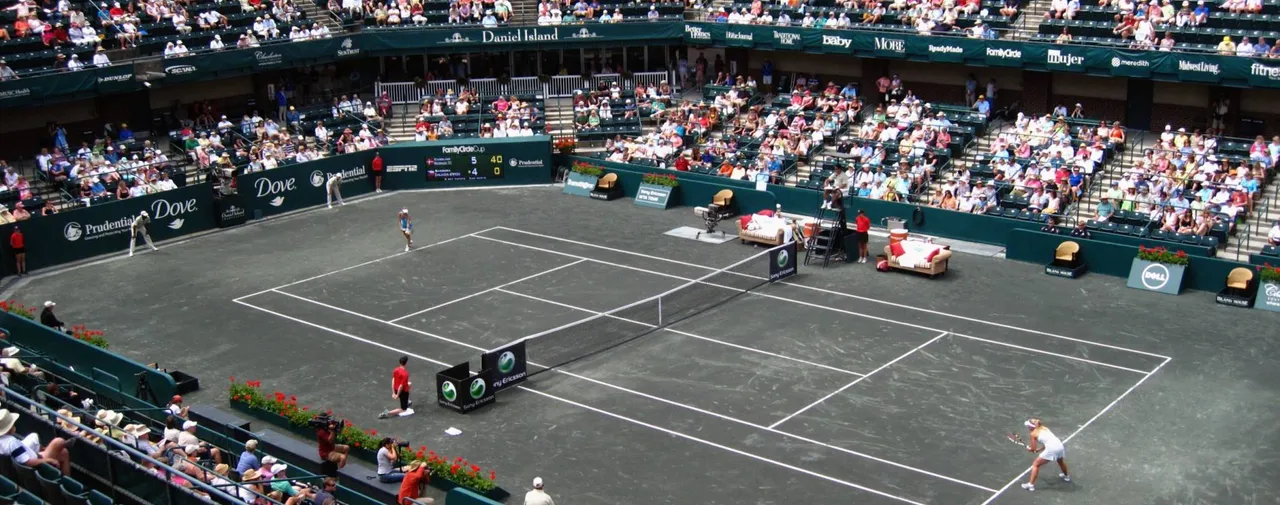
Charleston is not the only tournament to have used green clay. A similar surface was once used at the event in Amelia Island and Ponte Vedra Beach, from 1980 to 2010. Russian players such as Elena Dementieva, Maria Sharapova and Nadia Petrova won singles titles there. Interestingly, even the US Open once bought into this American clay for three editions, from 1975 to 1977. And while in the women’s draw the tireless Evert swept up every title during that stretch, the men’s champions kept changing: Manuel Orantes, Jimmy Connors and Guillermo Vilas. These days, green clay is no longer especially popular even in the United States. Still, there is a sense that not even half of its potential has been realised.
But there is one figure in world tennis who, if only for a single season, gave us the most visually beautiful clay court in history. In 2012, the owner of the Madrid Masters, Romanian Ion Tiriac, turned the clay blue, and it settled forever in the memories of fans. How was it possible? Iron oxide was removed from the excavated clay to change the colour from red to white. White bricks were then made from it, crushed, and mixed with blue pigment. The whole thing cost Tiriac twice as much as ordinary clay. But style costs more than money.
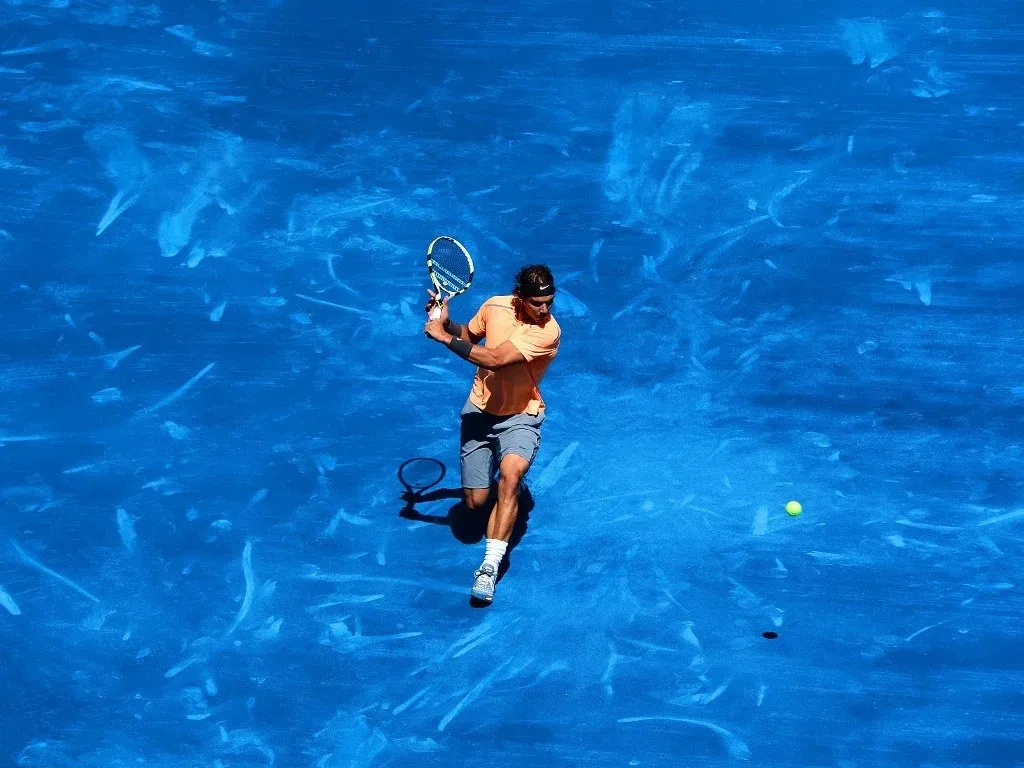
The players, however — including Rafael Nadal, Novak Djokovic and eventual champion Roger Federer, whose word carried real weight — were not especially fond of the experiment. Some complained that the courts had become slippery. Others felt there was not enough clay on the surface, because after rain and the abnormal heat that followed in Madrid, the courts had become too hard. The only satisfied voice belonged to Serena Williams, who beat Victoria Azarenka in the final. The American said she had not noticed much difference compared with the previous year. But the people running world tennis sided with the majority, and blue clay was banned forever.