Score: score unavailable
Участник
Участник
0.000.00
The breakout stories of this year’s French Open.
The Polish player came through qualifying in Paris and made her Roland Garros main-draw debut. But that alone was not enough for her. Chwalińska went all the way to her first Grand Slam quarterfinal, despite playing only the third major of her career. Including qualifying, she has now won seven consecutive matches in the French capital. Chwalińska became just the fourth Polish woman in the Open Era to reach a Grand Slam quarterfinal, following in the footsteps of Agnieszka Radwańska, Iga Świątek and Magda Linette.
It is worth noting that, due to her ranking, the Pole had spent most of her recent career competing on the ITF and WTA 125 circuits, where she captured two titles. Before arriving at Roland Garros, her tour-level record stood at a modest six wins and seven losses. By the end of the clay-court major, she is expected to establish herself inside the Top 50 — and could climb even higher.
Maja was born in Dąbrowa Górnicza, a coal-mining city in southern Poland. Away from tennis, she enjoys spending time with friends, shopping and relaxing over a good cup of coffee. Chwalińska describes herself as a little quirky but friendly. She admits she genuinely loves people, even if her occasionally stern facial expression suggests otherwise.
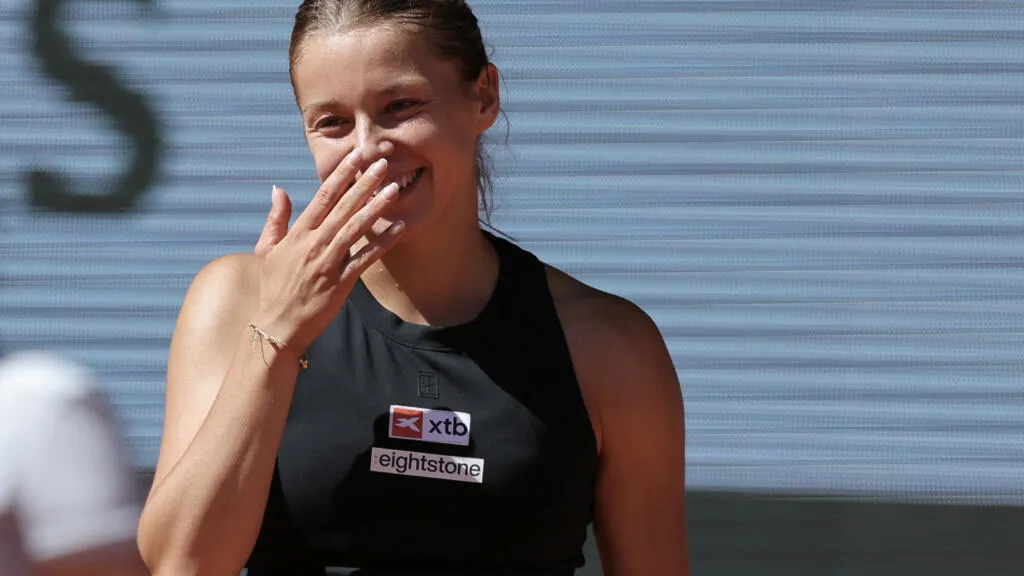
Five years ago, after losing in Wimbledon qualifying at the age of 19, she stepped away from tennis indefinitely, revealing that she had been battling depression since 2019. At the time, she was unsure whether she would ever pick up a racket again. The sport had become associated with pressure, stress and tears.
Back home with family and friends, she sought professional help and began treatment. Running and boxing became part of her efforts to improve her mental health. Eventually, Chwalińska found her way back to the court. After all, sport remained her greatest passion.
She draws inspiration from the Big Three. First it was Roger Federer, then Rafael Nadal, and now Novak Djokovic. Chwalińska considers herself fortunate to have grown up in their era. At the same time, she now understands that life offers many joys beyond tennis.
At her fifth Roland Garros main draw, the Swiss left-hander reached the Round of 16 for the second time in her career. Four years ago, she fell at that stage to Sloane Stephens. This time, it was Mirra Andreeva who ended her run. Either way, those remain the best Grand Slam results of Teichmann’s career. She owns two WTA singles titles, both won on clay in 2019, in Palermo and Prague. The 28-year-old possesses a complete skill set for the surface, and at her peak she climbed as high as World No. 21. Her run in Paris should move her closer to the Top 100, roughly around No. 130.
Teichmann briefly disappeared from the spotlight after deciding to take a break from tennis last September. Burnout had caught up with her. After years of relentless training that began when she was just 14, she felt she needed time away from the sport. The break was also prompted by significant changes in both her team and personal life. “As time went on, everything just piled up and became too much,” Teichmann explained. “I realized I was heading down a path that was no longer healthy for me.”
Listening to her instincts, she began traveling. She visited a childhood friend in Berlin and spent time with family in Switzerland. She went skiing, learned to surf and gradually recharged. Although Teichmann was born in Barcelona, she does not hold Spanish citizenship. Her parents are originally from Zurich. She speaks five languages: German, Spanish, English, French and Catalan.
After working through those challenges, Teichmann rediscovered her love for tennis. Her full comeback came in April at the tournament in Rabat, where the familiar smile and energy returned. She admits she loves competing in stadiums, performing in front of crowds and interacting with people. “It’s something I need,” she says. Sometimes, however, you have to step away to truly appreciate it.
Seventeen years separated the Romanian’s first and second Roland Garros quarterfinal appearances. That is the longest gap between quarterfinal runs at the same Grand Slam in women’s tennis during the Open Era. The previous record belonged to Serena Williams, who waited 15 years. Back in 2009, Cîrstea’s run ended against Samantha Stosur. This time, it was 19-year-old Mirra Andreeva who denied her a place in the semifinals. Cîrstea has now won 21 main-draw matches at Roland Garros throughout her career, making it her most successful tournament on the WTA calendar. She has also enjoyed a remarkable 2026 season, collecting 29 victories already. For comparison, she won 28 matches during the entirety of last year. Against players ranked outside the Top 50 this season, she owns a flawless 17–0 record.
Following her recent semifinal appearance in Rome, Cîrstea became the oldest player ever to make her Top 20 debut in the WTA rankings. Had she reached the semifinals in Paris, she would have broken into the Top 15. Despite her longevity, the Romanian has won only four career titles, all at relatively modest-level events: Tashkent (2008), Istanbul (2021), Cleveland (2025) and Cluj-Napoca (2026).
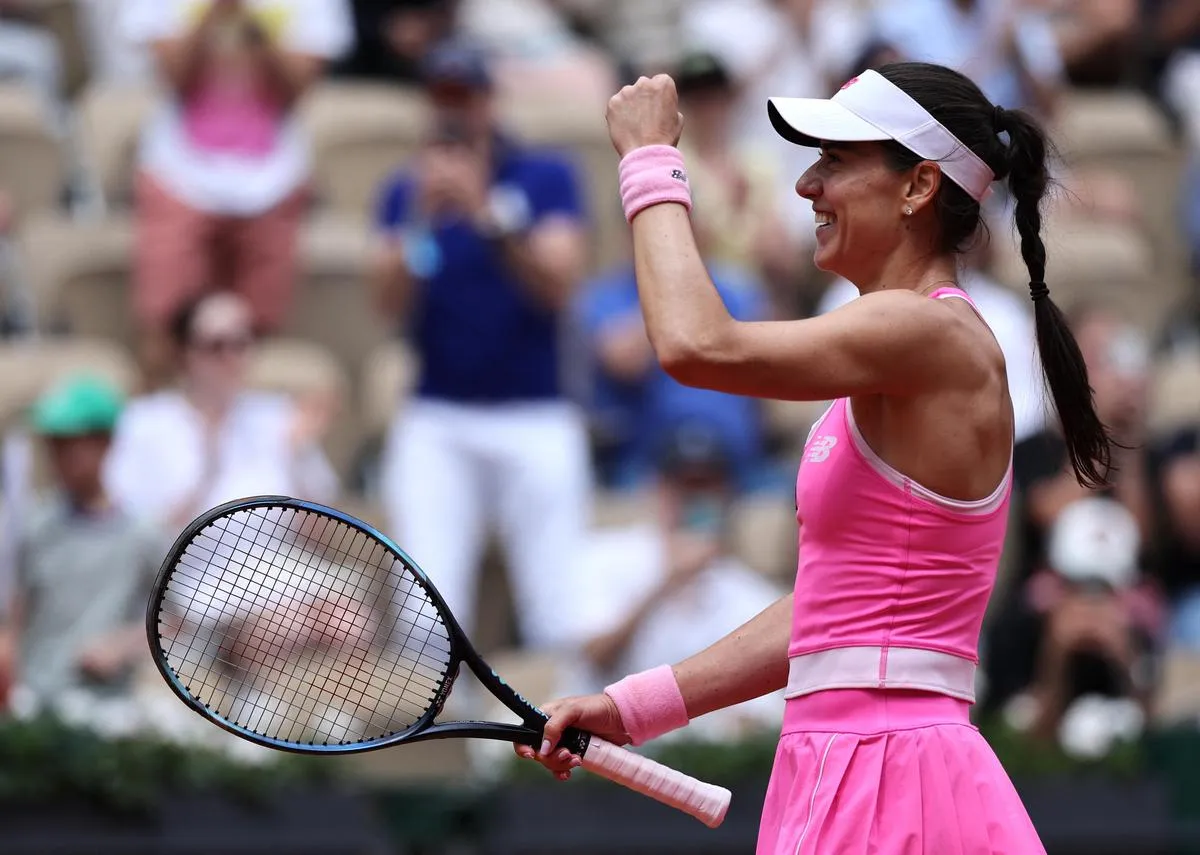
Cîrstea was born in Bucharest but prefers living in Târgoviște, her parents’ hometown, whose name originates from a Slavic word meaning “marketplace.” When it comes to favorite destinations, however, she chooses New York and London — big cities filled with endless possibilities. Her mother, Liliana, introduced her to tennis at the age of four. Cîrstea describes herself as ambitious, cheerful and stubborn. Perhaps that stubborn streak explains why, despite producing some of the best tennis of her career this season, she remains committed to her original plan of retiring at the end of the year.
“At the moment, I haven’t really thought much about it,” Cîrstea admitted. “I’m not looking to change anything or put extra pressure on myself. Of course, we’ll evaluate the situation as the season progresses, but for now, the decision remains the same.”