Score: score unavailable
Участник
Участник
0.000.00
First&Red have studied RG draw. Here's what we see there.
Since Wimbledon two years ago, Jannik Sinner has now been seeded No. 1 at a major for the seventh time in his career. Over that stretch, he has won three Slams: the US Open in 2024, and the Australian Open and Wimbledon in 2025. He lost two title matches last year — to Carlos Alcaraz at Roland Garros and the US Open. He was stopped by Daniil Medvedev in the quarter-finals of Wimbledon 2024, and by Novak Djokovic in the semi-finals of the 2026 Australian Open. Melbourne this season was the only time in almost two years that he did not arrive as the top seed.
The 24-year-old Italian came to Paris on a 29-match winning streak, with only three sets dropped, and five consecutive titles won. From January to the end of May, Jannik suffered just two defeats against 36 wins. Apart from Nole, he was beaten by Jakub Mensik in the quarter-finals of the Doha tournament. The chance that Sinner does not complete the career Slam at the French Open, which begins on Sunday, is vanishingly small.
With all due respect to Juan Manuel Cerundolo, Corentin Moutet, Arthur Rinderknech, Marton Fucsovics, Matteo Berrettini or Luciano Darderi — Jannik’s possible opponents through the first four rounds — he should be getting past them with something to spare. A potential quarter-final against First&Red ambassador Bublik, Hurkacz, Tiafoe, Tsitsipas or Shelton looks attractive on paper. But today’s reality is harsher for all of those players. The only thing that might save the top half of the draw from an easy Italian march is a semi-final against Daniil Medvedev.
In Rome, the Russian came very close to ending Jannik’s phenomenal run at Masters events — now already 34 straight wins and six titles in a row. The Italian was helped at home by the weather. At the same time, we should not forget that Daniil and clay are friends only on very special occasions. His best run in Paris was a quarter-final five years ago. And Medvedev’s early opponents may be far from straightforward: Popyrin, Cerundolo, Tien or Cobolli.
In the bottom half of the draw, the battle to become Sinner’s opponent in the final should be fairly interesting. Three-time Paris champion Djokovic faces a very difficult start: the talented Perricard and Fonseca, Prizmic, who beat the Serb in Rome, and the hugely experienced Casper Ruud are not exactly the players you want to meet in the first week. Incidentally, of that group, the 27-year-old Norwegian Ruud is the main contender to reach the title match. The two-time French Open finalist has looked bright in his last three clay-court starts: a quarter-final in Madrid, a final in Rome and now a semi-final in Geneva.
This year, second seed Alexander Zverev has reached at least the semi-finals in six of the eight individual tournaments he has played. Another run to the last four looks likely now too. And a Zverev–Ruud semi-final is already something of a Roland Garros classic. In 2023, Casper won at that stage; in 2024, Sascha did. This time, let us give the edge to the Norwegian.
Still, a Sinner–Ruud title match would probably look much like their recent final in Rome. This time, three working sets should end in a confident and thoroughly predictable Italian victory.
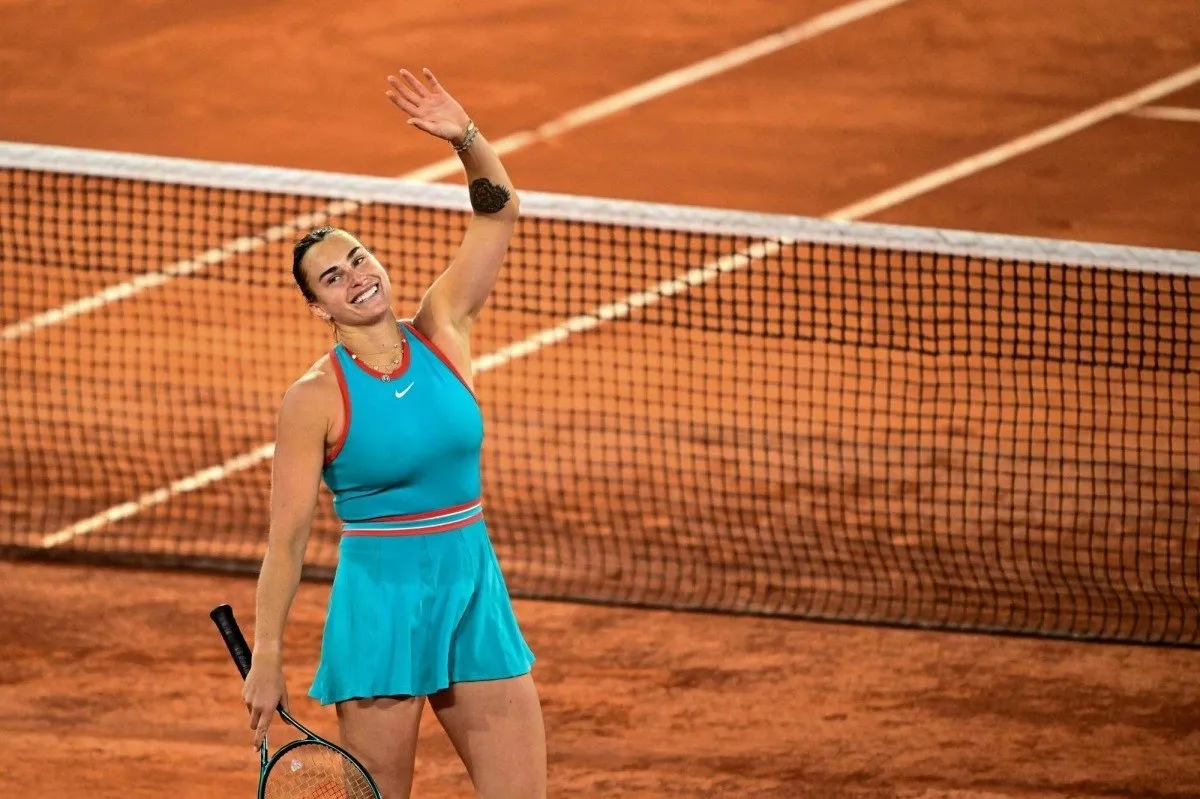
First&Red ambassador Aryna Sabalenka has won three titles in 2026 — Brisbane, Indian Wells and Miami — from four finals played. For the Belarusian, this will already be her sixth consecutive Slam as the No. 1 seed. Over that stretch, she won one trophy, at last year’s US Open, and lost three finals: the Australian Open in 2025 and 2026, and Roland Garros 2025. Last summer, Amanda Anisimova also beat her in the Wimbledon semi-finals.
Although the 28-year-old’s last two tournaments this season did not go especially well — a quarter-final in Madrid and a third round in Rome — Aryna’s run to the semi-finals in Paris does not raise many doubts. The youngsters Mboko and Jovic are good, but not yet good enough to stop Sabalenka now. Osaka has never made it beyond the third round here, Keys is highly inconsistent, and Pegula’s best result was a quarter-final back in 2022. But in the semi-final, it seems, we are in for a repeat of the 2025 final: Sabalenka against Gauff. The American has looked even more interesting than the Belarusian on clay this season: a quarter-final in Stuttgart, a fourth round in Madrid and a final in Rome. But after last year’s Paris stumble, Aryna won both matches against Coco and moved ahead 7–6 in the head-to-head. So revenge is on.
In the bottom half of the draw, the biggest major of Andreeva’s career simply has to take the Russian back to the quarter-finals — Bouzkova and Muchova are already within her reach — where Mirra may find the reigning Australian Open champion Elena Rybakina waiting. The Kazakhstani player has never gone beyond that stage in the French capital. But every wall falls one day. Rybakina will likely fight for a place in the final against four-time Roland Garros champion Iga Swiatek. The Pole is gradually finding herself in her partnership with Rafael Nadal’s long-time coach Francisco Roig. Her biggest test may come in the third round against Jelena Ostapenko. The Latvian leads their head-to-head 6–0. If Swiatek finally gets her first win over Ostapenko, that train may no longer be stoppable.
A Sabalenka–Swiatek final is a classic we have almost started to forget. Over the past year and a half, they have played only once. In last year’s Roland Garros semi-final, Aryna won in three sets. And although the Pole leads their head-to-head 8–5, at the moment the two players are still in slightly different weight classes. So Sabalenka will exchange last year’s painful Paris final defeat for the long-awaited title.