Score: score unavailable
Участник
Участник
0.000.00
Stefanos Tsitsipas: Zverev and Musetti are capable of winning Grand Slams
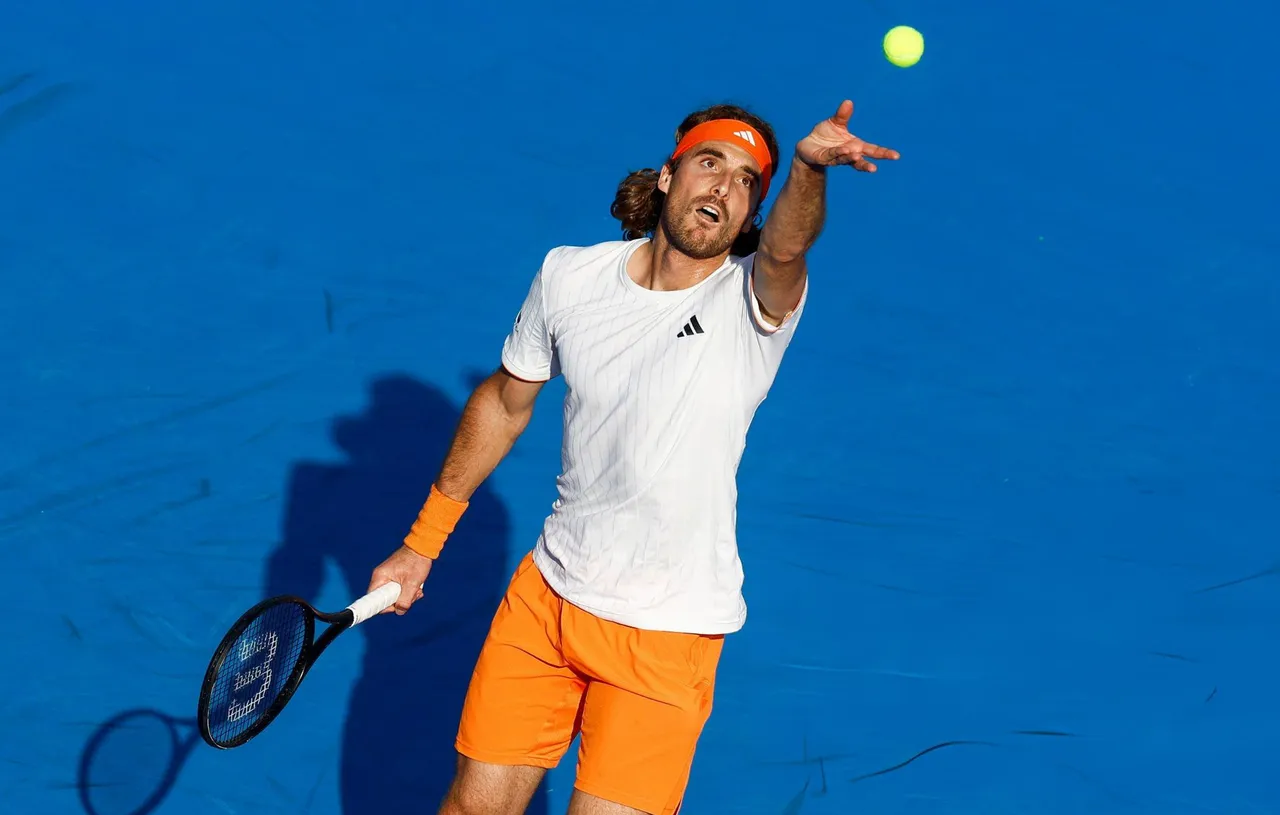
I was wondering how your family calls you at home? You're known as Stefanos, but I've also heard Stepa and Stepan.
- That's right, that's my mother's side calling me this way. My mom also called me sometimes in a cutter way more casual — Stepkin. Yeah, she likes it, so I've gotten used to it over the years.
When she gets mad, does she call you Stepan in this way?
- Sometimes, yes. It varies.
A lot of players go to the Maldives during the off-season, but you chose something very different – Namibia. What was behind that choice?
- Well, adventure. I mean, Maldives is a very predictable destination for any tennis player and the last thing I want to do is do something predictable. And I like spontaneity, I like something that is curious and also curated at the same time. Namibia has been on my bucket list for sure for a very long time and I didn't have the chance to go visit it so I really wanted to check it out.
Are there any other places you've never been but you want to visit?
- A lot of them. Too many. That's the problem. Well, Africa, honestly, is one of those destinations that taught me a lot, especially after Namibia. Now I'm considering maybe more African countries. Kenya would be on the list. Zambia would be on the list. South Africa. I want to explore a lot of South America. Maybe this year I will have the opportunity to finally go to Brazil. I've never been to Brazil. So there are a lot of destinations. Costa Rica is one of them too. So I need some time off from the tennis court. I can't be doing everything at once. I want to be everywhere, but I also have a tennis career and I have to prioritize that.
You hadn't beaten a top-20 player in a while, but you started this season with a win over a top-10 player. What changed?
- Well, my back, my confidence. I feel like it all correlates. Your confidence gets destroyed when your body is not fit, when your body is not where you want it to be. A lot of things start dropping. One of them is your confidence. Being injured for six or seven months has had a big toll on my mind, the way I process emotions, the way I process my career. And not to be able to have a healthy body... ultimately also serves me by not having a healthy mind. So going through a roller coaster like this during the year has been very difficult to manage and it was definitely at the bottom of my priorities, beating the best in the world in that particular part of the season. I started the year pretty well last year, winning a tournament, feeling like I'm on a bit of a snowball going on the right track. but things started getting more difficult the more the year progressed and ever since that started happening i couldn't feel uh my feeling on the ground I feel like I lost balance
You finished last season in September. What kept you busy after that?
- Just training. You will not believe it, but I was training every single day, trying to rebound from my injury. After the US Open, the exit in New York, I remember being in my hotel room the next morning after my loss in round two and I had trouble getting out of bed. That's how much pain I was faced with the next morning. I remember getting to the car that night because I finished my match really late. And I remember I could barely walk to go to the car. And I remember thinking, what am I doing here? What am I doing in New York? What am I doing with my career? That was when it really crossed my mind for the first time. I remember talking to my dad at that moment and telling him, like, I'm not going to play. until I'm 100% good that I'm stopping here. I didn't keep my promise. I still had a lot of passion and fire to go play for my country at Davis Cup. We played against Brazil. But it was more of an inner power strength that drove me to that decision. I wasn't thinking of myself. I was thinking of the team.
Not too long after your US Open lost, people saw you playing padel in one of the private clubs in New York. How did that happen?
- Paddle? Oh, yes, I did play paddle in New York, true. After a few days, yeah, true. I had a lot of difficulty walking for two days. After the third, fourth, and fifth day, I started feeling a little bit better. I wanted to have a little bit of fun. I did go paddle with some friends outside of New York. Now that you bring it up, I remember. And believe it or not, even there, I was struggling to play paddle even there. I'm a type of person that is very hyperactive. I don't like sitting and doing nothing. And whenever I get the opportunity to hang out with friends, do sports, I'm all for it. I'm not the type of guy that's going to sit on the couch and play video games. That's not my personality.
Your doctor, Hans Müller-Wolfhart, is very well known in the sports world, but his methods are quite controversial. Did it make you hesitate to work with him because of that?
- The only thing I know about Dr. Müller is good things and that's the reason I chose him. I have no idea what he's been through in the past. The recommendations that I've had to go there were from the best athletes, the best people that are in the sports industry. Mostly from football players. I know also Usain Bolt chose him for a very tricky situation that he was in a lot of top athletes especially the national team of Germany which I consider one of the best in the world when it comes to football I trusted him with any medical related stuff so I you know I was in a very critical situation I'm obviously going to choose the best in the industry to try and help me that was definitely a no-brainer for me to try and settle for something less than that Great. So far I haven't felt anything, so I really owe a lot to him. He has helped me so far to be able to win in the last couple of weeks, to start getting victories back under my belt and to start feeling like myself again.
My main goal is to be healthy for one full year and maybe find myself again in the Grand Slam final.
During the off-season, it was a bit strange to see you at the ATP in Athens at the post-final ceremony. You know, it's usually for former players. Did it feel a bit odd to you?
- I was not intended to be there inside the court. It all felt very weird to me when I got invited to be on the court.
You didn't say no.
- I remember I was sitting right behind Djokovic's chair when he was playing the final against Mercedes and when the match finished I was like, I need to leave, I have no business being in a ceremony, I want to get back home. Obviously there's going to be a lot of traffic to get back home. So I wanted to be out of here. I remember Djokovic calling my name and telling me, Stef, come in the court, you have to be here. I'm not going to say no to Novak Djokovic. If Djokovic wants me to be there, I'll be there. But I honestly did feel when I was there in the picture with Musetti and Novak, I felt a bit like as if I have retired or something. And I was like, I'm still an active player in theory. It's actually very true what you said, because I felt like I didn't belong in that picture with him. So it did feel odd, even for me. Yes, 100% for sure. It was one of those moments and situations that puts you under a lot of stress. It tests your limits psychologically because imagine going tournament after tournament and being like, okay, I can play. I'm sure I can play this week. And then a few hours before your match, you're like, there's no way I can do this. And this happened two or three times in a row. After I finished with one match that I had in Riyadh, I went to play Vienna. I wanted to play Paris-Bercy, but I couldn't. And it hurt me a lot knowing that my season ended there.
When things go bad, what helps you not to overthink?
- Reminding myself that I'm a good human being and I've done good things so far and I haven't done any bad things to anyone I don't hurt anyone I don't have bad intentions against anyone and that reminds me of like you know bad things will happen to you but you have to be brave and face them off like you know it's I have good will when it comes to other people and I don't wish anyone bad, honestly. So I feel like that's the driving force for me every single day. If things come back to me in a bad way, I try to tackle them by staying silent and calm and not reacting to anything.
In a recent interview, your mom said that only Alcaraz and Sinner have a chance to win Grand Slam titles. Would you agree with her?
- I think there are a lot of players that can win Grand Slam titles, not only Carlos and Yannick. They have shown a lot of consistency the last couple of years, and they've been in every single final. My mother perhaps hasn't been playing against this player, so she just says it from an outside perspective of her professionalism back in the day. She might know a thing or two, but in some things I think there are also other candidates to win Grand Slams. I don't think it's just Yannick.
Who, for example? Are you on the list?
- I don't know if I'm on the list. If I'm healthy, maybe, yes, I'm in the list if I'm healthy. And I wouldn't be playing these Grand Slams if I thought I can't win one. I would have stopped yesterday. But I think there's a lot of great talent and players out there that have chances of winning Grand Slams. For example, who can I name? Sasha Zverev was close sa couple of times. Of course, there are a few things in his game that if he improves, he can obviously push it even more to the limit. But I think he's a great candidate for a Grand Slam title. I would say... You know, Lorenzo Musetti lately has been showing a lot of improvement in his game. I've watched him live. I can see he's improved a lot. And I think if he continues that route, he's also a candidate for a Grand Slam title. Despite people saying that the single-handed backhand is a... this advantage in today's tennis, I still believe he's capable.
Have your goals changed since you first came on tour?
- They have adapted. My goals have adapted since I've been on tour. When you start on tour as a young kid, you have all these crazy dreams and beliefs about yourself and that you're going to change the world with your tennis. And once you settle a little bit on the tour, you see a bit more of the real picture and the real situation of what's day to day. Tennis has grounded me. Tennis has definitely been a very humbling experience for me. What I mean by that is it has really made me understand my weaknesses and my strengths as not only a player but also as an individual, as a person. I've done some mistakes on and off the court and that's absolutely normal, I would say. It's not a weakness on its own, it's a transformational thing that you are going through. So I think it's very important and vital for my career to be going through this process perhaps stupid moments that I might have done in the past and process those and ask myself, how can I do this better next time? Tennis has allowed me to dream and my goals today are different than they were when I started playing tennis in the sense of how I approach my everyday routine and the way I practice.
What is your main goal these days?
- My main goal is to be healthy for one full year and maybe find myself again in the Grand Slam final. Because you never know with Grand Slam finals, anything can happen.
Your mom said that she could help you improve if your team would allow her. Why isn't she more involved?
- My mom is very passionate about the game. She loves me a lot and she wants the best for me. But she's not consistent, unfortunately, into showing up every day. It's just coming out of feeling. She has a lot of feelings, emotions. I love her to death. She's my favorite person in the world. She has actually helped me a lot in the past, but unfortunately at her age, at her situation, it's not easy for her to travel all year round with me. And I think there's already enough family involved in my team, I think it would make it too much.
I remember years ago she stepped in at your press conference and said that parents are often very involved in their children's career. You took it with humor and asked her which player had won a Grand Slam that way. I'm trying to think actually who has actually changed your view on parental involvement since then?
- I'm much more at ease with my parents nowadays. I remember that was a phase where I was still evolving, changing. I want maybe my parents a little bit more away from me. And I was in a different phase than I am now. I'm really unbothered by them now. I probably know how to communicate with them better than what I did five years ago, for sure. I have matured more. I have perhaps seen my parents more as part of my team and my daily life than wanting to kind of step away from them and do it my way. So my mental take on it has changed. I see them in a very different retrospect than I did back then. And I don't think they're here to hurt me. They are just very passionate about the game. They want to help me. And they can just, you know, it's the truth. They can't live without tennis. They need tennis in their life. So I can't push that away from them. If they need it in their life, you know, they have to collaborate with me and make it work together.
Did taking a break from working with your dad change things, how you work together now?
- For sure. Having that break with my father helped me a lot understand how he sees me as a person and how I see him as a person and what really doesn't go right in making that work. There are a lot of emotions that go through a relationship like that. A father-son relationship is not an easy relationship and it can have a lot of tensions building up over time. I still need space for my father from time to time, and I still think it's healthy to have weeks during the year where I get to maybe spend with a coach, the same coach that I worked with a few months ago, and to have him there in tournaments that I feel like I need him. It will be healthy for us moving forward in terms of my career. It will be healthy for us building a closer, better communicative relationship. The thing that hurt us the most is that we weren't on the same frequency at some point. We were not communicating well. And at the end, that creates more friction than it creates connection. And you need connection to be able to perform on court and to have a smooth day-to-day routine. And, you know, my life is on the court. I can't... be talking to someone and trying to tell someone something that I see without them wanting to listen. It's important to have someone that's going to listen to the things that you have to say too. Not only have a monologue come your way
Your mom used to be a professional tennis player. Your dad wasn't. Why do you feel comfortable to trust your dad more in that role?
- My father, and I'm sure my mom would agree with that, is a much better... He's much more insisting than my mother would. In terms of disciplinary, he's able to pass messages and to dedicate himself fully into the craft. My mom, unfortunately, doesn't have that capacity in her. She's a very smart coach, my mother. She has great ideas. She can throw in a lot of wisdom when it comes to the game. But she's not a person that's going to insist and is going to do all the little small things that are required from a coach in order to make a player progress. I would compare my mother to more of a, you know, you have like a creative director in a production and then my father would be the producer. So my father would be the producer and my mother would be the creative director of that enterprise business.
My father has great leadership skills in tennis.
Could we talk about your dad's background a little bit? How did he become a tennis coach?
- He started in a sports university in Athens, Greece. He chose tennis as his direction. And that's where he also met my first tennis coach, the first tennis coach that taught me how to play tennis properly, but also developed my technique from a young age. That's where they met. And my father picked tennis as his direction, as his sport. He fell in love with it. He used to play it in his village. He comes from a very small village from the middle of Greece. He didn't have access to tennis there. So he always was fascinated by Bjorn Borg and John McEnroe and wanted to one day play tennis.
But did he play?
- He didn't play professionally. He learned at a very late age. I think he was something like 23 years old. He learned how to play tennis. And for... To be entirely honest with you, for the way he plays today, for someone that learned at 23... He's quite good, yes. Which is surprising because you wouldn't expect someone that learns tennis so late to be able to develop the skills. He has great leadership. My father has great leadership in tennis. He likes that. He probably lacks something, and I don't say it in a bad way or in a negative way. It's not expected from him to know that. That's where my mom steps in. She has that professional tennis IQ, you know, the ones that you've actually developed over the years. You've seen those patterns. You've played those patterns. You've played those opponents. You can detect those things. My father comes from a more amateur tennis background, but he has that amazing coaching perspective that he sees stuff from a coaching side of things. And I think those two blend in really well.
You worked with different coaches, Patrik Marotoglu, Goran Ivanishevich, coaches with completely different styles and backgrounds. How would you describe their approaches and why do you think it didn't work out? Because it's completely different. One is more honest, another one is more positive.
- Right. True. What didn't work out? One thing that I've... It's great working with coaches and ex-tennis players because you get to get into their mind the way they think about the game. And I've always been fascinated by that. It kind of gives you a different... genre of tennis when you work with him because i've worked with mark philippus's great coach i learned a lot from him when i worked with mark and i owe him a lot because he actually did improve and helped me a lot as a player
Did you speak Greek with each other?
- Yes, he is of Greek descent, so he speaks Greek. We parted our ways, but I'm still very grateful to him because he taught me a lot, especially my aggressive side of the game that I try and implement when I play against any player. And I did a lot of work with him on the volleys, and they did help me a lot. With Goran, it's a different story. I just... It was different. When I started working with Goran I didn't know him very well. I probably said hi to him a few times back in the day when he used to work with Novak Djokovic. I did spend some time with him getting to know him and after a few weeks I didn't quite feel there was something like a synergy between us. Even if you force it, even if you want to make it work, Sometimes it just doesn't work. There's no explanation for it. The way we communicate, the style of coaching, I felt like it didn't really match what I was looking for. And that was also the reason why I stopped so early with him. I would have never expected we would have stopped that early. It was never in my plans to stop that early. But once you see it, it's tough to avoid it and not to go against it.
Did you get offended after his comments about your game?
- He was probably right in some things but it was a very weird phase to be saying this type of things because in that particular moment I was going through a very difficult time with my back and to be saying this type of things I felt like it was very unfair to me because I haven't had the chance to practice properly because my back hurts the whole time. I remember I was going to practice and I just couldn't because of pain related issues. I think we only had one or two hard practice sessions where I was able to really show my actual potential and self out there. So it was a very weird phase to be commenting stuff like that because it really didn't, there wasn't enough time to be judging by the time that we spent together. We literally spent less than 15 hours together on court. And the reason I would hire a coach like Goran is to improve and get my game better. It was not to sit around and do nothing. Otherwise, I could have done this with any other coach, a much cheaper coach as well, because these are things that I do consider as well. When I'm paying a coach good money to make the work, I really want to sacrifice myself and give everything to that coach. And that's what comes with it. I'm ready to do that.
What do most Russians think about you?
- What is the most Russian thing about me? I enjoy luxury, I guess. I don't know. I appreciate and enjoy luxury and that's the most Russian thing about me.
How would you describe Russian character?
- Quite distant before you get to know someone but once you're in and you make them a friend, you're really in. So that's exactly how I am.
Do you follow Russian culture through films, books, music?
- Music, films, and some travel videos on YouTube.
What kind of films?
- Films? Dramas. I don't know what they're called but I used to watch them a lot in the last couple of years. I don't remember their title. Don't ask me
Also, you have strong Greek roots, of course, and your social media posts often look like pieces of art. Any favorite philosophers?
- In general? All the ancient Greek philosophers I admire. I think they did great. And I feel responsible in a way to expose my culture. I'm proud of my culture. I'm proud of being Greek. I'm proud of coming from a place that invented democracy and invented so many beautiful things that we get to enjoy today. And I feel like through tennis... I can have that, I can help people understand more about Greece, more about my culture and also bring that into the court.
He's got one of the best backhands in the game, especially when it's behind his body. I don't know how he makes that. It's impressive to watch.
You had some tense moments with Medvedev and Rublev. Is it better now?
- Absolutely. I have no beef against them. I appreciate their different unique styles that they have. I'm a big fan of Andrey's game. I think there's a lot to take from him in terms of how punishing you can be when you play. Andrey is one of the toughest opponents that I've faced, especially when he's been on. It's tough to defend against him. He's got one of the fastest shots on the tour.
Could you name three nice things about Daniil Medvedev?
- Daniil Medvedev. I would say his ability to never give up is impressive. I've seen him in moments where nothing works out and he's still able to put it together, puzzle it together and make it work. I'm actually quite impressed by how he's able to produce a forehand like that with this particular thing. I won't lie. It's an amazing skill. It's an amazing skill. I have to give it to him. I'm impressed. I've spent countless hours practicing since I was a little kid with my coach perfecting my technique and getting it as clean as possible. And when I see that, I'm like, you know what? I applaud you. You make it work. I would have never been able to make it work. What else? Oh, his backhand. He's got one of the best backhands in the game, especially when it's behind his body. I don't know how he makes that. It's impressive to watch.
Could you say a few words in Russian straight to the camera to our viewers, please?
- What exactly would you like me to say?
Maybe some advice or philosophy.
- Don't wait for your chance. Create it.