Score: score unavailable
Участник
Участник
0.000.00
It was a hot 1973.
When the New York Knicks last became NBA champions, the world was arranged very differently — and not only because the league still knew nothing of Michael Jordan, the three-point revolution or the salary cap in anything resembling its modern form. That title came on May 10, 1973, when the Knicks, after losing Game 1, took four straight from the Lakers, won the series 4–1, and Willis Reed was named Finals MVP. Since then, the club has not won a single championship.
But to feel just how long ago that was, it is not enough simply to name the year. You have to remember what 1973 actually looked like — in basketball, in sport, in politics, in music, and on the far side of the Iron Curtain.
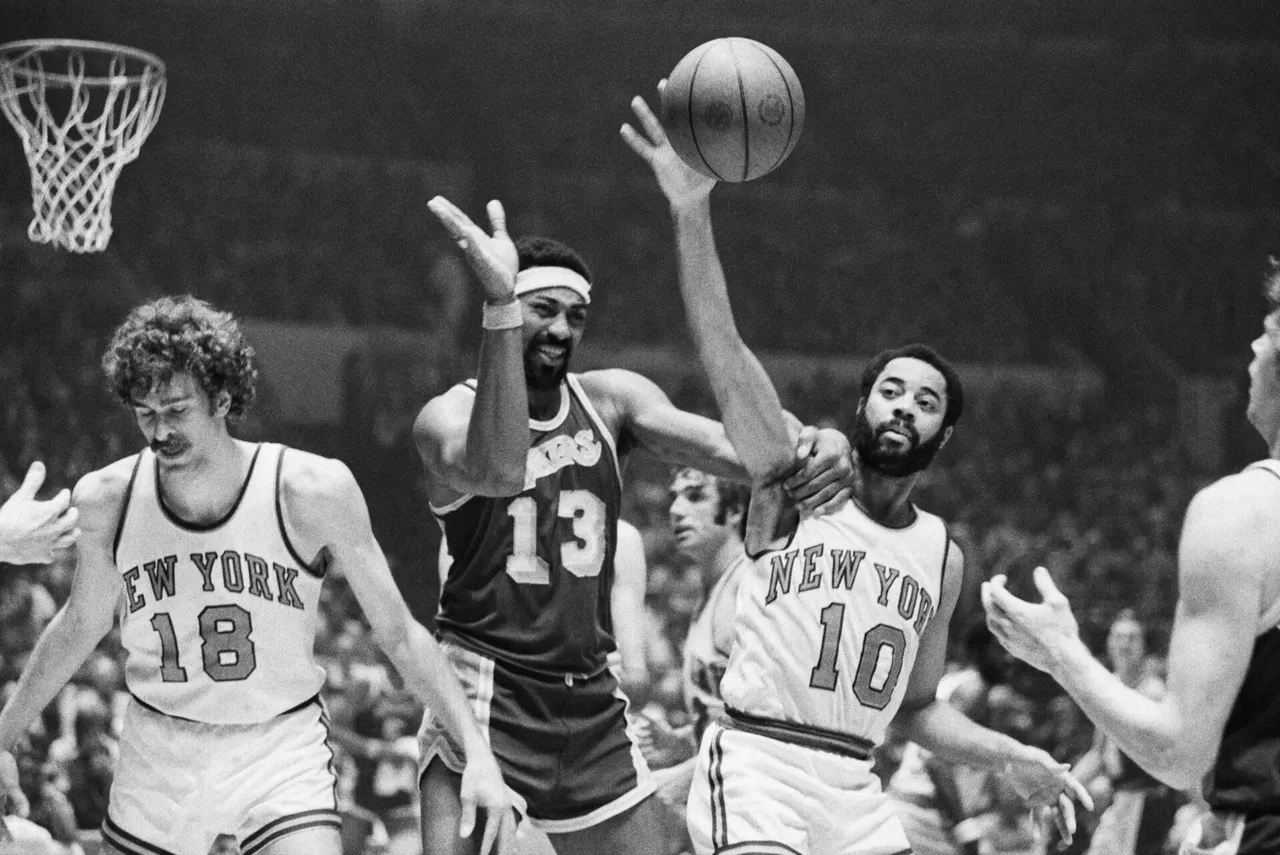
In basketball, this was still a league where power belonged to the big men. Centers and power forwards dictated the style and drew the very architecture of the game. Kareem was already a superstar, Wilt Chamberlain was living out the final pages of his career, and the 1973 Finals became his last NBA series: in Game 5, he scored the final points of his great career. The Knicks’ title back then did not look like a victory of the future, but like a deeply classical triumph by a mature, hard-nosed, deep team from the age before perimeter madness.
At the same time, the NBA was already beginning to transform from merely a strong league into a major cultural product. Yes, the great economic and television explosion would come a little later, on the wave of Bird, Magic and then Jordan. But by the early 1970s, basketball was already moving toward a new public life: everything was becoming faster, more star-driven, more media-shaped. It is just that in May 1973, no one yet knew the Knicks would manage to win a title before the league fully turned into a global show.
America in those years was ruled by football. And football, American football of course, was ruled by O.J. Simpson. In the 1973 season, he became the first player in NFL history to rush for more than 2,000 yards in a regular season. And he did it in a 14-game season, not 16 or 17, as his successors would in later eras. He was named MVP, but even he could not drag Buffalo to the Super Bowl. The champions at the end of the 1973 season were the Miami Dolphins, who won the rings for the second year in a row.
In tennis, 1973 gave us an event that long ago escaped the boundaries of sport. On September 20, Billie Jean King defeated Bobby Riggs in the famous Battle of the Sexes. The match in Houston was watched by roughly 50 million people in the United States and around 90 million worldwide. For sport, this was not merely an exhibition circus with a good title. It was the moment when women’s tennis, and the broader conversation about equality for women in sport, suddenly received a global stage. That year, tennis began to sound not only like an elite game, but also like part of a larger cultural war.
Montreal won the Stanley Cup, beating Chicago in six games. It was the Canadiens’ 18th trophy. Across the ocean, meanwhile, the revolution of total football was raging. The Netherlands were showing the world how the game should be played. Actually, not even that. The Netherlands were showing the world how to win. Ajax Amsterdam won the European Cup for the third year in a row, beating Juventus in the final. Johan Cruyff completed his transformation into a legend while still only halfway through his career. For him, 1973 was a transitional year: in the autumn, the Flying Dutchman completed his move to Barcelona.
For motor racing, 1973 was an extremely dark year. Jackie Stewart won his third Formula 1 world title, but the end of the season was overshadowed by the death of François Cevert in practice before the final race. After that crash, Tyrrell withdrew from the event, and the Constructors’ Cup went to Lotus. This was motor racing in its very 1970s form: beautiful, fast, deadly dangerous, and still not truly able to value safety and the lives of drivers.
In general, 1973 was a year of turbulence. In January, the Paris Peace Accords were signed, formally ending American involvement in the Vietnam War. In the autumn, the Yom Kippur War began, followed by the 1973 oil crisis. In Chile, a coup overthrew Salvador Allende. And in the United States itself, Watergate was growing louder — the scandal that would finish Richard Nixon’s presidency in 1974. 1973 was a year when the world was both shaking and rearranging itself. America was no longer quite Nixon’s America, but it was not yet Reagan’s either. Ronald was still the governor of California, a visible figure in conservative politics, but his national era had not begun. America was living in the aftertaste of Vietnam and the anxious air of inflation and energy crisis.
In 1973, the Soviet Union lived under Leonid Brezhnev, in the very climate that would later be called the Era of Stagnation. In the economy, the Kosygin reform of 1973 began, intended to adjust the workings of the Soviet economic system. In the cultural and political field, the year was also marked by Alexander Solzhenitsyn sending the manuscript of The Gulag Archipelago abroad — a gesture that became a direct challenge to the Soviet state. At the same time, the USSR launched Soyuz 12 and Soyuz 13 into space, continuing to sell the world the image of a country that, despite its internal viscosity, could still make grand technological gestures.
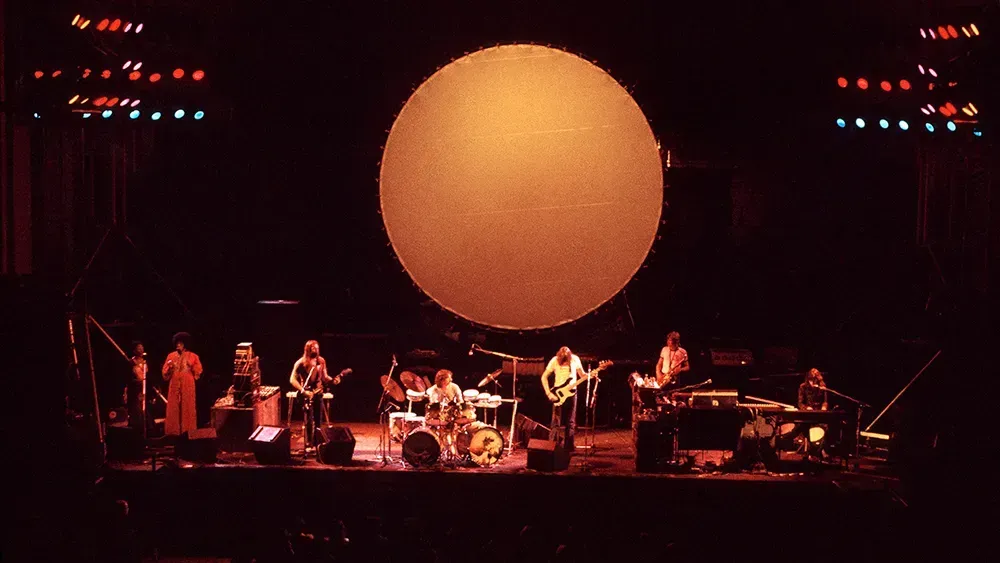
The music of 1973 was an entire civilisation of its own. That was the year Pink Floyd released The Dark Side of the Moon — an album that did not merely become a colossal commercial success, but turned into one of the great musical monuments of the 20th century. In the autumn, Elton John unleashed Goodbye Yellow Brick Road on the world, and the year itself is now seen as one of the densest and most luxurious in the history of rock and pop music. 1973 did not simply have a sound — it built the sonic backdrop for the entire second half of the decade. That claim is easily proved by one simple fact: in July 1973, Queen released their debut studio album. Those gentlemen showed, on a mass scale, what happens to music when you are not afraid to do things the way no one has ever done them before.
That is why the main effect of 1973 today is not dry nostalgia. It is the fact that the Knicks’ last title came from a world so unlike our own. Back then, O.J. Simpson was still a magnificent football player, not a convicted criminal. Hunter S. Thompson had already shaken the world with Fear and Loathing in Las Vegas, but was still gathering material for his brilliant political epics about Nixon’s presidency. It was a world in which women proved they had the right to stand on the same step as men, Johan Cruyff ruled Europe, and the legendary Pink Floyd allowed us to look at the dark side of the moon. A world in which New York could still look at basketball not as a chronic unfinished sentence, but as a championship fact.
And perhaps that is precisely why the Knicks’ title is so hard to peel away from myth. People usually speak of such times as “long ago and not quite true.” Because since then, almost everything has changed: the league, the money, television, music, geopolitics, even the very idea of what sporting fame looks like. Only one thing has not changed: the Knicks are still trying to get back to where they were in May 1973.