Score: score unavailable
Участник
Участник
0.000.00
Who plays, when plays and what for.
When: The main-draw matches will take place in Paris from May 24 to June 7. Traditionally, the women will play for the Suzanne Lenglen Cup first, on June 6. The men’s final, where the winner of the Musketeers’ Cup will be decided, will take place a day later. Tickets can be purchased only online via the Roland Garros website. Official prices range from €45 for the opening days, without access to the two main courts, to €590 for the men’s singles title match.
Where: The Roland Garros Stadium, named after the fighter pilot and First World War hero, was built in 1928 in the south-west of the city, in Paris’s 16th arrondissement. It sits next to the Bois de Boulogne and the Parc des Princes, the home stadium of Paris Saint-Germain, where goalkeeper Matvey Safonov plays. Various embassies and consulates are also located in the area, including the Russian one. Depending on traffic, it usually takes 25–40 minutes to get from the city centre to the tennis complex by metro, with a single ticket costing €2.50, or by taxi, from €15. Three Paris metro stations are within walking distance of Roland Garros: Porte d'Auteuil, Michel-Ange–Molitor and Michel-Ange–Auteuil.
The main symbol of the stadium, Court Philippe-Chatrier, was called simply Centre Court until 2001. At the start of the 21st century, it was renamed after the long-serving president of the French Tennis Federation, who developed the French Open with particular enthusiasm and helped tennis return to the Olympic family. The stands, which seat 15,225 spectators, are named after the French tennis Musketeers: Jean Borotra, Henri Cochet, Jacques Brugnon and René Lacoste, whose 1927 Davis Cup victory became the starting point for the construction of the stadium. Eight years ago, Centre Court was demolished down to its foundations and rebuilt. As part of the renovation, the main arena received, among other things, a retractable roof and floodlights. Last year, a plaque bearing the footprint of Rafael Nadal, who has won Roland Garros 14 times, was placed directly on the court. Five years ago, a three-metre statue of a steel Rafa hitting a forehand was installed on the stadium grounds.
The second most important arena, Court A — now Court Suzanne-Lenglen — was built in 1994 and seats 10,068 spectators. A bronze bas-relief of the great Frenchwoman, who won six singles titles in Paris, is installed above the eastern tunnel entrance. A retractable roof was added to the court in time for the 2024 Summer Olympics. Its shape is inspired by Lenglen’s pleated skirt.
The court named after two-time tournament champion Simonne Mathieu, with a capacity of 5,000, is technically located outside the Roland Garros complex. It was built and opened in 2019 on the grounds of the adjacent Jardin des Serres d'Auteuil. The court itself sits four metres below ground level, with greenhouses integrated on all sides, blending with the plants in the other parts of the garden.
Who: Two-time defending champion Carlos Alcaraz will miss Paris for the first time since 2019. The Spaniard was taken down by inflammation of a tendon in his right wrist. He is tentatively planning to return to court in mid-June at the Queen’s Club tournament in London. But 2025 Roland Garros champion Coco Gauff is fit and in good form. After reaching the Miami final, the American made the quarter-finals in Stuttgart, the fourth round in Madrid and the title match in Rome on clay.
Also missing the French Slam will be last year’s semi-finalist Lorenzo Musetti, with a rectus femoris injury, and 2024 US Open semi-finalist Jack Draper, with a knee injury. At the same time, the great British compatriot Andy Murray, a two-time Wimbledon champion, will join Draper’s team during the grass-court swing. Two-time French Open quarter-finalist Holger Rune has not made it to Roland Garros either, as he continues rehabilitation after surgery on the Achilles tendon in his left leg.
On the women’s side, 2019 finalist Marketa Vondrousova will be absent. She risks a suspension of up to four years for refusing to take a doping test. The leading favourites are the world-ranking leaders: Jannik Sinner, who can complete the career Grand Slam, and First&Red ambassador Aryna Sabalenka, who has never won in Paris.
What else: Unlike the other Grand Slams, where an electronic line-calling system is used to determine whether the ball has landed in or out, at the 2026 French Open matches, human line judges will still be working. That means player emotions and regular arguments are guaranteed.
Since 2021, the tournament director and public face of the Paris major has been 46-year-old Amélie Mauresmo, a former world No. 1 and the 2006 Australian Open and Wimbledon champion. She also made history by not being afraid, after the end of her playing career, to work as a coach on the men’s tour. Amélie’s players included Andy Murray and Lucas Pouille. But as a player at Roland Garros, Mauresmo always lost to her own nerves and to the pressure of her home tournament. She stopped at the quarter-final stage two years in a row, losing to Serena Williams in 2003 and Elena Dementieva in 2004.
The upcoming Roland Garros will be broadcast on more than 170 television channels and digital platforms in 220 countries. Last year’s tournament became the most watched in history, drawing more than 324 million viewers.
 International Padel returns to Moscow. What to watch, where it takes place and how to get to the tournamentThe most important tournament of the year.
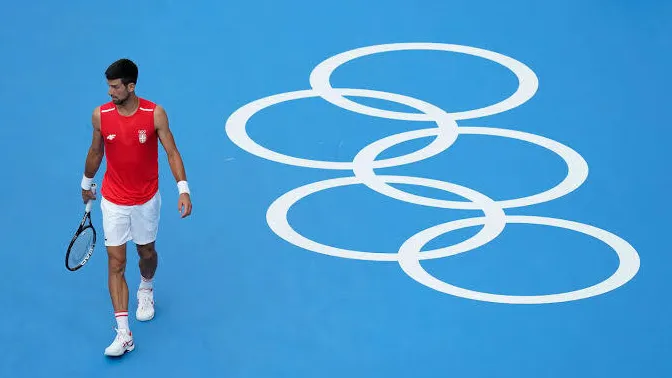 Olympics vs. Wimbledon: For the First Time, Tennis Stars May Have to ChooseThroughout tennis history, the Olympic Games have rarely competed with the Grand Slams.
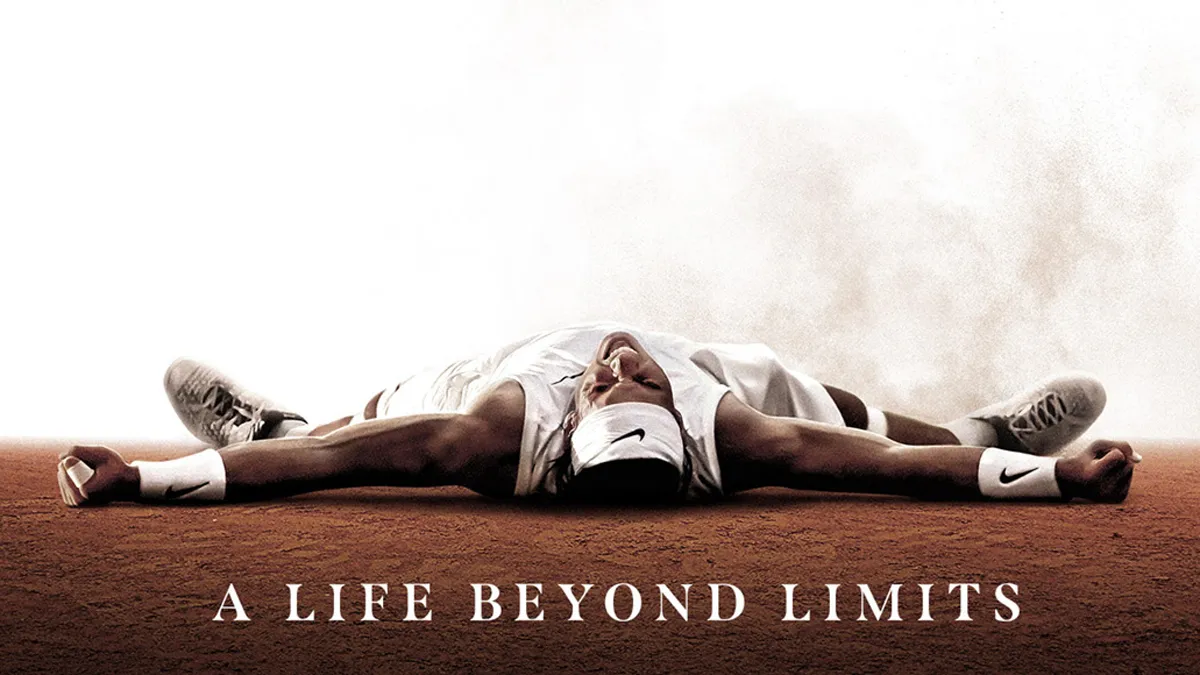 Rafa: The Documentary That Finally Shows Nadal Not as a Superhero, but as a Human BeingWhen sports icons make documentaries about themselves, audiences usually know exactly what to expect: archival victories, inspirational quotes, stories of overcoming adversity, and an obligatory triumphant ending.