Score: score unavailable
Участник
Участник
0.000.00
Before the start of French Open we look back at the success of Russian women's players in Paris.
One month before the start of the French Open, we look back at the successes of Russian women’s players in Paris.
For many Russian fans, tennis began on June 5, 2004. It was on that day, in the French Open final, that Anastasia Myskina and Elena Dementieva faced each other. Nastya won comfortably, 6–1, 6–2, claiming the first and only Grand Slam title of her career. She became a kind of Yuri Gagarin figure — the first Russian woman in history to win a singles title at a tournament of this category.
That match, however, might never have happened: in the fourth round, against compatriot Svetlana Kuznetsova, Myskina had to save a match point. It was the first all-Russian final at a Slam, and the first title match in 25 years between players who had never previously appeared in a major final. At the 1979 Australian Open, Barbara Jordan defeated Sharon Walsh. Russia became the fourth country in the Open Era to have both players in a Grand Slam final, after Australia, the United States and Belgium.
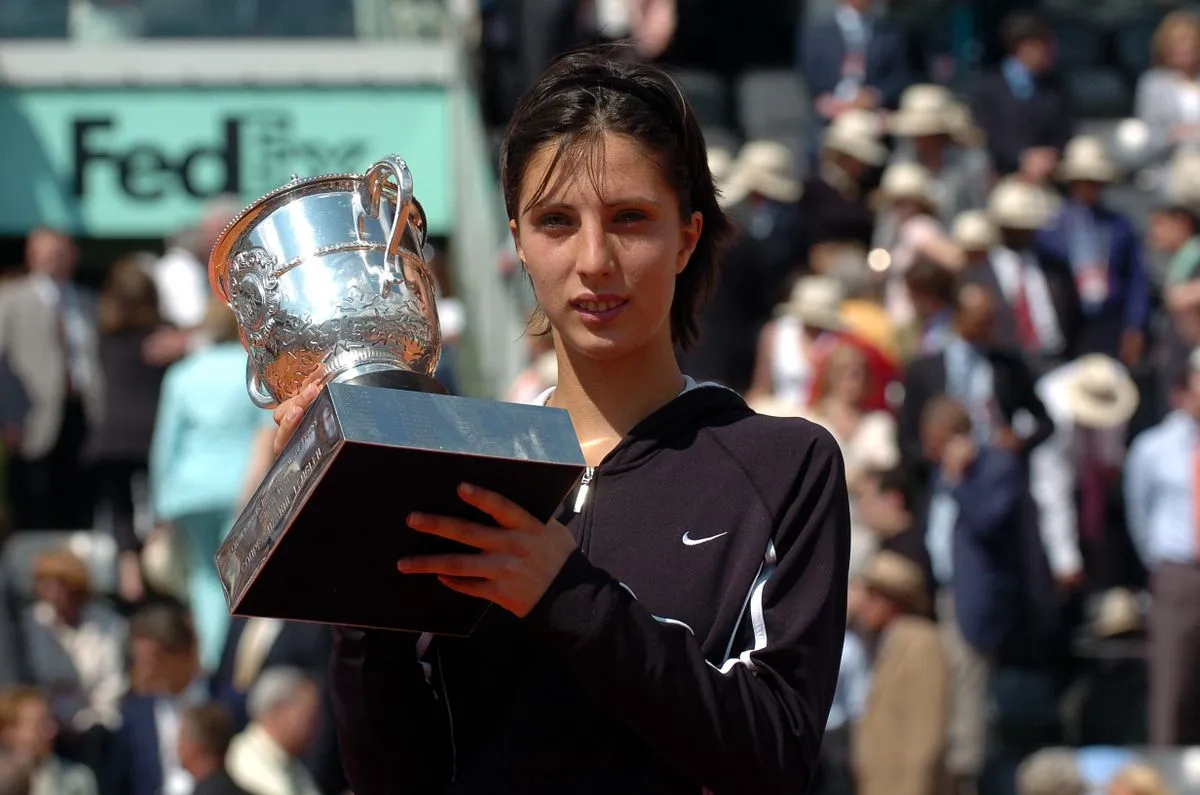
The very first women’s tournament at the French Open took place back in 1897, with only four women entered. For a time, the competition was open only to French players and foreigners who belonged to local tennis clubs. Sometimes, winning the title required little more than showing up on court. For example, Françoise Masson, better known as Adine Masson, and Hélène Prévost were the only players in the draw in 1898, 1899 and 1900.
In the 1920s, Suzanne Lenglen ruled these courts, winning six singles titles, including two at tournaments where foreign players were already allowed to compete. Several decades later, her name was given both to the trophy awarded to the women’s French Open champion and to the second-largest court at the Roland Garros stadium.
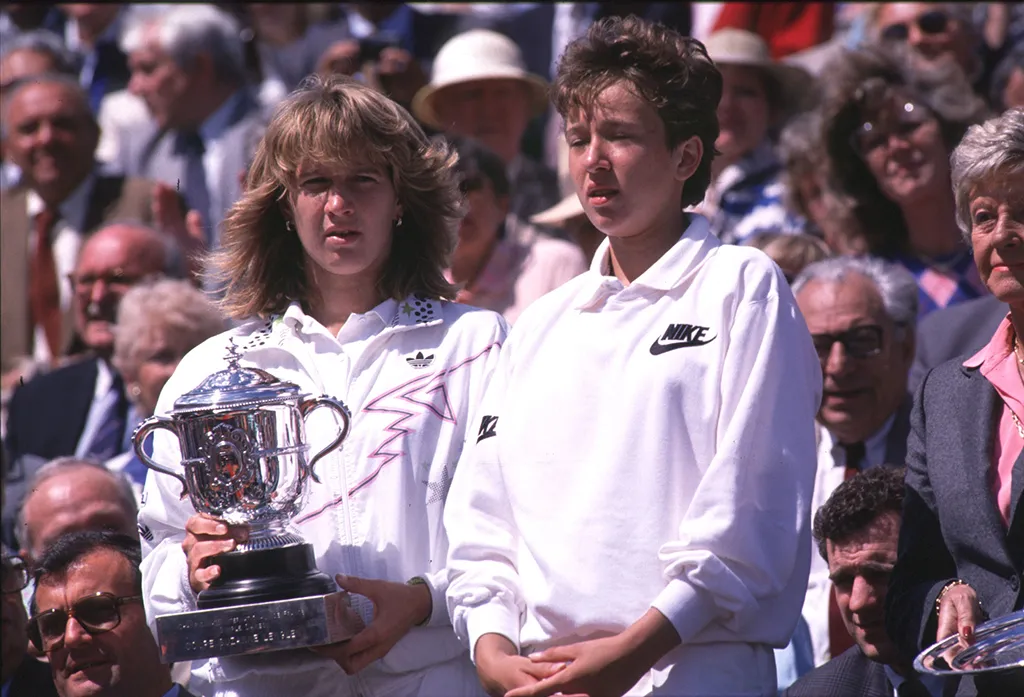
Myskina and Dementieva were not our first French Open finalists. In 1974, Muscovite Olga Morozova lost to American Chris Evert, who was then winning the first of her seven Paris trophies. Fourteen years later, Minsk-born Natasha Zvereva also fell short. The great German Steffi Graf did not allow her to win a single game on the way to her second of six titles in the French capital. But it is important to understand that in 1988, not even the Berlin Wall would have stopped Graf: that year, Steffi won every major and added Olympic gold in Seoul, completing the Golden Slam. She dealt with Natasha in 32 minutes, producing a 6–0, 6–0 Roland Garros final.
In the 21st century, Dinara Safina lost two finals in a row here: in 2008 to Serbia’s Ana Ivanovic, and in 2009 to compatriot Svetlana Kuznetsova. That second all-Russian final ended 6–4, 6–2. It was the logical conclusion to the entire clay-court season, during which Kuznetsova and Safina had also been battling each other, with alternating success, in the finals of the tournaments in Stuttgart and Rome. It is worth noting that before her triumph, Sveta had already lost one Roland Garros final. In 2006, she could do nothing against the then queen of clay, Justine Henin, losing 4–6, 4–6. The most recent Russian finalist at the French Open to date is Anastasia Pavlyuchenkova. In 2021, she lost in three sets to Czech player Barbora Krejcikova.
Maria Sharapova and clay did not fall in love straight away. The phrase about being a “cow on ice,” which the Russian used to describe her movement on the surface, is still brought up to this day. And yet four quarter-finals, two semi-finals, two titles — beating Sara Errani in 2012 and Simona Halep in 2014 — and one more losing final, against Serena Williams in 2013, amount to more than respectable career results at Roland Garros. It is telling that after her meldonium ban, Sharapova produced her best Grand Slam tennis precisely in Paris. In 2018, she lost in the quarter-finals to Garbiñe Muguruza. So even in professional sport, there can be only one step from hatred to love.
For the current generation of our players, challenging for the title, or even reaching the final in Paris, still looks fairly difficult. Other players are in fantastic form: First&Red ambassador Aryna Sabalenka and Elena Rybakina alone are enough to fill the two available places in the final. But beyond the clear leaders of the women’s tour, there is also the defending champion Coco Gauff and four-time Roland Garros winner Iga Swiatek, even if she is going through a far from simple period in her career.
If we look at Mirra Andreeva’s recent clay-court results — the title in Linz and the semi-final in Stuttgart — and at her performances on the Paris courts in general, then a small ray of hope can even be seen. The French Open is the most important Grand Slam of the still 18-year-old Russian’s career.
In 2024, she took care of Sabalenka in the quarter-finals, but had neither the emotions nor the strength left for the semi-final against Jasmine Paolini. Last year, by contrast, Mirra drowned in her emotions in the quarter-final against Lois Boisson, who was playing the tournament of her life. If Andreeva has taken anything at all from her last two appearances in Paris, then a run into the second week should happen again this time. And once you reach the decisive stages of a Slam, anything is possible. Roland Garros 2017 champion Jelena Ostapenko would not let you lie about that.