Score: score unavailable
Участник
Участник
0.000.00
The only upset of London major came out of the final.
Last year’s Wimbledon women’s draw proved just as unpredictable as the men’s. Four Top 10 players crashed out in the opening round: Coco Gauff (No. 2 seed), Jessica Pegula (No. 3), Zheng Qinwen (No. 5) and Paula Badosa (No. 9). The defeats of Gauff and Pegula made history. It was the first time in the Open Era that two of the tournament’s top three seeds had both fallen in the opening round of a Grand Slam. The defending champion didn’t survive long either. Barbora Krejčíková was stopped in the third round by Emma Navarro, who had reached the Wimbledon quarterfinals the year before.
Interestingly, the early exits of the previous three Wimbledon champions — Krejčíková, Markéta Vondroušová and Elena Rybakina — guaranteed that the tournament would crown a first-time Wimbledon champion. It marked the eighth consecutive year in which a new women’s singles champion was crowned at the All England Club. Even more remarkably, none of the players who reached the quarterfinals had ever previously appeared in a Wimbledon final — another first in the Open Era.
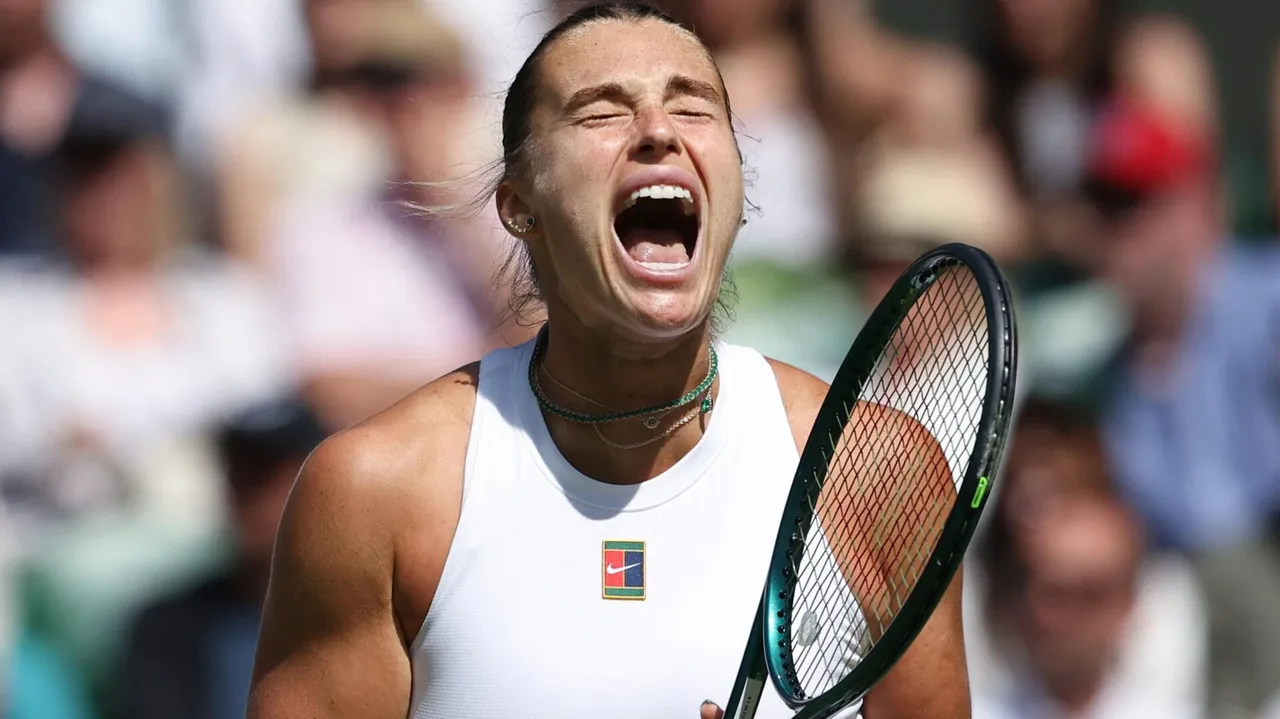
First&Red ambassadors Diana Shnaider and Aryna Sabalenka left London at different stages, but with similar disappointment. Shnaider suffered one of the biggest upsets of the opening week, losing in the second round to French qualifier Diane Parry. Wimbledon continues to be something of an unsolved puzzle for the Russian, who has yet to advance beyond the third round.
Sabalenka, meanwhile, came within one victory of reaching her first Wimbledon final but once again fell in the semifinals — the third time in her career she has exited at that stage. She was defeated in three sets by American Amanda Anisimova, whose family has Russian roots.
Several other breakthrough performances also stood out. Zeynep Sönmez became the first Turkish woman in the Open Era to reach the third round of a Grand Slam. Her run ended there with a straight-sets loss to Russia’s Ekaterina Alexandrova. Argentina’s Solana Sierra made history as the first women’s lucky loser in the Open Era to reach the fourth round at Wimbledon, and only the seventh woman ever to achieve the feat at any Grand Slam. Her campaign was ended by Germany’s Laura Siegemund. The tournament also marked the final Wimbledon appearance of former world No. 2 and two-time champion Petra Kvitová, who lost in the opening round to Emma Navarro.
Few would have predicted the championship match that eventually unfolded. For Iga Świątek, Wimbledon had long been the least successful major of her career. Across her previous five appearances, she had reached the quarterfinals only once, losing to Elina Svitolina in 2023. Amanda Anisimova had hardly enjoyed much more success in London. Before this run, her best result had been a quarterfinal appearance in 2022, where she lost to Simona Halep.
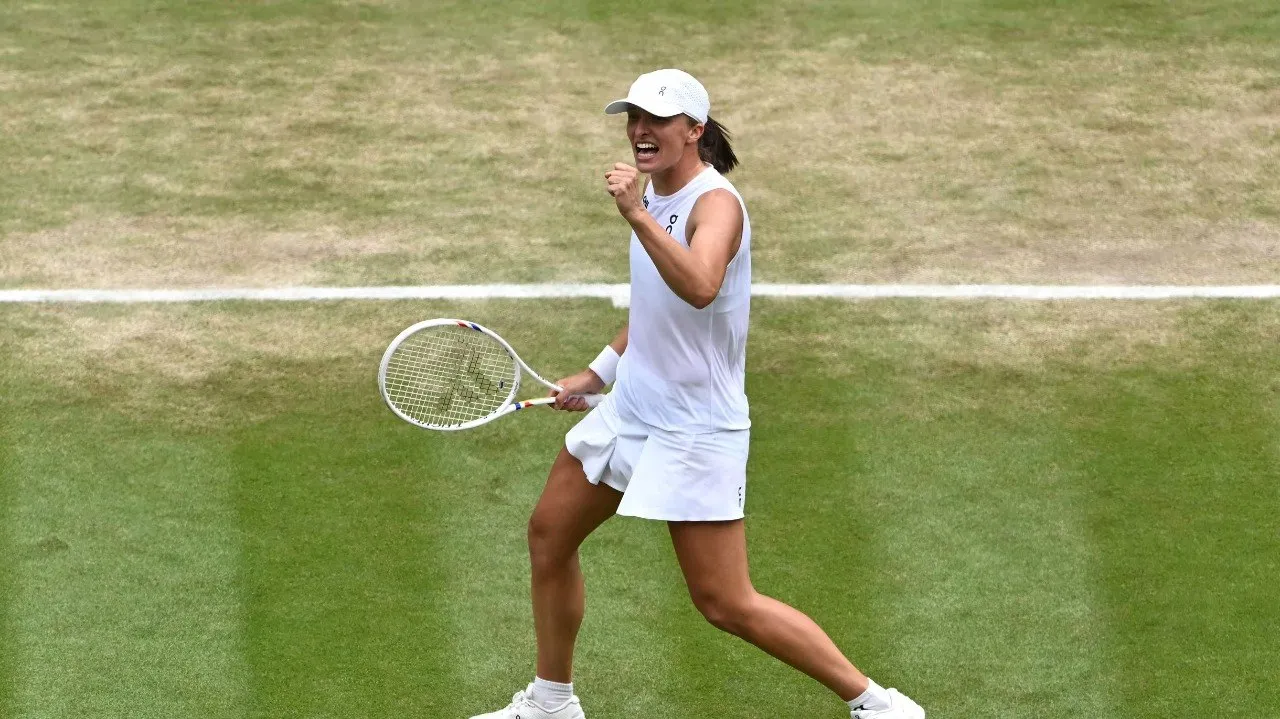
The final itself lasted just 57 minutes. Świątek dismantled Anisimova 6–0, 6–0 in one of the most one-sided Grand Slam finals ever played. It was the first major final to end with a double bagel since 1988, when Steffi Graf overwhelmed Natasha Zvereva at Roland Garros in just over half an hour. Overall, it became only the third Grand Slam singles final in history—and just the second in the Open Era—to finish without the runner-up winning a single game, following Wimbledon 1911 and Roland Garros 1988.
The victory gave Świątek her first Wimbledon title and sixth Grand Slam crown overall. She became the first Polish woman ever to win the Wimbledon singles championship. Świątek also joined an exclusive group as the eighth woman in the Open Era to win Grand Slam singles titles on all three surfaces: clay, grass and hard courts. In addition, she became only the fifth woman overall—and the fourth in the Open Era after Ann Jones, Martina Hingis, Amélie Mauresmo and Ashleigh Barty — to capture both the junior and senior Wimbledon singles titles.
The short transition between Roland Garros and Wimbledon leaves players with very little room to adapt. The switch from clay to grass remains one of the most difficult challenges in tennis, and even the warm-up tournaments rarely provide a reliable indication of who will peak in London. Yet when Wimbledon returns, the same names will once again dominate the conversation: Świątek, Sabalenka, Svitolina, Roland Garros champion Mirra Andreeva and Rybakina.
Elena, in fact, has another opportunity to challenge Sabalenka for the world No. 1 ranking. To keep those hopes alive, she will need to reach at least the quarterfinals. The problem is that her recent performances have given supporters of the 2022 Wimbledon champion little reason for optimism.