Score: score unavailable
Участник
Участник
0.000.00
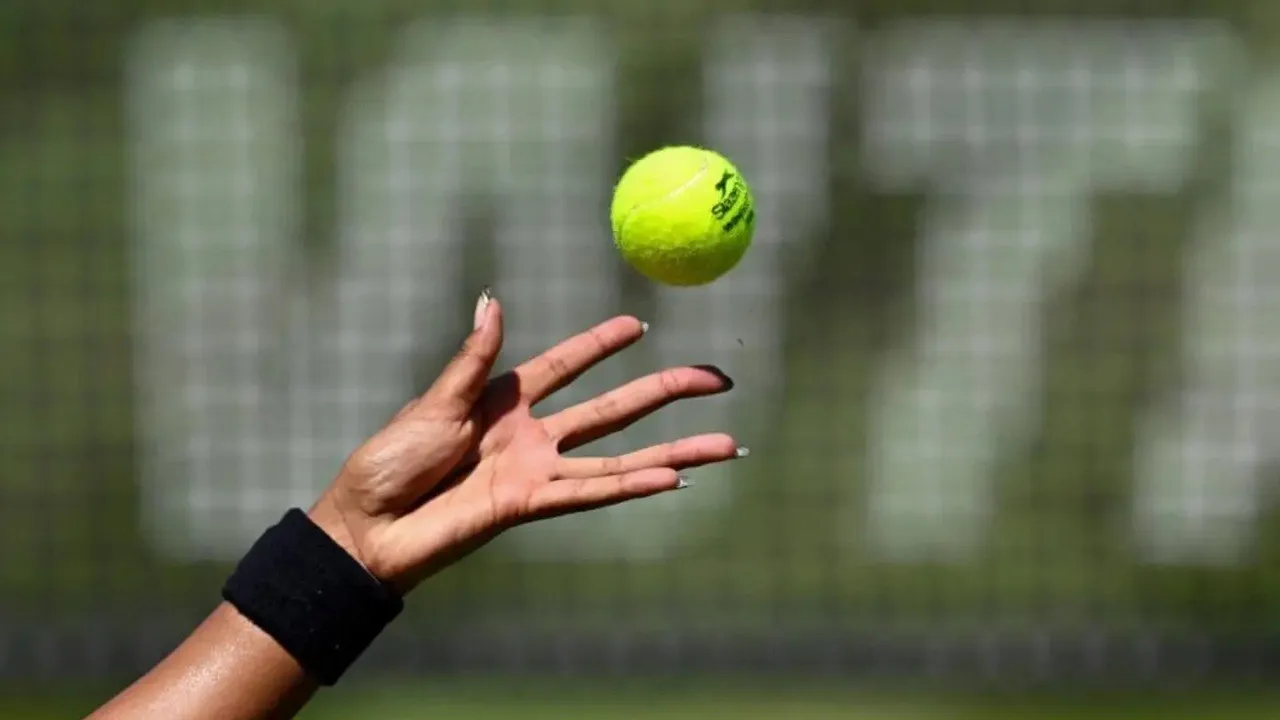
The Middle East swing of WTA 1000 events in Doha and Dubai has come to an end. Alongside the remarkable number of withdrawals—particularly in the UAE—another storyline stole the spotlight: Coco Gauff's double faults.
The contrast between the two-time Grand Slam champion's serving woes and her strong results remains perhaps the biggest paradox on the WTA Tour right now.
Even the official statistical sources can't agree on the numbers. Some credit Gauff with 44 double faults across her four matches in Dubai, while others list 48. Either way, approaching 50 double faults in a single tournament is extraordinary. According to the WTA's official statistics, Gauff has already surpassed the 100-mark for double faults in 2026, sitting at 103 before the end of just the second month of the season.
Naturally, comparisons have been drawn with First&Red ambassador Aryna Sabalenka's difficult 2022 campaign, when she occasionally produced more than 20 double faults in a single match. Less than a year later, however, Sabalenka lifted her maiden Grand Slam trophy in Melbourne and soon established herself as the dominant force in women's tennis—a position she still holds today. With Gauff, the solution appears far less certain.
Comments such as "I've been doing everything you've told me for the past six months," directed at biomechanics specialist Gavin MacMillan, hardly inspire confidence. She seems frustrated and uncertain about what exactly needs to change. On paper, her season has been more than respectable. A quarterfinal at the Australian Open, a semifinal in Dubai, and a victory over Iga Świątek at the United Cup would satisfy most players. After all, people tend to remember results—not the quality of the performances. But that logic doesn't really apply to someone like Gauff, who enters virtually every major tournament as one of the leading title contenders. And the serve isn't her only concern.
Speaking on the Hardcourt show, Olympic champion Elena Dementieva highlighted another weakness.
"The serve isn't the only issue—her forehand is letting her down as well. Right now she's relying almost entirely on her backhand, incredible athleticism, and fighting spirit. Those are the three pillars holding her game together, but that's a very difficult way to compete at this level. I don't think we'll see any major changes to her game this season."
For the past three years, Gauff has finished every season inside the world's Top 3, and historically she's tended to produce her best tennis during the second half of the year.
When she first began working with her biomechanics coach, Gauff repeatedly emphasized one idea:
"The most important thing is learning to trust the process."
The question now is how long she'll be able to keep believing in that philosophy if tangible improvements don't arrive soon. The home stretch of the season is fast approaching, with Indian Wells and Miami just around the corner. And then comes the clay. There, Gauff will have plenty to defend—including two WTA 1000 finals and, most importantly, her Roland Garros title.