Match Center
Back to videos

First&Tour: Andrey Vasilevskiy

First&Tour

On the final episode of First&Tour Pavel Kisliy sits down with Aryna Sabalenka's manager Andrey Vasilevskiy. The segment uncovers Vasilevskiy's career trajectory, beginning in juniors and leading to his involvement with Aryna's team. They further discuss his transition from a sparring partner into a managerial capacity, the intricacies of his job, Aryna's training partners, and how often brands make contact with them.
Duration
Family friendly
Yes

Transcript

Tennis to all. This is Pavel Kislyi. You are on the First and Rad channel. And with me is Andrey Vasilevsky. Until recently, Arina Sabalenka’s sparring partner, and today she is already her main manager. Today Andrey and I will take a walk around Melbourne and try those famous and much talked about Ogberi osai boolula. Andrey will take me there and show me how to eat them properly . We'll take a walk back and forth and, of course, we'll talk with Andrey about his new, let's say, position. I know your parents personally. Ekaterina Viktorovna, Alexander Dmitrievich. Just wonderful people. And they are your coaches, they are currently active coaches who work in Minsk. And it was like, you know, you had no choice, yeah. But still, tell us how you came to tennis, tell us your whole path, your achievements. Because you have them. Let's. Well, listen, I started playing tennis when I was probably 7 years old. Although my dad was already training at that time. And I remember, all the time the little one would go to bed in the morning, and he would say: "Dad, I want to go play with you too." He says, "Well, you have to wake up early. Are you ready?" I'm like, "Yeah, yeah, yeah, that's it, right, let's go." And from that moment on, I somehow went with my dad, just came to training, watched how he trained the children there. Yeah. And you were number one in Belarus at one time. You have won international tournaments. Please tell us about your achievements. Oh, number one. That's putting it so strongly. Yes, until I was 14, probably, yes, there was me plus Vova Krug, there was someone else, Gleb Panov, we all played. Ah, well yes, there was something about it in Europe, and now it seems like a conversation is starting about a failed athlete. But in reality there was something to be proud of, of course, and I had a good career, maybe not so productive in singles, but in doubles we showed quite a lot of good results and played in the Davis Cup. What title are you most proud of? I can already see how Arina will watch this and laugh and say that I don’t care about the results either. No, well, we don’t compare, right. Yes. No, well, for me, probably the biggest achievement was the quarter-finals of Umbaldon. It was the year 2000 nineteen. Are you a couple? Yes. Yes, yes . This is in pairs. Here with Hans Podlipnik and with Chile. We played there for t-t years, showed some good results, reached a rating of, I think, somewhere around 50, plus or minus. Well, and so the career continued for several years. And so, after 5 years, yes, after that I ended up as a member of the team. Today, by the way, it’s probably not a record heat wave for Australia, but it’s certainly noticeable for the players . 38° right now in the sun, on the court. So it’s generally plus45 there, probably because the heart raises this heat. They say, "Let's go, the car will run us over now and the video will end." Here. Because, yes, uh, the cord heats up and gives off a little more heat from the court. Yes. Oh, and by the way, they just , uh, they've got this trick where they stop matches because it's too hot, and they have four or five indicators that they use to determine when it's too hot. The first is simply temperature. The second is the temperature on the court. There are sensors on each court, and it determines the temperature. Then humidity. And some other one, I don’t remember. And, generally speaking, when it's summed up, there is a scale, I don't know what it's called. If, when summed up, it exceeds five points, then they close the courts in the arenas , and on the open courts, they, oh, in the arenas they close the roof, and on the open courts they simply stop playing altogether, because it’s too hot. Andrey, please tell us how you joined Karina’s team. Oh, it was twenty- two, I think. Yes, twenty-second year. I was at some tournament, and after it I had such a gap that there were no tournaments there for some time. It's like I'm stuck somewhere. I write to Arina: "Listen, Arin, well, well , well. Don't you need to, well, let's say, play there, get yourself some sparring for a while?" I wrote: "Myself." asked. Yes. Arina sent me to Anton and said something like, well, they’ll talk. I asked Anton, and he was like, "Well, come over." Initially, it was planned that everything would be possible for some American series, in Individual Wells and Miami. Ah, but I was still playing at that time. At that time, my rating was still 70, so I was still an active player. Yes. Yes. Let 's go left. Current player. Yes, yes . And, but this, in fact, if we talk about this, then the doubles is that I played doubles, doubles - this is something, Anton likes to talk about this, we’ll leave it to him. But a doubles tour is quite a tough one because you travel a lot, you do all the same things as players, well, singles skaters, but at the same time you don’t earn that much money, you can’t afford to take a team. Just imagine, if you are worth 70 or 80, then you don’t get into big tournaments. You won't get into the masters. There are some 250k, yes, you play, you have a couple of chances, but everything else is challengers. Yes. And at the moment when I started going to challengers, I was in France, and there was some small tournament just in a village, and at that time I was already , well, closer to 30-30 years old, I just asked myself: “Well, why do you continue to do this?” Because it’s clear that, uh, when you travel, you have a team, it’s all super, cool, you have fun, you have some kind of common goal, but when you travel on your own and you’re there every day, every tournament you live in the same room, and yes, you play a couple with someone, but there’s no way out that you feel like you’re earning a living. Therefore, at some point, it wasn’t just some financial part or something, but there was also a very strong mental burnout , because imagine, you have to travel all year round, and you’re alone all the time, always in the room, so Yes, I came to this point, it was already boiling over. It's not like when I wrote to Arena, it was already a cumulative effect, yes, it was a cumulative effect, because the life of tennis players who are not top, especially doubles, well, it's very difficult, in fact. Yes, I understand. You had the role of sparring, now you have the role of manager. Your place was taken by Yaroslav Shila, right? Tell us about this transition, how it happened, because, well, as I know, you combined for some period, that is, the role of manager and sparring. Now you are already fully developed. How does this happen? Well, as I said, when I came to the team, I asked myself the question: “How can I be as useful as possible for Arina, for the team?” Because I understood that she was a very good athlete. Eh, well, here is a tennis player who had already achieved very decent results there at that time. And I, uh, wanted to understand how I could be useful in order to somehow improve what already exists . And Anton and I also talked a lot about this topic at that time, at that time, more precisely. And Anton says that things didn’t work out very well in terms of, oh, our guys there, in terms of management with agents, she had some disagreements there. They didn't provide the service she wanted. Yes. And, well, it was like at that moment, that is, I started to, well, help a little, find out a little about what was going on there, how they worked with her. Ah, well, and I’m kind of interested in why this is, because all my life, like, for me it’s been , well, like that. I always conducted all these negotiations for myself there. Well, I had agents there, of course, but I still always did everything myself. And basically, well, for me it was always important and interesting to be in this area of management, where you help, negotiate something, well, create conditions where there are conditions of maximum comfort. And, well, and so, little by little, little by little, I began to help Arina a little more in terms of management. And then, well, I still kept playing. And this continued there for three years. This is so important for us , it’s very important to create comfort around Arina, so that she doesn’t think about anything except tennis. Because as soon as you start thinking: “Okay, what should I do there in another area, what should I do, uh, let’s say, well, anywhere, there’s an organization, there’s hotels, flights, there’s communication with some brands.” Because, well, as you can see, Avarin has a lot of agreements now and, well, imagine how much time all this takes. And that's why, that is, we always communicate with brands. Separately, we also have Carly and Stu. These are Arina's agents. And we always keep in touch with them. And we only involve Arina at the most necessary moments, when everything, as they say, is already on a silver platter. To understand, last year, at the beginning of last year, Arina signed an agreement with Evo. Yes. Yes. I moved to this agency, that is, right before the Australian Open. Here. And it turns out that EVL is found, right? uh, contracts, agreements, and you manage all of this and No, not quite, not quite like that. Look, everything was like this: Rina was unhappy with AMG, and that’s why we knew that she wouldn’t renew her contract. And I had a period of, roughly speaking, six months to find someone who could really work well and find a good contract and represent Arina. That is, the person who represents Arina must have good skills in, well, how to conduct and position herself during negotiations , and negotiate the most favorable conditions. I had six months to find someone who could really help. And I met with many agencies, and so many, you know how it works in the agency business, that you start meeting with someone and they start promising you with any company, what are you talking about, they say, these are the contracts, we work with such and such brands, we will give all these contracts to Arina, she will earn an incredible amount of money there. Just subscribe with us and everything will be great for you. Yes. As soon as people came to me and said phrases like these, I just, well, that was a red flag. And that means we don’t work with these companies. Why did we start working with STU? Before we all met together with Arina, I also had two meetings with him. And just to understand his vision. Yes. How does he see, for example, Arina, how he can develop. And what, well, I liked is that he didn’t promise me anything . He didn't promise me. He says, "I know." Well, at that time he had Kyrgios and Osaka, yes, and he built this whole business for them. Well, not quite from scratch, relatively speaking, yes. Yeah. Well, it's just that they seemed to be with Naomi in the beginning. Yes. Yes. He was also with Nami at AMG, then later Naomi was never a founder . And it never was. That is, this is actually such a feature, because everyone is talking about it, that this is Naomi Asaka’s agency. Yes. This is what everyone wrote in the supposedly official tennis media. Everywhere. Everywhere. Well, because people don't know the information. People don't know the information. And yet it was positioned like this. I don’t know why, but there have never been any promotions in Naumi , as far as I know. So, like, it's exclusively an agency, well, Styuk. And so, before we had the meeting, uh, the three of us, where I was, Arina Istyu, that is, I also had a meeting with him, well, I met twice, two or three times, and he told me why we chose him, because he didn’t promise me anything. He simply explained about his business with Naomi, how they do it. They look at things a little differently. I always told Arina that you need a more individual approach in terms of marketing, in terms of business positioning, in terms of which brands you work with, what direction you want to work in. And so, well, yes, we came to the point where we started working with STU, because I liked his vision. Can you list all the agreements that we all know about, a list of Arina's sponsors and partners? Oh, well, now, of course, we have signed two of the most high-profile ones, which we worked on for a long time, because any deal that needs to be concluded takes a decent amount of time, negotiations, understanding that somewhere up to a year or even more, well, less, less than a year, but less, yes. Well, somewhere plus or minus, that's how it is. And you kind of have to find that middle ground where it will be beneficial for both the company and the player. That is, we always say to all brands that we are not we, not you, not you are our sponsors, you are our partners. That is, we are always looking for ways to be as useful as possible for the brand. Yes. Well, in the end, if you just received some kind of fee there and are simply fulfilling your obligations, then it’s, well, it’s called sponsorship. And if it’s a partnership, this is where you’re already looking for the moment and options where you can be useful for the company. Yes. So, let's get back to brands. We, of course, signed Emirates, which is really cool. This is Emirates' first deal for tennis players. They had no other agreements before. Then, just a couple of days ago, we announced Gucci, which is also simply incredible. I feel so proud when I see, let's say, we went to a photo shoot there, I see Arina doing a photo shoot, it's for Gucci, and you understand that, damn, where we started, even from the moment I started helping as a manager and where we are now, well, it's just night and day. That is, it is clear that everything basic, uh, everything that she is receiving now, this is happening because she plays tennis well, but at the same time, the right brand, brand positioning, it also seems to have a place to be. But we also talked a lot about this topic with Arina, and with Jason, and with Anton, that is, we always explain to Arina that everything you have besides tennis is only thanks to the fact that you show excellent results and you... It's all interconnected. And so if there's no tennis, then naturally brands won't be as interested. How many offers do you receive that you just immediately accept? Well, at first, perhaps, you were still like that, maybe, but now, well, when we have such a level, of course, yes, the most precious thing is that we have this Arinino time, because you understand that having 8-10 sponsors there, you must understand that each of them will ask for something, each of them will need to do something. Yes. And the most expensive thing is time, because we can’t, for example, guarantee that we’ll do three photo sessions there in one week for 8 hours. This can't be. Well, and how else can I say this, Rina is actually a unique person in this regard, because when we were doing it, and every week before the helmet, you do some kind of events. Let's say in New York this year we had an event every evening . We did two training sessions, plus every evening we had an event, we had Electrolyte, we had Double Tequila at that time, we had more later, ah, with a hotel. And so, well, every evening we had some kind of activity, yes, some kind of activity. And it's all energy. It's all energy. And you know, I’m like, well, I’m always present with her. And then one day she probably, well, to be honest, probably stood there for an hour , that is, everyone came up to her and took pictures. Those who were at the event. Wow. You just stand there for an hour and take pictures. And this was after two workouts and a little fitness. Everyone needs this. This is not a week. And then we arrive, get into the car, and I sit down, I’m just tired, I’m like: “I can’t, Irina.” Well, today wasn't too hard. I'm like, "How, how do you do this?" You started talking about some other team. Yes. Is this a team of managers or is it a team of agents, PR people? Well, look what kind of team this is. When we first started working with Arina, Arina managed her Instagram entirely by herself . At that time, she had, I think, 300 or 1,400 million. And I said: “Well, damn, we need, well, a social media team.” That is, and we started, uh, looking, that is, we took several agencies. And again, it’s all my job to find a team that will be suitable. We changed three or four social media agencies there, and then the ones that suited us. This is an international agency. Yes, yes, of course. It is an international agency that is currently based in America. And with all this, well, how can you keep track of this, it’s impossible to keep track of this. That's why we have a separate team, which, in fact, without them, I think, could simply collapse. They help us a lot in terms of providing all the obligations for brands. And this team also needs to be selected, because not all of them specialize in precisely this and cannot work with tennis players, because it is, well, how can this be separately, it is completely different. You need to understand that if they work with, say, Hollywood stars, then they have the same schedule. Tennis players have a completely different schedule. Yes. And so, well, it also took us time to find a good team. We changed the team there two or three times, I don’t remember exactly, so that there would be people who could really help us. Then social media, then PR. PR is also the people who are looking for photo shoots with magazines for Arina. Yes. There are photo sessions, uh, some big interviews. That is, let's say, in order to, well, here's the simplest example, let's say, in order to be able to make some kind of cover, you have to plan it at least six months in advance. That is, it’s not like you come and are like: “Oh, that’s it, we’ll put you on the cover.” That is, uh, well, it’s clear that Wok is like the highest level, but other stores are too. It is necessary to constantly conduct conversations and negotiations about how to, for example, put Arina on these covers, in stores and magazines. And this too, like, you know, the team also has to be very, very good. So, well, what I’ve been doing over the last 3 years is creating a team around Arina. That is, for me, well, fortunately for me, I have good assistants there who have been through all this. It’s there, well, my friend is alone, and he, uh, he was just heading towards me, and I continued talking and, well, we made some decisions together with Oriny. You can think about it right now, how to name the number of people who work, well, I don’t want to speak about Arina, but who work with her, who help her, in principle, to exist in such a difficult rhythm. Well, it’s hard to say who is the world’s number one player, but I would say somewhere around 20-3 people. 20-thirty people. Well, if we take, for example, a social media team, then they have a team of four people who work only with us . Yes. Not only with us, but also with others, but these four are our team. Yes. Then PR is the same thing, that is, even just PR, they have five or six people working there. That is, well, very, very big. That is, Arina, imagine it as a huge company in which everything must be well organized in order to exist. Just because, well, you just can't cope if you're on your own, or you have a couple of other helpers, you can't cope with all of this and still continue to play tennis. That is the main topic. And Arina, she’s a huge professional, and that’s why we try to make sure she concentrates on tennis, so that she doesn’t even need to know about these things, about some things, for example . And we approached Okbera, we found this point. Now we'll see, we'll see. If, of course, they find out about us, we will get it for free, but if not, we will not get it for free. Okay, let's do it now. Damn, well with a camera, of course, you can pour. I'll just show you a little bit. Yeah . Then we add a little bit of pistach. Pistachio butter. Yeah . And more and a little bit of peanut butter and bs 29 Australian dollars, that's 56 Belarusian dollars in ours. In Russian, you 'll be scared right now. No, I think there were more, to be honest. More, yes. And all this is one. This one is worth it, guys. Here is one standing. We'll take the check, and then we'll just give the check to Georgis. Two Russian Russian 15. Here. Yes. 48. This means for one piece. For one piece. Well, in short, 112 Belarusian rubles, damn. Or 3,000 Russian rubles. Well, it's not cheap. Well, apparently, there are ingredients, protein, pistachio cream. In general, pistachios are expensive everywhere. Yes. So, at what point did this breakthrough happen? That is, when all the offers came in, the sponsors kept writing, writing, when all the lines simply broke, when the servers were all. There was no such thing. This has never happened before. It’s all like, you understand that, let’s say, we already have ours ready. And you understand that, like, look, in order to... Okay, let's do it later. Let's. Oops. Very fast. Here they are. Well, damn, he's just cold. Anton told me that they make it a little more frozen than usual. And it takes 5 minutes for it to melt. Oh, sorry. Otherwise, otherwise my brain will freeze. Oh, that's it. Wow. Wait, where? Why not? But there is one who speaks. Here. Let's. Close. Oh, this is pistachio cream. Yes, yes, yes. That's it, we'll take a photo now and show it to you later. That's it , we've had a snack. We took the ogre. Okbori villages. Yes. While we were sitting in Ogbor, I posted a photo on Instagram. J Joe saw this and called me. He says: "Andrey, bring me some too, please." And here we are bringing special delivries. Fine. Well, we need to hurry up so that, well , more or less, so that, yes, because every time you order online, they don’t do it the way we like, but only in the store. And that's why they asked me about it. So we're taking it to George now. Are you talking about Ogrizha? We offer special delivery. Awesome. I forgot to check with you. You said that you are a manager and SQ is an agent. Yes. Please tell me, what is the difference between the work of an agent and a manager? The difference is that Stuhl deals exclusively with business matters. That is, everything has to do with contracts, uh, communication with the brand, and he, well, that is, he only does this part, and he does it well. My job is a bit broader , because I also do a lot of organizational work, in terms of, well, you could even say, being a comfort manager for Arina, because every time, let's say, the simplest example here in Australia, they couldn't figure out the transportation. Arina can't . She has become so popular lately. Oh no, it's still red. You're about to get crushed, just wait. It has become so popular lately that she can hardly go to public places at all, where she can't even go out and just walk around, because people will start to just, well, really run up to her, take pictures, yes. And so here at the hotel we, I arranged for her to be picked up from the garage downstairs. Yeah. But, uh, drivers don't always know. And this is just another extension of my work, that I have to meet the driver every time and explain to him how to get there, because they don’t know how to get to the garage. And every time I leave 15 minutes early and just wait until I explain to the driver that I need to come exactly there, so that a situation doesn’t arise where Arina goes out, uh, into the garage and, well, the car is gone. That is why these are also such moments. It’s all these little things that make, well, not a big difference, but they really help with comfort. So what was our question there? And the question was, yes, what is the difference between the work of an agent and a manager? You answered, is everything clear? Well , as I know, you also don’t train at these practices that are on the territory of Melburg Park. You train like this too . far away from everyone. I don’t know if these are private courts, or if someone else might play there at the same time, like amateurs or, I don’t know, train, but you also go elsewhere to train. Well, it's not entirely different. It’s just that if we train on the main courts, then again, a lot of people will gather there. And, damn, well, sometimes I just want some privacy, because Yeah. It is clear that where we train, it is the same. This is the same Australian Open. These are just practice courts. Yes. And, well, somehow we are just in a different place, yes, and there are a lot of people there, there are fewer people there, yes. I want to have a quick blitz with you. There are a couple of questions, just answer them briefly, and then that's it , I'll let you go. And the contact in your phone that you are most proud of, or which you just think about and it simply amazes you. Damn, I have this person's contact information. Arina Sobolenko. Fine. This is number one. Let's have two more then, in which you can write and communicate with him. Well, it could be a sports superstar or maybe a Hollywood one. Anton Dubrov and Yaroslav Shilov. Yes. Okay, everything is written down. And what is your favorite Grand Slam tournament, personally? I would personally say that for me he was a don. Fine. And my favorite city on the tour is Rome. Very tasty food and old town. And what was the most delicious place you visited while on tour? Triluza Tavern. The time is the same. What's the first thing you absolutely must do when you get to a Grand Slam tournament? watch as many matches as possible if you're coming as a spectator, and if you're coming as a player, prepare for the tournament. Fine. Let's go over the team now. What is Jason Stace's strength? Oh, you can't answer that quickly. Jason is actually a really cool person, a psychologist, and he knows a lot about training and how to get an athlete into a state where he can show his best results. What is Yaroslav Shila's strength? He sleeps after lunch. What is the power? Ah, yes, but he sleeps after lunch. Fine. What is Max Mirny's strength? Max. Max is what Max is - he is a legend. He brought in a lot of new things and some of the points that he explains as a tennis player are very necessary and useful for our team. What is Anton Dubrov's strength? Oh, Anton, it’s really hard to put it briefly here , but we’ve been working with Anton for almost 3 or 4 years now. And every time I am amazed by the professionalism that stands behind each team member, especially Anton. That is, he is the kind of person who won’t hang out with you there a lot, take walks, but on the contrary, he will go and prepare for something that is important for the team and his strength in the organization, I would say. What is your strength? Oh, not me. My strength is that I make everyone laugh and everyone still loves to laugh and joke around. Therefore, when there is positivity and a relaxation of this situation, whatever it may be, I send this to the team now, it is always good in any case. And what is Rina Sabalenka’s strength? But if we're being completely serious, we'll say that her main strength is in her discipline and how much she wants to achieve something. And no matter what obstacles you have, or a bad mood, or poor health, she always goes out and does what she has to do. This is her greatest strength. And, well, the second thing is, of course, that she has all our passports, and we can’t even do anything about it. She says: "That's it, guys, fly with me and nothing further." Andrey, thank you very much for the interview. I wish the whole team, and of course, Arina in particular, a successful performance in the second week of the Austroinop. We will root for you, we will worry about you. That's it, we're keeping our fingers crossed for you. Thank you. Thank you, Nek. Great interview. Thank you. Yes. เฮ

No comments yet.

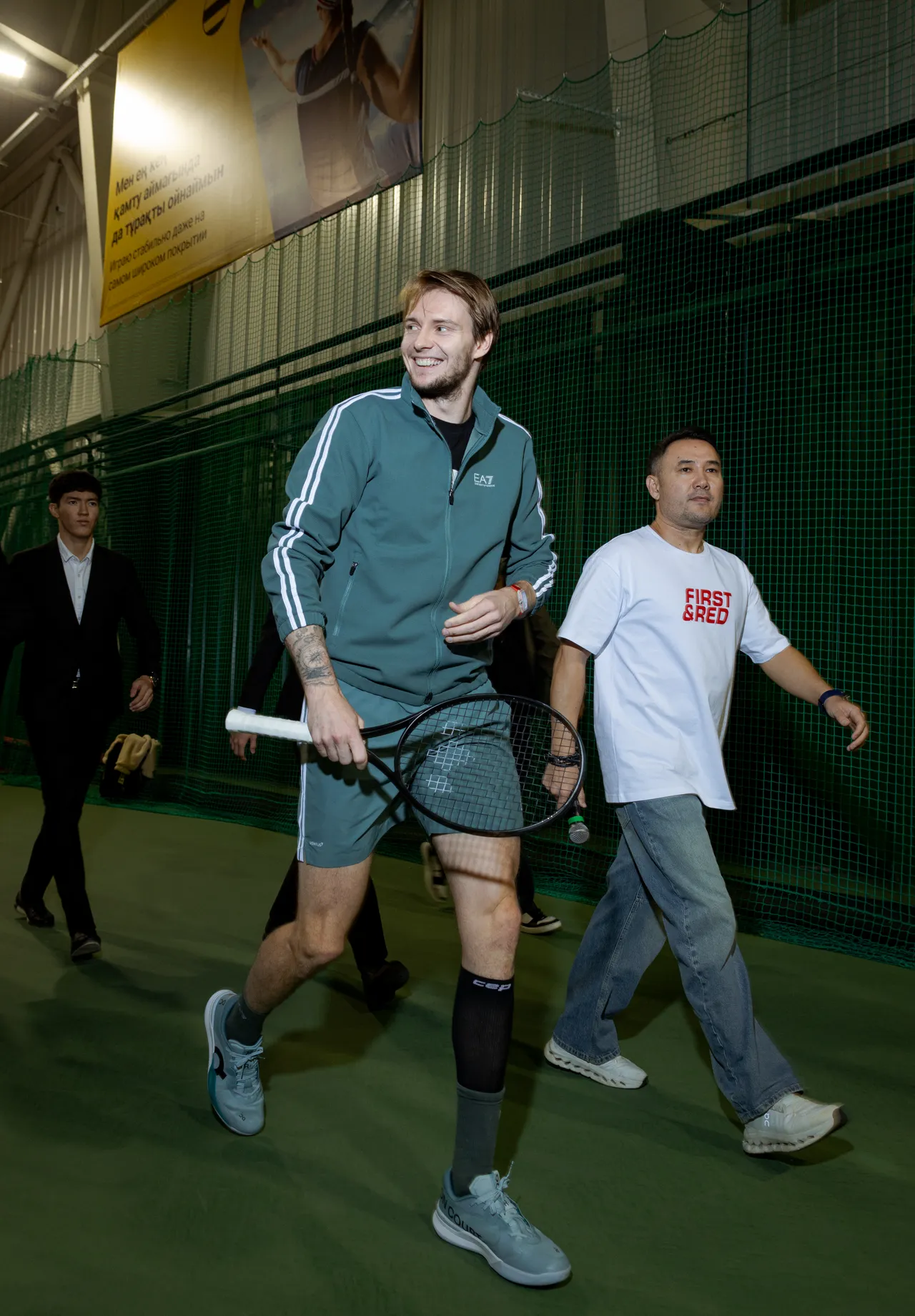
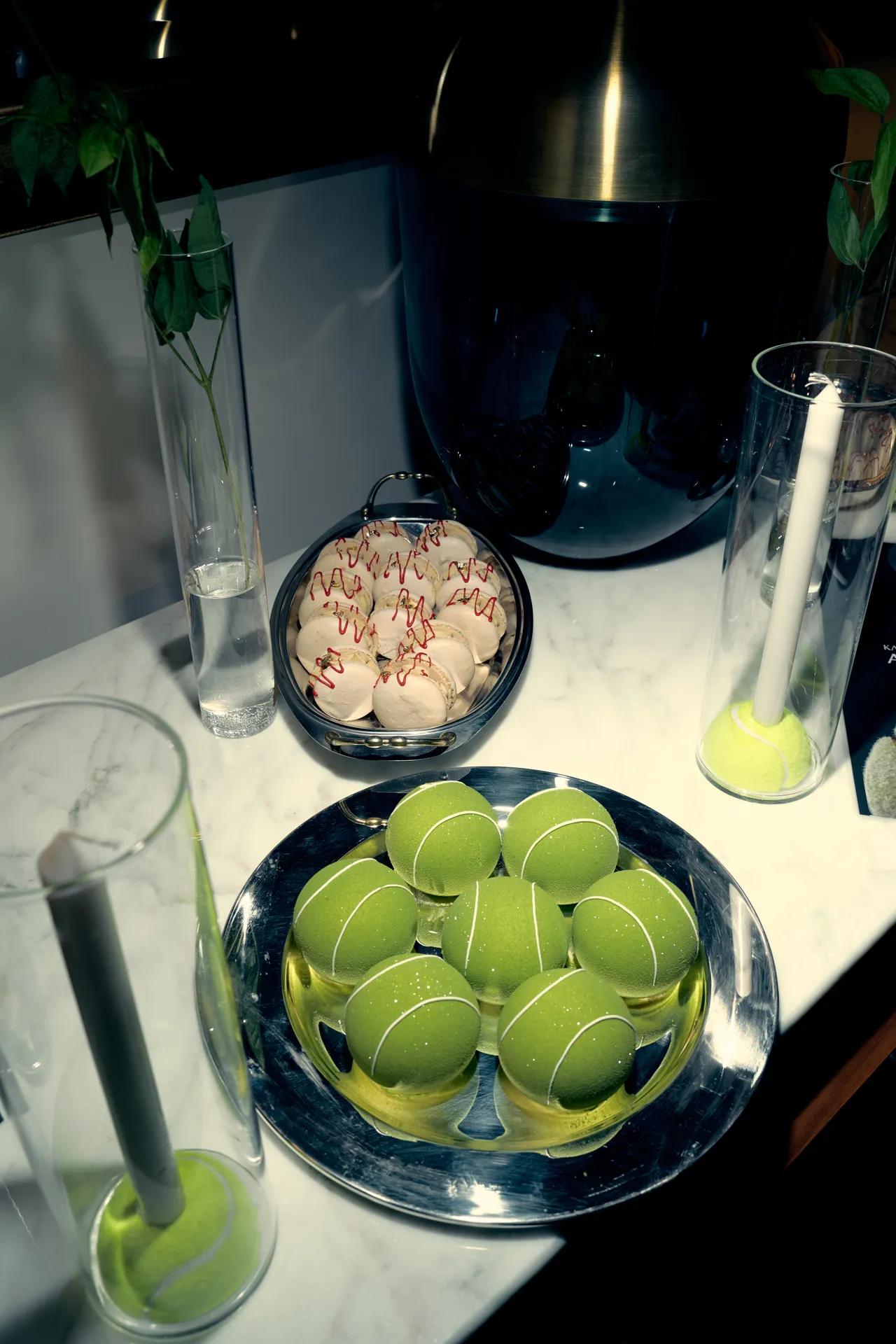
угощения на мероприятии First&RedAlexander Bublik at FONBASEKaren Khachanov at the First & Red event with fans and mediaAlexander Bublik is First&Red ambassador
All photos