Match Center
Back to videos

First&Tour: Anton Dubrov

First&Tour

On the new episode of First&Tour, Pavel Kislyi meets Aryna Sabalenka's coach, Anton Dubrov 
Duration
Family friendly
Yes

Transcript

Hello. Anton and I came to the establishment. What is this anyway? It's fast food, but more or less healthy fast food. Grill. Grill. And are we going to try a healthy burger now or are we going to try? We won't. Let's eat. Yeah. The burger is okay. Full-fledged. He who eats well works well. Right. He has an appetite. Thank you. [music] [music] Do you have any favorite burgers around here? Uh, I like the regular one that they have , I think it's called, [music] I think it's called Original or Simply Simply Grill, I think it's called. Ah, but they have different types of buns to choose from. Cool. And it is possible, well, like everywhere else, you can change, change Fido, but I usually go the classic way. Here you take Simply. Simply by weight, there are, yes, 2,500 calories. These are kilojoules. A, divide by approximately four to get calories. Yes. Here's life for you. Can we get one simply grilled sweet potato? Right. We have chips. And also can we get a cambucha wildberry? How much is it? 53. Normal. 53 Australian dollars. So, we've picked up our burgers and are now going to sit down. It's empty here because in Australia everything closes at five. Everything closes at five, six at the most. First of all, the sauce is incredible, so we're just going to get the tomato sauce right now. Unpacking, bli. Secondly, the potatoes are simply incredibly tasty . Oh, so they give it in the kit. Yes, I ordered it. This is your Simpm. So, this is my Simply the best. Come on. Oh well, it looks good. He looks very, very simple. Which one did you take for yourself? This is mushar and peak. Here I have a little more of my favorite cucumber. Okay, well that's it, have a much better appetite. After all this, we will continue. It did n't rain in Melburg. I'll show you now. Look guys, this is the Johnkein Arena. The roof at the Johnkein Arena is being closed . Even the Australians and Melburnians themselves say that they experience four seasons of weather here in a day. That is, well, really right here, and on one day it can be very, very cold in the morning, a real disaster, and then during the day it’s just 30 or 35 . Then it rains, after 5 minutes it becomes sharp, then it becomes dry or cold again . That is, directly. And what can you say about the Australian sun? They say that there is some kind of ozone hole here. Yes, here, well, here are the most of these ozone holes, so even when it’s cloudy, you need to smear yourself with cream, sunscreen, because , well, my hands usually get burned , they get really red. I could be wrong, but in my opinion, it's one of the biggest cancers, because, well, there's more sun here, yes, that UV index. Anton, while we wait for the rain to stop, let's talk about the team. As I understand it correctly, you have one more person this year. Plus one, yes. Gave birth to one. Gave birth to one. This is Yaroslav Shila, am I right? Nikita Chupkov says about Yaroslav that he is a man with very soft tennis hands, a sensitive person who simply wants to put the ball where his eyes want and knows how to do it. Listen, we took him because he can do a lot of things, yes, on the court, especially since we know him. We tried it with him for a couple of days in Dubai, he trained with us, so it worked out. And now he was with us in Brisbane. And now it's the third week with us here in Australia. So far everything is fine. Yeah. Here. Andryukha switched more to agency issues, that is, as Arina’s manager, right? So how many people are on your team now? Six. Seven? Seven. Six. Seven is tech. Should we take Arina or not? Arina? Well, let's take it, it won't hurt. Here is a bright character. OK. Well, she's for the mood and the atmosphere. The main thing is, don't let her turn on music, and so on. Fine. Fine. What's there? [laughter] Nothing. Fine. Evan about not Elva either. I found out that when they hear her listening to it, I'm like, [laughter] "Wow, that's amazing." So hello to you. I hope so then. I listen to Red Hot Chili Papers. So, guys, if you, well, can hear me, then please. Fine. [laughter] Six people are those who sit in the box. But you still have some behind the box, as I understand it . There are still two more agents. Yes, who is Carly's main style, yes, who is responsible for Ivovdin's agency. Sometimes guys come to us who have sponsorship agreements, it could be Nike. By the way, today I saw a girl from Nike sitting there, I just saw her on your Instagram and I also saw Natasha from Emirati sitting next to us. She came straight in and said: "I'm Natasha from Emirati." Where are you from? I say: "We, yes, we also get carried away , yes, in short, well, sponsors often ask for sponsors, that is, therefore, a team is very often, well, a team is, if you take it, then six or seven people plus what else with the agency. Well, that's all, probably, this is just the foundation of foundations. That's it. But there are also friends, close friends, relatives. You are me beyond friends, beyond relatives. Good. A hired worker, yes. How can you even fly on the same plane with such a team? We prefer to fly late in the evening than the next day in the morning, so as not to break up the day. That is, it is better to wake up a little later, but already on site, than to wake up early the next morning, go to the airport, fly. And with Arina, we just fly earlier, no matter who else was there, but it's just that activities begin there, and we want that if she plays, actually, in the final and then Australia starts in a week, she has one day of full rest there. So, so that she can completely build this day under She doesn't want to do any procedures , she does all the goodies, as if they were scheduled, but for her to do this, like, she arrived right in the evening, woke up later, but the whole day for a month. Let's talk about the season and the start of the season. It's already started. It turns out that Arina made it to the third round at the Australian Open today. And you, as a coach, every year, probably like everyone else, set some goals for yourself in your work, like, well, let's make it there, yeah. You said that when you first arrived, when you became head coach, your and Jason's goals were to improve Arina's game at Grand Slam tournaments, because she reached the fourth round there. And then there, yeah, in the second week, and this is already the second week, of course, yes, the fourth round, but getting from the quarterfinals to the fourth and further never worked out. Now, when Arina, well, no one plays like her at all during the season, if We'll see. So, the USA Open final, Tito's semifinal, the Rangora final, and then the Australian Open final. Well, no other tennis player has such consistency over four Grand Slam tournaments to get that far. No one has ever gotten that far. So it seems, what could be even better when you play like that? What are your goals in terms of results? In terms of results. Basically, at this level, everything is already clear, what your goals are, well, yes, that is, the goals are to win at every Grand Slam tournament you play. Essentially, one goal, yes, at tournaments. And if we talk in general, then, first of all, it's like monitoring your health, making sure everything is good. And in general, this is first and foremost, because if this base is closed, everything else will be possible. Yeah. Then we'll see how the tennis player would like to improve certain areas that we would like to improve there, I don't know, starting, as it always has been, with his defensive play, which has become, I think, better overall. You can also It's possible to make it better at the versatility level, it's possible to make it more, I would say, and I won't say anything, but more effective, that is, in terms of energy expenditure in attack, to expend less energy, to structure the rally more ergonomically, to look for more finishing of the volley somewhere, we'll need to add some, create variety, like we did back in the day with shortened ones, to look for ways to further unbalance the opponents so that they do n't destabilize each other, that is, some approaches, maybe the same to the net. In general, there are a lot of interesting things to do to improve tennis itself. We need to maximize variability, which, in principle, we are gradually doing this, but also in such a way that it, in principle, can be used under stress, including. That's it. But, as always, there remains the question of psychological stability. That is, you still have to find this motivation for yourself , this anger, this drive that Arina has, so that she has it now. Yeah. But as I understand it, for me, probably the main thing is The challenge for the entire team, including Arina, is how to make sure he stays around for the long term. That is, we need to think about it. He attacked. That's right, like , how to think, think now, and not like, like, we spend it all, spend it, spend it, and then at some point we lose it. Yes. We didn't play many tournaments last year, if you take it into account. So, basically, we missed some, but you gave it your all in them . And that's the point of playing less, but playing better, better. Last year, we didn't play two 1,000-man and three 500-man tournaments. The point is, if you play big Slam tournaments well and you adapt to them, then everything flows from there. It's not like you have to play everything because you simply won't be emotionally prepared, even without taking into account your physical condition. Perhaps, if I were looking back, I would have even missed some tournaments last year in order to be fresher there. Combledon. I think we kind of overdid it on the same clay, so that later we simply would n't have time to be there on the grass, because the final of Rongoros, the whole Langoros tournament, took a lot of us, because she was sick the first week. Yeah. And Combledon didn't have enough recovery afterwards , but maybe she was sick because there was too much workload before that. Yeah. It's very difficult, because all tournaments have to be played on the facts, and we were already kind of playing our minimum. Yeah. And how do you understand how much this level, like in games, yeah, like stamina, yeah, body, like Arina's level of energy. Are there some factors by which you determine whether she's at 100% now, or whether she needs to rest now. How do you, uh, as a coach, determine this? Well, you see how passionate a person is, how a person reacts to certain moments, how they react to certain things The same conditions are different. Maybe a lot of energy is usually expended when a person starts thinking about what to do. When a person is in shape, they don't think about it, they naturally feel it, and yes, they come out lost. And then it's important to give them a clear message, like, you do this, if it's cool, you got it, then you can add something of your own. When interviews, he gave talk there on the court or was heard, Nunaya could sing Louis Armstring, yes, there's a decent amount. In short, when Arina has such breakdowns, we as a viewer can interpret how it had been building up, building up, and then they just threw off this body battery ski skin ballast, yes, they threw off the ballast. Well, by the way, how did you react to that? Normally. Then they also threw off the ballast, each in their own, each in their own number. And at the moment, when she shouted it at you , did you understand what was happening? Well, yeah. Do you have any emotions? You're people too, you have emotions too. Well, I mean, when you're watching this match, you're like, "Well, that's the fun of watching Arina's match, because she's so energetically strong that she, well, really draws you into what's happening on the court." You start to empathize and you think, "That's it, some kind of catastrophe is happening." And it seems like it's all just such a big deal . What do you think? First of all, well, at first there was some kind of objective, uh, frustration. Frustration was just unpleasant. And then you realize that, first of all, this is the final, like, this is the maximum intensity of passions that can be. It's not going where it should have, well, it was planned and you would have liked it to go away. Ah, but then, if you think about it, it means that, well, there was no, let's say, a drain in this situation, you know, when something like this happens, you think that everything, like It would be hopeless, that is, the person shouted out, didn't control it, uh, it is what it is, but the question is okay. And did you discuss this moment with Alina herself afterwards ? Yes. And how did she say, like, damn, guys, or how did this dialogue even happen? I mean, it's clear that after the finale, you probably did n't touch on this topic for a day or two, or did you immediately... No, a couple of days, well, she then went on vacation for a couple of days. We left, each in his own place, and we... she just later said that she was simply so overcome in that moment that she basically didn't understand, as if she had no control over herself. I mean, she just, she says, was such a strong blue fog in her head. She had such high expectations of herself. The fact that everything was leading to her taking the title, that when she started leaving her, she simply basically didn't understand at all what was happening, what to do. And besides the fact that she was basically stressed In the match itself, these expectations simply finished her off . Yeah. Because I said that she was simply giving everything away. On the other side, there is an opponent who has a style of play that you might not like, the conditions might be unpleasant. That is, we also went out, you know, initially they told us that the roof would be closed so that there would be a strong, strong wind. There was just a crazy wind in Paris. There were gusts of 10 km/h. And we thought they said: "Well, we'll close the roof because rain is expected." Yeah. And then 10 minutes before going out, they said that the roof would be open. And then they went out, the two of them, well, they just couldn't adapt to anything at all. And I would say that in such conditions, Koka could clearly have a greater advantage in these conditions , since she can simply be, she can move faster and longer and, accordingly, kind of adapt. That is, for Arina, it was necessary to adapt very well and quickly to the conditions, which is what she did at the beginning of the match when she took the lead 4:1. Uh, yeah. Uh, but then it was like I started to fuss because it was 40:0, and I started to rush a little , just to make it happen faster. Instead of staying in the moment, it's hard to do because you start thinking about everything. The game is going on, you start thinking that you'll often take it, you make one mistake, then your opponent catches up somewhere, plays something, finishes it off in an uncomfortable way, and you start to fuss. You think: "Damn, it's slipping away." Although you only won back two points. Therefore, it's very, very important, what Novok was talking about , to bring yourself back from this situation right away in reality. Okay, what to do? [music] The density of the WT tour schedule, including the density of the modern schedule in general. In a week, as you said, it will be Doha, right? Well, after the final, after the final, that is, for those tennis players who play in The final, those who play in the second week with one quarter with one half, with a quarter of a quarter, so you recover emotionally for a couple of, I don't know, not for at least 3-4 days, you just lie there hugging yourself, because you give it all. Then you start training slowly, considering that you were kind of reaching a peak, ideally some kind of form, then you invariably experience some kind of decline, because you don't have such a big, huge goal. You can't pursue Doha as some kind of goal. Well, I don't think so, I don't know. And you start, you can play with discipline, but the question is long-term, that you wear yourself out nationally. So this year there's a week between Australia and Doha. Then you immediately have Dubai next week, and then a week or a week and a half later you have Ballos. And are you thinking about not playing in the Middle East at all? Die, yeah, we'll see how it goes. it, because from year to year, no matter how we go there, the 1,000-meter tournament is mandatory, we still train there, we are there. But even last year, considering that she was well prepared, yes, to drink the season, Yeah. Those were her worst, well, tournaments in terms of indicators, yes, because [laughter] well, she even openly says, “ Guys, sorry, I can’t just step away, refocus.” Well, yeah, it’s hard, because there’s also the situation that the Doh is still a tournament in itself, it looks more like, let’s say, a prettier picture, I would say. Yeah. In Dubai, you have one central stadium located at a vacation hotel. During the day, there are no people, spectators, at all . Yeah. Oh, and the second line after the central one is just a fenced-in chord. There are three lines and one of them is fenced in, like, it’s your second chord. The atmosphere doesn’t energize you, right? Yeah, you should be energized by the tournament, but when you when you I played, say, the final there, I don't know, Australia or or if you won Australia, you don't see it as some kind of goal. Probably for those who are rising or still want to. And there are no great results, or didn't play well in Australia. More often than not, you just skip in order to recover and prepare, because then you look directly at the fact that you need to think in advance about how to plan your preparation specifically for clay. And you look at what you have next after that, uh, after that there is Indiana and Miami. It's four weeks, five weeks, four weeks, because they are a week and a half. So you spend money there because the tournament is longer. Yes, you have more time to rest, which is a plus. But on the other hand, you seem to be perpetually charged. That is, it's not like you play for a week, play, yes, and then stop for a week, play. No, you kind of play, then have a quiet day and you're always in this You're in a kind of mini-stress, so to speak, which you're always ready to recharge. You're fired up by Indian Wells Miami because you come to Indian Wells after Dubai and you know that this tournament is a place for tennis, and it recharges you. When you come to Dubai, this place was built. People came there to play, well, like, temporarily, tennis, let's say. Yeah. And we come to Volos, you know, courts and everything. It's the whole atmosphere, it's just this tennis community. Miami, I wouldn't say [laughs] that it's the same atmosphere, it's just that Miami is a big tournament. And, most likely, because there are a lot of spectators there, it also recharges you, because the city itself recharges you a little more, because Miami, too, like, when it was, when it was Bisque, it was a much better tournament, I would say, because you just had an island, which also was buzzing with the atmosphere of tennis. And here you're temporarily You're renting part of the stadium, the Rock Stdium. Are you already living there? Well, Arina has a house there, like [music] . Bofd has a house, yes. And she said in an interview on Luan's podcast that Dubai and Miami. That's it. Yeah, Dubai, Miami, those are the two bases. Dubai would probably cost a little more , right? It's been cool lately. And, accordingly, you're preparing for these tournaments, where he was with Miami, and then you have two weeks there, two weeks before clay. So, again, you build a schedule so that if you give it your all in Doha and Dubai, then you'll most likely fail a week with Miami. You'll need to recover, then you'll need to play a tournament. You need to build a schedule like that. In my understanding, you play something big, then you recover, prepare for something, prioritize, play there, then you prepare again, so to speak, for clay. So, these 2-3 weeks are there for you to be between tournaments there. A clay court preparation course where you can fully rest for at least four, I don't know, five days. Yeah. Completely, and then rebuild yourself for something. And you're looking at a cool suburb, you're not looking at it like, oh, I need to win Stuttgart. Yeah, yeah, yeah. You go there with the goal of winning, but you don't win there because of your best form, you win there because of something else, discipline, work. And you strive to get into your best form closer to Paris, so to speak. But again, you need to plan it out, look at it according to the schedule, so if you overplay and arrive tired and not so hungry and, well, you're just oversaturated, there's no point either. That's why some tournaments have to be, let's say, canceled. Okay, we talked about Arina's goals for the season from you as a coach. What are your personal goals? To become the king of the game on the court. Well, no, I'm no longer pursuing that goal . No. Playing on the okule, to meditate, to make it easier, better. Well, I went to quite a lot of jiujitsu last year , so I would like to continue that. Jason got you hooked on jiujitsu. That's right. My first lesson with him was in '19 in Izburn. There's a university near the Courts. We went, there's a small park inside the university , grass around, and everyone is busy, students are taking a break. And we, he says: "Okay, let me lie down." He sits on me. It's an interesting position. Yes. There we are lying on the grass. Anyway, well, it was interesting, you know, I've always been interested because I haven't done anything like that . I like it, my body type allows it, so plus additional activity, plus some kind of outlet. Uh, well, not emotionally, but, well, it makes it easier to unwind. In any case, your activity helps you recover. Therefore, well, [laughter] I think my task here is simply to continue practicing consistently. Jiujitsu, how many times a Can you do a week? Listen, well, I'd like two or three. Two or three. Are you still training with Jason or do you have a different trainer? Do you just go to different places and, like, have a new trainer every time? Well, roughly speaking, well, most of the time, yes. He can't now, he has an injury. Good. Jiu-Jitsu, uh, regular jiu-jitsu training. What else? Okay, listen, no, I probably have some basic points. I mean, I watch some things, study, like, like, different podcasts, like, watch Huberman. Uh, there's a CO in Dairia, but it's all very basic, common for everyone, not just some specialized stuff, some things there. I'd really like to brush up on the medical part in terms of knowledge. Yeah. I mean, so that I can also communicate with a physiotherapist, right? Well, not like understanding, like, a muscle can be tight somewhere, but more for myself, yeah, for that kind of development. Yeah. Try to rest. And let's talk about this now. Hey, are you suggesting we go somewhere to relax? No-no, well, that would be cool, of course. We went into the chord. You went in last, but you left right away first. Yeah. So, you and I, you just saw me, we shook hands, you said: "Hello, travelers," and that's it, and you left. We didn't even hug. Maybe it's not professionalism, but many teams stay and listen to interviews. Yeah. Once with Jacin, when we still always traveled together, we were, like, maybe we weren't such pros. Yeah. And we were like: "Okay, let's go get ready." You need to borrow, I don’t know, a bicycle there, you need to prepare something there, so that the person comes right away, oops, that’s it, lies down, starts stopping.” Standing there as if with a smart face, he wanted to say another word, and listen. It seems to me that this is more about some kind of I thought it was more about some kind of additional attention. Perhaps this is what needs to be done so that people also kind of know and understand you. Perhaps some interview questions will also be about the team. I don’t argue. Sometimes I, like, Jason, say, maybe we should stay and then we still leave. Yeah. [laughter] That’s it. But it’s like some kind of routine of ours, that we’re like: “Well, that’s it, our job is done, we’re working there, we’re working here, we’re not here for an interview.” If we need some kind of interview, like, we’ll come separately later, we’ll do it. Yeah. But it seems to me that we’re just a little strict. No, on the contrary, I thought that you were very disciplined and that’s professionalism. That is to say You, oh, well, sorry, I interrupted. I went to find out if there was a free court, because then we went to practice again. Oh, well, you see, yes. And, accordingly, it turns out I was right. You're defending professionalism. Look, he's doing push-ups. Oh, well done. And he's drawing at the same time. And he's drawing. Go ahead, take a picture. You're not filming for some reason. Oh, okay, okay, go ahead. I can't stand it when he sings so beautifully, I can't. My favorite singer. Damn, I should buy him a record. In short, Australia. For you, everyone calls it your favorite Grand Slam tournament, because Arina won her first Slam here , actually, her first one. And in general, basically, they already call her the Queen of Melbourne, because she just flies in and takes off. What can be unique about Australia? Because it's the beginning of the season, a big tournament right away , and it gives you such a boost, of course. And, accordingly, when you win Australia, you at least have a plan, not exactly a plan B, but you understand that no matter what happens next, the season was a success. I mean, you know, as Darin Koechel said, we met, I think, after Karina won her second Australian Grand Slam, and Yanik won his first Grand Slam, yes. And we were discussing something, and he said that Yanik had some expectations. He says, like, listen, you've already won the Grand Slam anyway, no matter what you play next, like you could lose everything already, like you've already accomplished the goal and accomplished a good season, where you won the Grand Slam anyway. And that kind of momentum, of course, gives you a lot of confidence and everything, you know . If you approach it correctly , again, if you don't hang any anchors on yourself, that this is how it should always be, but you understand that you've done everything great, like, from the beginning We 're starting to do everything. And you know why they say that it's not just Karina, but I think that in general many people like it here, that here, if you compare it to all the slams, tournaments, there are some tournaments that are also similar in organization. So, it's quite comfortable here, everything is close, right? I mean, you said yourself, it takes half an hour to walk to the courts, if you walk, it's only 2 km here. Uh, it's summer, it's such a quiet city, compared to New York, especially, right? Yeah. You don't get tired of the noise here as much, you relax here, you know, what I might not like here is that everything closes at 5:00 pm, on the other hand, it gives you a certain life-work balance feeling. You kind of catch yourself a little bit, like, that people here are a little more relaxed, or something . Yeah. There's always transportation available. In fact, the problem at many tournaments is that you can't go somewhere there Leave on time. You need to wait. It's better here. There are quite a lot of shuttles. If you don't want to wait, you can walk again. The restaurant is big, I mean, I guess, well, it's big in South Korea, but here, I would say, there's always space here. That's also important. You don't need to waste extra energy being out there in the noise. The organization itself makes your life more comfortable, which creates conditions for greater comfort at work, which gives you the opportunity to give your best on the court . Um, at first, when Rina wasn't there in such positions, we trained. There are practice courts at Albert Park and another place, well, I do n't remember the name. There are no courts on the main ones either. You go there to train, there you have everything, cars, shuttles, warm-up areas, run around the fields. We trained there all the time, everything, everything, great. Plus, it's important that it's the beginning of the season. In any case, everything is more like, yes, after the preseason You could say, but at the same time, in any case, they happened before the tournament. And, accordingly, this also gives, because it’s closer to the Esop, but there it’s already like survival. There, people are like: “Okay, [laughter] yes, it’s the last Slam, and that’s why few people have it, like, five times in a row maximum.” I would, I would say, well, five times, damn, not enough. Five times maximum. No, I mean, I understand, but Roger’s record in general is that no one has conquered the US Open five times maximum. That is, Roger, Sampros, Conors, and Novakuch. That’s it, how much are we… How spoiled are we by success? No, well, if we take Austria as a comparison , I’m telling you that, you know, like, 14, you look at all the others, they spoiled us Rafa. He won three times, like, great. So what, are you successful? Well [laughter] now Rafa has set such a bar at the Slam that if you’re not 15 If you win, then you're already, well, like, or there's Novyk, for example, 10 Australians, seven million donuts, everyone's like that, yeah, the basic minimum. Well, and you're already praising everyone else, but I don't think about them anymore. What, you know what else? You play again, there's this schedule, firstly, at the end of the season you have a million donut for about a week and a half, Canada starts, then Cincinnati, then you have the US Open. But in reality, the city takes a lot. That is, the US Open is a very noisy stadium, probably the noisiest stadium. Yes, incredibly noisy, not like the fans there, but because of the very design, the noise is inside you, it doesn't go outside, you have all this pressure inside. And France probably has the loudest fans, but the New Open is exactly that, even if it's quiet, there's this kind of , you know, people when they talk, like, it's just there's pressure from above and it feels like they're looking right at you . Not from the side, from above, but from above, from above. Here, here on, here in Australia it's just oval. It's just beautiful. Oval. It's oval and not as big as it looks on TV. On TV it looks really big, but it's just big in place, it seems small. And the US Open is exhausting, you're riding there for at least 40 minutes decors. In Manhattan, if you live, you have, well, the people there are just there, they're all working for the result. You feel it. People, they move twice as fast as here. Yes, they run. You don't notice that you start running in New York, because you have to run just to avoid being hit. There are a lot of people there, like, in Australia people run but don't run. [laughter] The rest of the time they walk very leisurely . And everyone has men and moustaches, and here everyone is shaved. In short, it's the city itself that's exhausting, it's It has a very, very strong influence. People don't underestimate how powerful the atmosphere, the surroundings are, but you don't feel it because you naturally begin to, well, adapt, but this adaptation takes your energy . But here we don't have that. There's more space here. In Europe, if we take Paris, it's also exhausting because everything is very small, tiny. The French are like, "Sorry, the car didn't show up." You're like, "Well, great training, I won't make it, so I'm taking an Uber." This often happens on Rogoros. Well, for some reason, this happened to us there, yes. We were once on our way to training before the semi-final with Mukha. We were on the 222nd with Karina Mukhova, I'll explain. The car didn't show up, so Arina and I went to training on a scooter. Well, we just lived near the Louvre, and the car just got stuck in traffic. She says, "Ma, I can't..." " Just drive up." Well, there's a real crazy traffic jam there. There, delicious, she was filming some video of herself riding a scooter. Like, guys, look, they got on, we got on too, I think Andryukha and I drove up first, we drove a little and then we realized there was no traffic. We, look, the car is stopped by a taxi. We got in the car and we drove, and we overtook them, they rode on scooters. Arina rode with Jason to the Jean Bois practice courts on a scooter. It seems to me that if Arina were on her own, there would be so many stories about her there on a scooter, I don't know, running across. Well, in short, she generally sees the goal. I don't see the obstacles. But what if it's us who, on the contrary, are asking this? And if ... I haven't thought about this. Well, that's if you are like this and one more point that also needs to be discussed, this press conference. [laughter] It's going to be a fun media. It's gonna be a fun media. Hello everybody. Well, she came up with it herself. Well, yeah, well, it's just, you know, like a person gets pregnant, literally five. When I saw it, I was like, "How is that possible? Well, it immediately flies apart into these mimes, like these swear words in basketball. Mayotte, please come on board. What is it, by the way? Yes, glasses. Where does this come from? I don't know. Then maybe it can give even better results . Well, they are the sponsors of the tournament, yes. It was their activity that was basically present at the tournament. We gave it to them in the locker room, they gave it to us because we were all opening champagne there so as not to poke anyone in the eye. Yes. But how would you, when you open it, there’s a funny thing , there’s big champagne here. That is, you open it, no matter how you hold this cork. Yes. But you can't hold her. She shoots. That is, you really need to wait, but it’s difficult to get the timing right. That's why very often we already open it, it all gets screwed in, everything is sparkling there. You just hold the neck of the bottle with your finger . Yes. And then you just shake it loose. Yes. Well, that is to say, she does all these things organically. She had the kind of mood swings that happen at press conferences and tournaments. And accordingly, she understands that, like, well, that’s it, don’t expect anything else from me now. No, [laughter] that wouldn't be legendary. These are the moments that go down in history later, you know, like with Agassi and his form, eh, there's Uraf and this, this, this, this, this, this, this, this, you know, and things like that will happen too. And I like if doesn't exist. Yes, yes. [laughter] And Djokovic has this [laughter] Italian, yes. Not bad, yes. And he was like, yeah, this is one of those. Anton, thank you very much for the interview. We wish you good luck. Like and subscribe to my channel and his channel, because there is no channel, so subscribe to his , yes, and of course, subscribe to the First and Rad channel too. [music]

No comments yet.

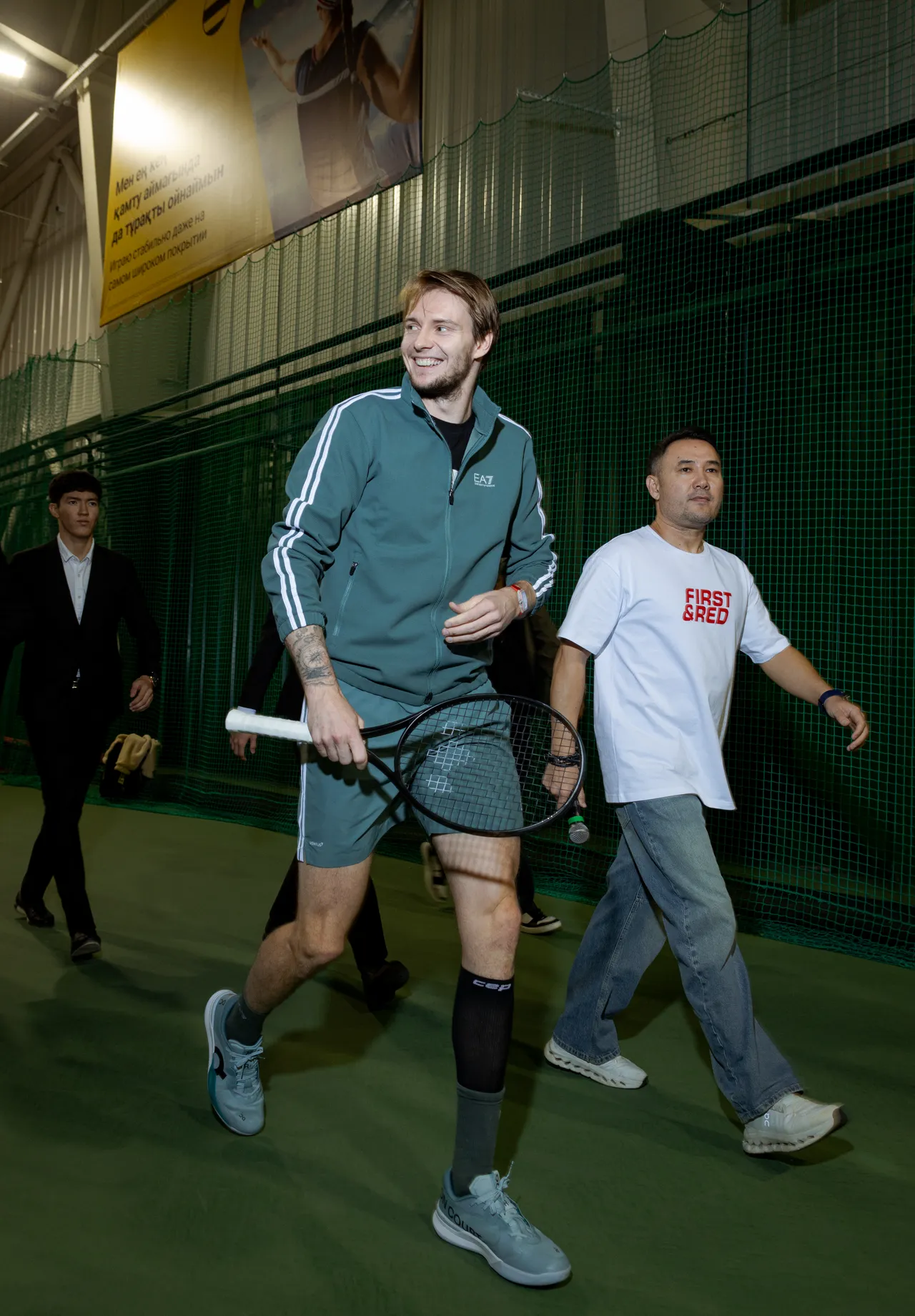
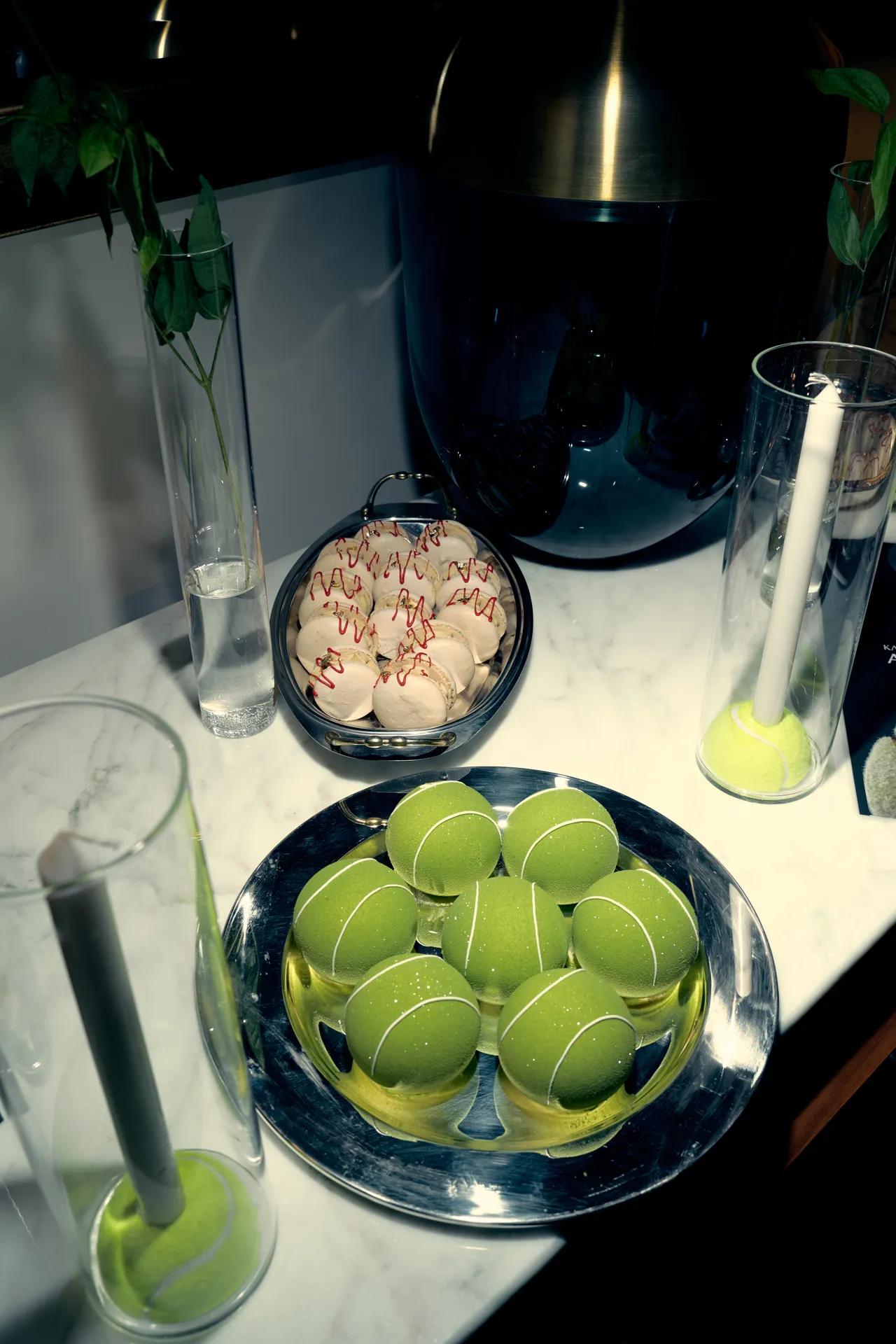
угощения на мероприятии First&RedAlexander Bublik at FONBASEKaren Khachanov at the First & Red event with fans and mediaAlexander Bublik is First&Red ambassador
All photos