Match Center
Back to videos

PONKRASHOW: Egor Dёmin

Ponkrashow

An emerging NBA star, Egor Dёmin, appeared on the newest Ponkrashow episode.

Duration
Family friendly
Yes

Transcript

[music] Friends, well, today we are here at the Clay Arena and will be watching Yegor Demin’s game. And most importantly, we will record an interview with him , because Egor is now, like me, a potke ambassador, and this is very difficult, for which we congratulate him. And he is our great Russian [laughter] hope, in whom we believe, because of whom we drown. Let's go watch an awesome game. Sad I get up go get it. I ain [music] for nobody pushing myself to the limit. If I never give up [music] myself to the limit if I never give upus [music] myself to the limit. If I give up myself [music] to the pushing myself to be blind but I don't see no computure [music] how do I Everyone [music] hello, friends. We are now in Brooklyn, and in front of me is the man who is followed by the entire basketball country, Yurdyomin. Egor, hello. Thank you for joining us on the First Red channel. Finally. First of all, we are very happy about this. Ah, secondly, a question right away. Well, for those who don't know, we've been waiting for you for an hour and a half. Please explain. No, I more or less understand what we did. Explain your schedule. So your game is over, huh, what are you doing? Is there some special routine? What do you do after the game? Or do you go straight to the shower? Actually, yes, for me it was something new too. I could n't imagine how it all happens before, during, and after the game. And in fact, there are a lot of processes outside of basketball, in theory, because the schedule is very tight during the season, there are a lot of games, and few practices. Accordingly, these training sessions are trying to fit in between games, after games, before games. So it turns out that I arrive about 2:12 hours before the game. Yes. Also because I'm a hands-on beginner. My warm-up is 2 seconds to an hour. I arrive at 5:00, the game is at 7:30 and, accordingly, I warm up. I need to somehow stay warmed up before the game starts, right up until the very end . Oh, and after the game we have the gym, as an extra work that we can’t fit in before the game or the day before the game, so that no one is tired. Everyone monitors the amount of load and all these details. So, yes, after the game we, and I and most of the players, have a gym, and each one, accordingly, has some kind of individual story. And then restorative procedures. That's all, basically . Yes, he says, he says, I make sure that, or rather, Inba makes sure that no one gets tired. The guy just came at 2:30, it's 10:00 pm, he's still in the hall. Well, how difficult is it for you to adapt to this format and did you have any difficulties when you played in NCA? So, uh, was there a similar format in terms of workload, or was it a more flexible story? Ah, at the university, I think, but I don’t know exactly how it is at other universities. I heard that I heard some wild stories, when people don’t have days off, they train for 5 hours after games, before games, this is some kind of wild story. And in our case, since the coaches are from the NBA, they tried to give us this, uh, this NBA system as much as possible already in college. And there was something similar. Accordingly, there are not so many games, not so many, but precisely this load before or after the games. It was all a little shorter, a little faster. The games themselves are generally shorter, accordingly, at university. And more training sessions, just regular training sessions, like when we just come on a regular day, train, and go home. Listen, look, this is a question that really worries and interests me. So, because you have a large number of games, a busy schedule, plus you also have to fly, how does your body cope with this? And have you found some secret that makes it easier for you to handle such loads? I think the secret for me personally is sleep. At any moment, when I want, on the bus, in a taxi, when I'm going to training, after training, I try at any moment, when I have the opportunity to sleep a little, even if it's 5-10 minutes, I just collectively get more sleep for the whole day on top of what I slept at night. So, how much sleep do you get at night, plus or minus ? Right now, we do n't get that much overnight because, for example, we have, well, today we have a fairly early game, at 6:00, and usually it's at 7:30. We finish somewhere around 10:30. So far, here we are again at the gym, this whole story, I’m home somewhere around 12:30 after the games. I think that, you know, I can't really sleep. I have no problem with this, by the way. I have, I have, I have, I come home, I need to ventilate a little more. It is clear that the nervous system needs to calm down. What time do you go to bed? Three, four? Ah, no, it's not that late. I probably do it when we play at home around two o'clock, if I come home at 12:30, at 2 o'clock I'm right there with you, okay. Look, you fell asleep, and tomorrow you immediately have a training session, yes, it depends on the weekend , it depends on the schedule. Sometimes we have a full day off, so I can sleep a little longer until 12:00. On days like these, I try not to get out of bed at all, of course, and just order food to go home and not move much. And sometimes it happens, for example, with us, after some games, when we leave immediately the next day, we have a small training session, perhaps. Well, it's more like a vitamin, just walking around the stations a little bit, or we just come to the gym, for example, we'll watch, analyze the game, and analyze some clips, and accordingly, the coach will know what he likes and what he doesn't like. And so on and so forth . Can you tell me about the video? It’s interesting to even have this kind of insight, because my practice, well, in general throughout my career, there have been a huge number of videos. And often , you know, it would start there for 40 minutes. Moreover, I would have had one Greek there , and his video would only start at 40 minutes. That is, the minimum video we watch per day is 40 minutes. How do they do it in the NBA? And is there any detail, let's say, about your individual moments, or is it all just about team analysis, and are they sent to you individually ? And they send it to everyone in general, in principle, it doesn’t matter, regardless of the game. We all have an application where we get our minutes. That is, accordingly, this is all the time that I spent on the set, not a selection of good and bad, but just all the time in general. What do we watch at home? Basically, I watch and re-watch these minutes, and then we each have an individual coach on the roster, the coaching staff at Staff. Yes. With whom we then also individually watch some clips that he liked, didn’t like, some details. It's usually not that long. These are a few clips, unless this is some kind of total failure of a game, where a bunch of stuff has accumulated and they just take it all. And usually these are just a few clips, sometimes before games. Ah, so from the previous game before the next game we watch these clips. Yes. And team viewing of clips, in fact, doesn’t take that long for us. Again, it depends on the schedule for that day. If it’s before a workout, it’s, well, let’s say, 20 minutes, 15-20 minutes more, just to get into the training mode a little bit. But, for example, tomorrow we have, ah, we’ll drop it a little, most likely the film will be longer, there will be more of these clips, so that we can analyze a little more, analyze what to do next. But look, let's say, well , you're in the system anyway, you were preparing for the games, there were combinations, some movements, something similar here? That is, when you are already preparing for an opponent, you study some interactions, because, for example, I watched the game between New York and Philadelphia, and I got the impression that Philadelphia was playing only one offense there . Well, like, they have two entrances along the perimeter, two barriers and that’s it. And it’s clear that this is something that is simply being prepared for. I don’t know, there are probably some teams there that use a huge number of sets, and there are some runs, well, again, there are probably Golden State there with some of their own runs. To what extent is there a clear analysis of team interactions or, you know, okay, the basic three or four things and off we go. I think it's more based on team principles than, well, we can't just go and analyze all the combinations. It's just too much information for players. Perhaps no one will remember anyway. That's it, and there will be confusion. Yes, we basically, I think, make up some basic combinations, some basic interactions. Yes. And the main principles, for example, Miami, we played in Miami recently, their main principle is simply don’t let them run, and they just play one on one the whole game. There are no combinations as such. They kind of exist, but we didn’t even analyze them, because our main task is how to insure, how to prevent them from throwing free three-pointers, how to prevent them from running away. This is the story. That is, a, preparation, preparation for the opposing team is more, a, about their features. It's clear. Here, for example, is Toronto, Brand Igrom, how we defend it, as in the post against it. That is, they have a lot of combinations where he comes out from under screens, where he gets isolated, in the post, and how we track, yes, and all sorts of stories like that, some of the features we analyze most of all, rather. Yes. Cool. I didn't see that you were targeting him when he got the back ring, you immediately ran there without dribbling at all. Sometimes he didn't even intend to attack there. That is, I understand that the main point is for him to get rid of the ball so that there are other creative players there. Listen, you said something about a one-on-one game. How difficult is it for you to adapt to the format, specifically the fact that basketball is completely different? That is, the whole game is still designed for one-on-one play, for aggravation, where everything essentially comes down to 5-7 seconds of isolation or taunting, if you have talent there, yes, you can beat them there using speed and physicality and score. Ah, well, I think that the main factor here for me personally is, in any case, physics. First of all, I just need to become a little stronger, yes, so that, uh, I have an even greater, uh, even greater opportunity to defend myself against someone, right? But again , you look at some of these people , Scotty Barnes, he didn’t play very well, but he, well, he’s a unique individual simply in terms of his physicality, his talent. The man can do everything. He doesn't quit just because he doesn't want to. I have this feeling. Here are the three rubles. Well, as if, if he wanted, he would throw them away. He just doesn't really need them. And also here's Maxim now, well, it's difficult against a game like one on one, but this is more of a game of one against five. Yes. All the same, that is, the coaching emphasis is on how to insure, how to help a person, how not to leave a person alone. That is, everyone is trying to get rid of this situation where a person is isolated one-on-one, face to face, yes, as they say. And this is the most dangerous story in the NBA, as far as I understand. Listen, well, I’ve actually already watched quite a large number of your games. It seems like you don't have any problems there, except with insurance. I see that you... I'm just explaining this to young people now , that you have to talk in defense . Well, this is actually an interesting point, because I see more and more players who, and I think that the best players that we see, yes, this is their specialty, they have the opportunity to be in every game every day. Well, in full, because there are a lot of games. I have played 30 games, yes, I have almost played, and I can already feel it , yes, it is no longer like in college, for example, where we play, I am not even talking about Spain, yes, where we played once a week, God willing, but at the university, where there are two games a week, and we play like that, yes, finally. Now, to train, to not train, something like that. And when will the training be here? And every game is more. Well, it's difficult, but those are not... Well, you will adapt in any case. Everyone adapts to this. I didn't tell you that a personal training coach was flying in to see you . To what extent does this story even have a place in the NBA? So, for example, everyone, or anyone on your team, has a personal training coach? And I think most people have trainers. Yes. During the season, it is unlikely that anyone trains consistently. So, and also in addition, because sometimes it’s not even about how you feel, but what you are allowed to do by the coaching staff, by the performance staff. Yes. It's like physiotherapists, because we train with sensors that count our load during training and during games. That is, from the game, for example, they know how much I ran. They have a telltale taskmaster. It's even interesting. Ah, well, we even had this in our colleges , but I don’t know what it’s called, to be honest. Well, it doesn't matter, they just hang it on their shorts. It is hung on shorts by a shortsman. So. And accordingly, the sensors are in the deposit. Uh-huh. And on the site, they count the distance, for example, the interval, yes, how many sprints I had, how much I ran in the sprint, how much I ran in jogging, something like that. Every story is like that. And from this they calculate how much, what kind of, what level of load I received during training and during the game. Here they are from the games, for example, they can say who gave the most, essentially, during the time they played, for example. And everything depends on this too, because, for example, one day, I ask, I don’t ask, but I say, I’m planning today, we have three training sessions, I’m planning to return to the gym in the evening. They say: "Listen, come back, but no more than 30 minutes and no running, anything like that." Well, not just running, well, like spot-shooting, yes, the usual. Here. Well, do you understand why this is done? Well, so as not to get overloaded, right? Well, that is, because the system is built in such a way that any organism has a resource. And, accordingly, if you overload your resources, overload your nervous system, then at some point in time an injury occurs. Because of this, it is necessary to carefully balance the restoration of the nervous system and the load. Often people, yes, there in Europe do not understand this. That is, they move at maximum load all the time, then they are surprised that they have three knee injuries and four back tears and say: “Well, that’s not luck.” Well, no, it's not bad luck, it's an idiotic approach, because you have to control the load and understand that if a person is overloaded, then you need to give him a rest or say: "Okay, come to the gym, but do 30 minutes of low-intensity work there, if you feel like it, quit or something else, skate on roles, there are some high- key searches there very clearly." That is, here I am interested, you know, from the point of view of even the NBA’s approach to this. That is, it turns out, well, it’s always a story, you know, when they were at Chelsea, when Abramovich was at Chelsea, he said that, like, when I pay millions for my players, I have to take care of their health. That is, here we have the same story, they seem to be, well, approaching all of this professionally . I think that here too, everything is individual in this regard. That is, for me they are simply afraid, since they still don’t know me completely. They don't know my body. I had some injuries this summer, yes, there was some story there, with which I missed something. And I still had , like, five games in 7 days. This is also the first segment for me, like the NBA. This was a complete nightmare. And I missed out there, didn’t play some game, because they were calculating the workload, they thought it was necessary that I needed to rest, otherwise it might not end very well. And for some, for example, well, for the older guys, they understand that their, uh, body, their physical preparation, as it were, is already, because they have gone through some years, yes, in the NBA, it allows them, uh, to add some additional work. For me, this is very, very neat. We try to feel it all out , yes, and the coach comes, and we watch clips more like we study theory, because sometimes they just don’t let you go back to the gym, although you really want to, especially after some bad games, yes, I threw 10:0, you think, what else should I do? took: "I'll go, and then, and then the next one." Well, and they have their cameras, so, everyone even, well, sometimes it seems like you even want to cheat. Okay , well, he won't see it. And every time I come in, I need to put on this chip, this sensor chip. Sometimes I don’t put it on so they won’t see, and the next day they’re like, “What did you do yesterday?” Yes. And it’s like, well, you know, they know, and they say: “Listen, well, we want you to be better, like.” Yes. Here. And you have to somehow adapt to this . Well, that's fine. Fine. This is something of your experience. Listen, that's an interesting question. said: "Ah, well, in general, here's how much, well , yeah, let's dive a little into psychology." That is, this means that, well, there are unsuccessful matches and, well, let’s say, 10:0. Yes. What are you saying, what helps you overcome all this? That is, this process, you know, not worrying about the fact that, oh, and this is as usual, I threw 10:0, oh-oh-oh, what will they say? But calmly, with a clear understanding, realize that okay, I threw 10:0, I go to the gym, I work, yes, okay, good, uh, and then it’s like a process. That is, you already have some clear algorithms that you have built for yourself, that I do this and that. Well, okay, 10:0, 10:0. Well, I think that this is, in principle, initially a mental component, yes, when there are 80 games in a season, 82, I haven’t even played them yet, but I already have a rough understanding , yes, which is that we still have a third of the game played, and already, well, such a story, it’s impossible to focus on one game , because the next game is in two days, in principle, it’s physically difficult to focus on one game, even if it’s flat, no matter how bad it is, because the next day we are preparing for the next one. Yes. And yes, and in general, well, there is such a moment that for me this is, of course, something new. I have never lost as many games in my entire life as we have already lost in a third of the season. Oh, and I had to deal with it somehow very quickly. For the first few Yeah. For the first month, you'll definitely need to get used to the fact that things might not work out for now, but you need to enjoy the process, I think, first and foremost, and not try to get all the results right away. Yes, and this is a long game for me personally and for the organization, for ours, definitely. And so, yes, I don't worry about how it looks now. Of course, you want to play solidly and even more, but sometimes it works out, sometimes it doesn’t. All that is required from me is work in this regard. No, well done, you're great. Well, this is just a normal state of people. That is, they think that we will come now and win everything, but then it would not be interesting to play if everyone came like that. It's still a process. You have a very young team. Uh, I'm saying, I was sitting here today, looking at the age of the team, and I didn't find any veterans there. Particularly funny. I don't know about you. I, well, I look at it differently, from a different angle, you know, they react to substitutions. That is, relatively speaking, there I see how calm you are about this whole topic, there, well, replacement, replacement, everything is okay, plus or minus, you know, there, when you go, but right on the body dealer of some I am just like, there are just replacements, he keeps lowering his head and immediately died. Have n't gotten around to replacing it yet. There is a lot here, I also think that sometimes I also watch, for example, games and I think, I’ll put myself now as a field player, as if I didn’t play. Yes. And sometimes it looks like, as you say, yes, like this body language, yes, I think, well, it’s not nice. And then it’s like, I analyze, well, a lot of this is not because, for example, someone was offended by someone. This is my own story, that I can do better. Yes. And I must do better. People's contracts depend on this. For some people, their lives depend on this to some extent. Well, yes. And of course, it seems like, well, in the NBA, everyone should be happy, they get so much money. And there are a lot of people who have problems with this, specifically with their mental history, staying afloat. That's right, stable. Again, as I said, be 100% every day, every game. Well, it's complicated. No, well, I'm saying this is a whole big process that we , well, we, you know, through you, are just getting to know it a little bit, because, well, in fact, everyone is like: "Oh, like, the picture is cool, they are playing millionaires, it's all easy, but it's a lot of money, a lot of responsibility." Listen, one important issue that definitely worries a large number of our subscribers is pharmacology, because, well, it’s clear that the world of pharma has gone far beyond the limits. You're in the NBA, how much attention does this get? Well, that is, give me a general basis for your pharma, well, that is, like what are you talking about, what are you writing about, vitamins, and what do you use it on, honestly? I was expecting more with the additives very seriously. In general, with any additives. Medical supplements, just some dietary supplements , vitamins. This is all very serious and very careful. And I got the feeling that the people we work with, yes, in the organization, they do n’t even really want to take on this responsibility. So, that is, they would rather not advise than advise. Well, it’s like this, that is, if I don’t ask, they won’t give me anything. Yes. That is, you should act more based on your feelings, as it were, yes. And if I'm interested in something, of course, they'll teach me, they'll tell me what's what, and I'll already have some kind of base, yes, knowledge about how to eat right, what dietary supplements to use, yes, and I have some kind of base that I use, but just like in a group, it's more like , well, they make us protein shakes after training, after games. This is where this team story ends, in principle . U. And, for example, what is it called, they give us beetroot juice before games. Yes. That's interesting. OK. Yeah, that's cool. Listen, well, I just have very close contact with Dr. Eduard Bezuglov, and he is the head doctor of the CSKA football club, and I have a general idea of what kind of pharmaceuticals they use. Well, that is to say, there is simply a super super approach to expansion. That is, again, here, well, I’ll probably give you purely my experience that pharma should be strictly individual. For you to feel comfortable, I would need to eat two bananas there. Well, eat your two bananas. Is this good or bad? If it gives you comfort, you should do it. For example, I always eat Snickers before games . Well, it's sweet. Well, yes, it is sweet, but it makes me feel good. I eat half a Snickers. I have this trick too. Well, here I am eating watermelon. Well, that's about it. And you eat watermelon. And you like it. For example, our nutritionist, she says: "Listen, ah, we can make some kind of program for you in addition to the fact that I myself drink it with dietary supplements, yes, with additives, but she says: "I prefer that you get it from food." Yeah. For example, I have, like, with this, I have a base, yeah, some kind of creatine, and protein, omega-3, D3, basically, a multivitamin, yeah, something like that. Well, everything is fine, they are good. For sleep. We have these, by the way, I really like them. I just, ah, discovered for me this cherry cherry juice, we have it in jars right in the gym. And cherry candies. Yeah. Good too. But they are always cherry ones for recovery. Well, that's good. I also, when I was collaborating with one company, uh, I don't even know if it's possible to advertise them or not, they also have cherry ones. gels, and I was just like, "LeBron, did you see it?" And like, "Well, help, well, like, this is impossible." Well, I understand that, well, anyway, these are some kind of first impressions, you know, even Kirilenko told me, like, there was my first game with Michael Jordan. So I went out against Michael Jordan, I, he says, touched him. Well, that's it, like, yeah, mission accomplished, because he covered him, and I, he says, already sat down , thinking, that's it, well, I defended Michael Jordan and covered him. Well, like, mission accomplished, yeah. Well, like, well, what could be better? Well, that's it. I mean, you watched the finals on TV, and the NBA, and then you went out and played against him. Did you have that kind of feeling? Well, that's exactly the feeling I had with Durant. Yeah. I didn't play against Houston. I missed that game because of the management, that workload, and so on. Ah, but he’s like, well, the story is that the coach at BYU, yes, Kevin Young, since he’s from the NBA, he’s very, well, he knows everyone. This is really the NBA world. I’m realizing it more and more deeply now . It’s such a small world that it’s hard to imagine at all. I mean, everyone who’s ever been through the NBA— they’re all practically friends. Well, roughly. Yeah. And he, because he was some kind of coach, they all know me. I mean, we’re playing against Houston, I’m on the bench, I didn’t even go out on the court after the game, and someone taps me on the shoulder, I turn to Durant and says, “Dude, keep up the good work, you’re doing great.” Well, that’s cool. Thank you. Well, I didn’t even seem to be playing and it was like , well, it was just such a, I guess, feeling, well, some kind of incredible feeling, like I was also watching the games, yeah, and so on. When I was at Gold State, they won the championship Cleveland, that's the whole story. And I haven't met LeBron, or Kari, or any of those guys, but it's just, yeah, now, well, apparently generations are changing , and I've already met some younger guys, yeah, guys who are leading the league now, but with Durant, it was probably just like that, I was just so pleased, I'll remember that for sure. And the one I saw and was speechless was Janitz. I, well, I roughly understood what Janitz looked like, yeah, but I don't think people understand that. Well, and Manyama, of course, those two. Yas - it seems to me they also lie about his weight and his height. They make him smaller. He's probably 7 feet tall, his shoulders are like that . He probably weighs, I don't know how much. Well, he, he just played against us. I didn't play that game either. Did you miss all the games? [laughter] all the games that I got impressions of, not He ended up playing, but he probably played about 20 minutes against us and scored almost 40 points. He was just, well, he was also going through this load regulation, and he didn't play for half a game, and he ended up scoring 35. Did you see that photo of Janis's transformation, when he's like Janis, who came to the league and now Janis, who just runs, runs, runs, runs, runs, runs, runs , runs, and the person in front of him, he just runs with the person and then starts from the spot. That's exactly how it was against us, exactly like that . And I just had a fitness coach at BYU, who was with him at that moment of this transformation from Mioka, and he talked a lot about him , and I was really looking forward to it . Well, give me some interesting fact about Janis, even just for people who... By the way, there's also a very important topic here for players and for the league, like Mental Performance. Coaches, like the person who does mental preparation. Yeah. And we also had someone at BYU who still works with him, with Janis. And I had very deep conversations with him. No, not about Janis, but in general. But he also told me again. Janis, of course, they say he's a very interesting person, not just as a player, yes, and he's come a long way, and they've known him as Janis for like a couple of years, but he's been in the league for , I don't know, more than ten seasons for sure. So, this transition from, like, childhood, youth basketball to who he is today, took a lot of time and effort. Not only on the court, but also in his head with all these processes and so on. Well, it's not just being a superstar; he got a lot of hate, too, and he couldn't make those free throws. Then they said he couldn't play in clutch games. It doesn't matter when you're successful. And so this pressure is going on, uh, it's hard to cope with. Well, this crisis is actually happening at all levels. Listen, uh, last questions, as they say. Um, so the videos have already gone viral, right? Where are you? And Vince Carter is telling you something there. Then I look there, you're there, yes, together, telling you something . Ah, well, I see some things like that, they say things like that . Well, I understand that they have it really set up. I mean, uh, well, let's call them veterans, yes, those who have been through it, they calmly share information, say things. It's generally normal for him to just come up and say something like hi, listen, this is on pikedrug, you attacked, this is it, it's very difficult to listen to such people because you miss a lot of information while you're thinking that whoever it is in front of you with Vince is actually very, and with Wade, they're both very, very simple guys. In fact, Wade has a lot of stories right now, in the media, of course. In terms of Vince, he comments, but he's just a simple person in general. Basically, he's been here so many times already , firstly, with us, yes, he kind of hangs out sometimes at games and he was with us in China then. And he just comes up to me and says, yeah, oh, great, how are you there, how are you living there, it's not even really about basketball, right? Oh, and about basketball, of course, of course, I have some questions, yeah. And he himself just sometimes says something like, I saw this, do this or something, some other details like that. But it's very, of course, interesting and perceived differently, you remember much better from people like that, and but it's difficult, it's difficult to remember in any case, because it's like, well, there's a Winrter standing in front of you. What should I do? Well, it's like, it should be normal for me by now, right? I've already met so many players, yeah, yep. And then, well, like, this story, yeah. And I think I write to my dad afterwards: "Well, with I just talked to Vincent, he advised me to be more aggressive or something." He says: "Wonderful in general." [laughter] He says: "Don't tell me anything that he told you. It's enough for me that you just haven't met him." Yeah. And so you understand Vince Carner's aura, I mean, I was standing there today, he was just walking by, and I kind of felt it. Well, I mean, it's not like you grew up on it, but it's just like when you watched his games, you thought he was a person, well, not from this world. Well, I mean, some kind of alien came and said: "Let me play basketball with you." And can anyone do that ? Like this or there, and like that. And we all watched it and grew up on this topic. So it's really cool and really normal. So, uh, and this is a super, super cool thing, what you said, because you, you know, like this, through you, you pull back the curtain a little , and we're like: "What are you doing in the NBA?" Ah, well, it's interesting, then, uh, guys, please, well, like, I don't know, only kind words of support from you. Let me just add something, I'll repeat it again: we're simply following you and sincerely rooting for you and worrying about you. So if there are any negative comments, you don't pay any attention to them at all , because a huge part of the Russian basketball community, and not just the basketball community, supports you. And we're rooting for you. Thank you for taking the time to support us. You need to rest and move on. As for us, we have to call it a day. It's a shame. Come on. Well done. Yeah, thank you.

No comments yet.

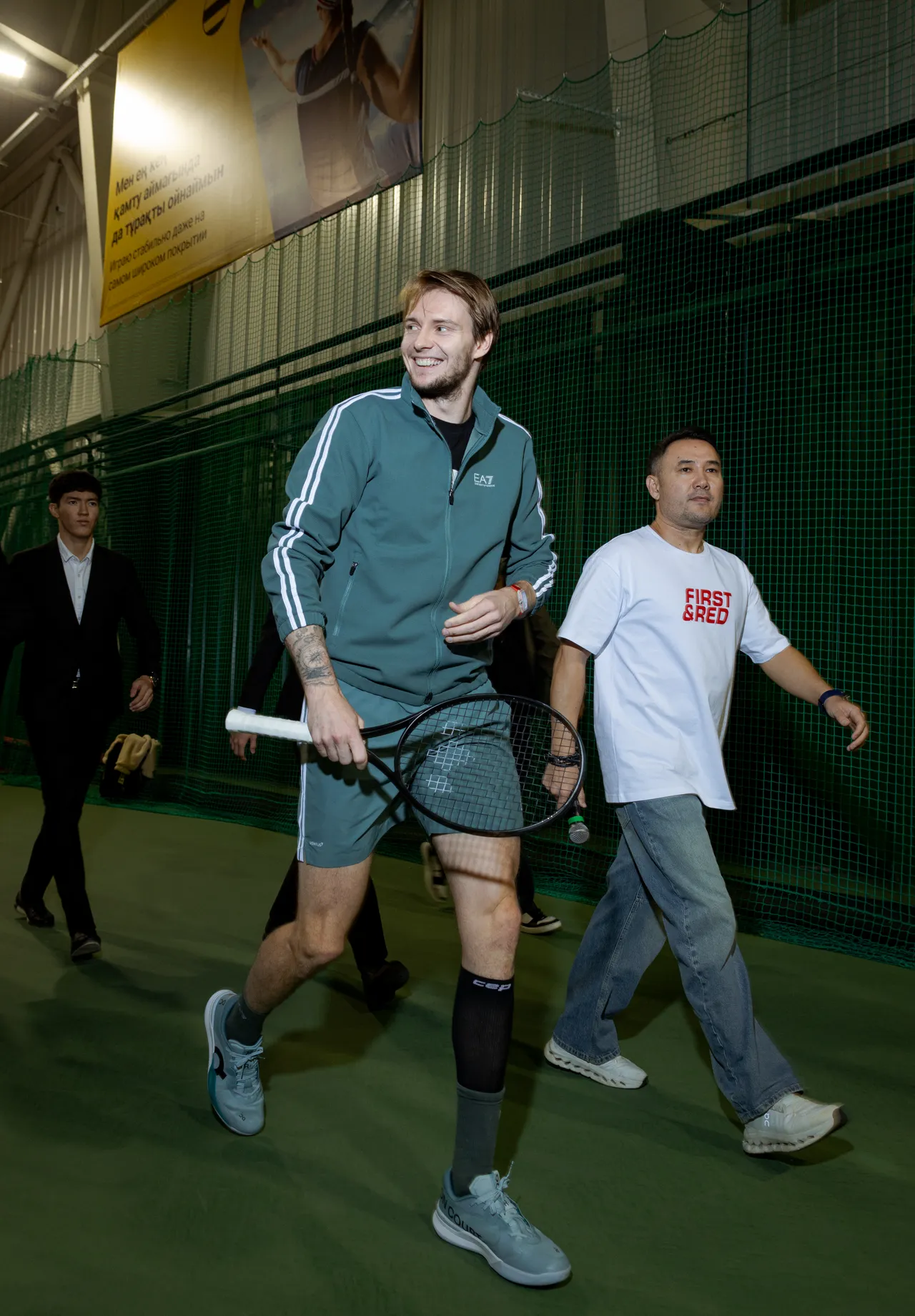
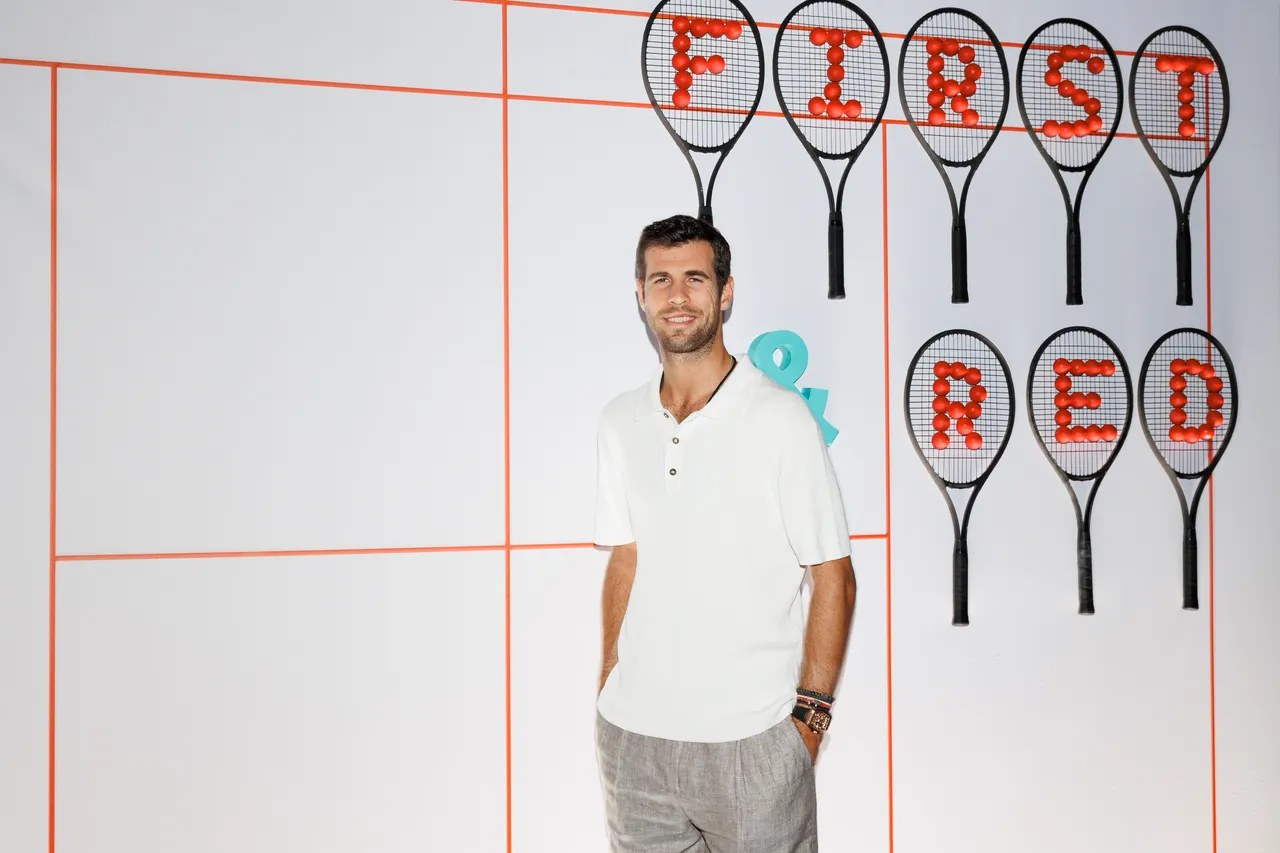
угощения на мероприятии First&RedAlexander Bublik at FONBASEKaren Khachanov at the First & Red event with fans and mediaAlexander Bublik is First&Red ambassador
All photos