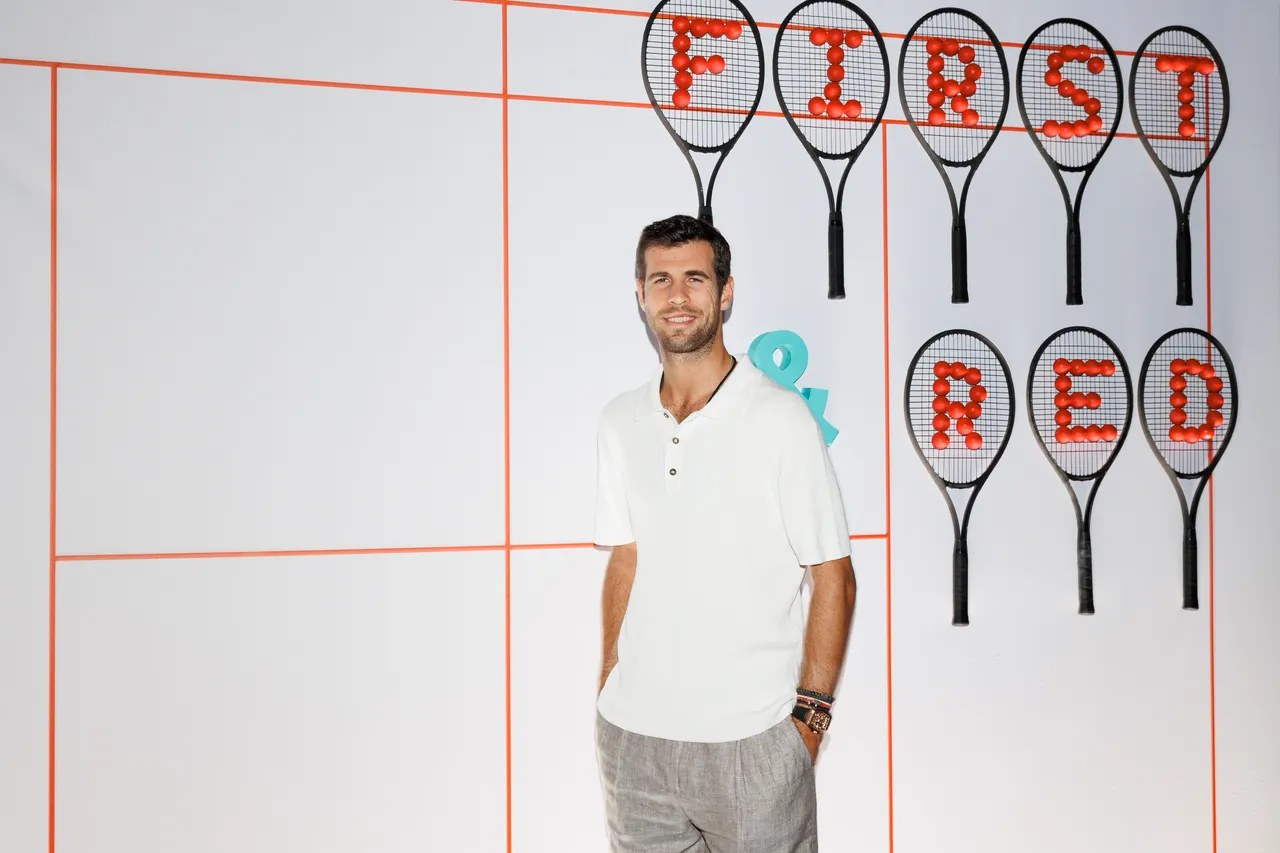
PONKRASHOW: Evgeny Voronov
Today's guest for Ponkrashow is Evgeny Voronov, known for winning a bronze medal at the 2012 London Olympics.
- Duration
- Family friendly
- Yes
Transcript
Banners clap clap. You think I haven't been a consistent, so to speak, shooter my whole career. He stands there, scratching and scratching his balls. He scratches his balls there, thinking that it’s cool there, I got my salary today. Years go by, but nothing changes. Yes, he is simply a clown of the affairs of all of Europe 100%. In terms of work and attitude, everything there is top-notch. Duck. There, I don’t know, shorts, spins and you can’t figure out what it is. And everyone, all the head coaches are watching, waiting for a signal to see what will happen. They are imagining things for themselves and making the same mistakes. Either this or move your ass. And often people write some kind of dirt, and then come up to me and say: “Hi, can I take a photo.” Yes. Yes. Ah, hello everyone, friends. Well, Pancroshow is back with you. We are on the First Red channel. We continue to learn about the game of basketball in a new way. Today we have a guest with a man with whom we won the European Youth Championship together, and also, uh, we won bronze medals at the Olympic Games together. He still plays for the MBMI team and makes us happy with his play. Evgeny Vornov. Zhenya, wait, which one? How many, how many seasons? Twenty, twenty-fourth is coming. Ouch, ouch. For 24 seasons, the man has been playing basketball normally, at the highest level. Ah, listen, since we, or rather, I started talking about the European Youth Championship in 2005, I suggest we remember a few things. Do you remember how we analyzed our opponents in 2005? Well, I'm talking directly about scouting, and we discussed them, right? You don't remember that I have a story written and written right on me. We had Poluyanov as our scout. He slept on the floor. In Chekhov he had two beds, two tape recorders, a TV, and he copied games. I thought you remembered this story. No, I remember what you’re telling us now, I remember that we watched the video in Novogorsk. Well, I honestly don’t remember this story where he slept and copied from one cassette and two TVs . Yes, really. I'm just thinking about how I became interested in how much progress has grown in terms of preparation for the game from 2005 to this day. That is, well, back then there were some banal things, I don’t know, there, well, some, maybe two or three aspects at most. Come on, let's start with the fact that before you had to send a cassette from one city to another by train just to get, [laughter] yes, video. That's why, of course, of course, go ahead. In the past , the game was recorded, well, let's say, you play somewhere in Rostov or Mineralnye Vody, the game is recorded, it is sent by train. I need to get to the train station and send her by train so that she can arrive in Moscow in the morning. or to some other city. Well, yes, actually, and now it all loads as quickly as possible, and the computer cuts it even faster. Therefore, well, that is, I am convinced that for personal progress as a player, you need to, uh, watch videos regularly, and not only your own, but also players in your position, players who are somehow interesting to watch something from them. How much attention do you pay to analyzing your game in general? But, perhaps, we need to delve a little into history , which I think is that I, like you, started out, started watching tapes just when you were watching, ah, and following some players. I don't know, I had, uh, I remember it so clearly now, it's Kobe Bryan, uh, when you stop every episode and look at how he put his feet, what he did. And, probably, this is where it starts, when you follow other players. My conscious, let's say , my conscious scouting, I probably began with CSKA Samara. It was in 2008. Uh, I even recently found disks, blanks with my cassettes, with my games. That is, I asked after each game, and, what should I do, record the game. And as I remember now, I watched a lot of my own games, how I played in defense, in attack, so what? Well, I mean, when you watch your game, what do you focus on? If we are talking about today, then, of course, before each game there is a game plan that the coach prepares. And you understand how you should have played in a given situation. Defense on pick and roll, or one-on-one play, or there should be some backup somewhere. Accordingly, after the game, having this game plan in your head, you can look at what actions and how you played based on this. That is, well, you compare how you should have played individual defense, team defense, and how you played, in what moments you made mistakes, in what moments you did right, well, for example, the defender scored, in what moments you made, maybe, some mistake. And so, at this moment, having, let’s say, a hint, I look at games from this point of view. But if I were to advise young guys to do an analysis based on what you could have done, and, both in defense and in attack, did you do something well, did you do something bad, for example, did you make the right decision? Gave up or passed? gave the correct pass or the incorrect pass. That is, probably, first you look at your game and what you could have done well or differently, and then, probably, further analyze some team game. And you, well, uh, when you watch your video and you see some of your mistakes, errors, I turn it off [laughter] right away, I turn it off. Well, actually, yes. I think you know that feeling that, uh, you used to turn off when you were young. I turned it off, then rewound it, turned it on again and thought: "Damn, how could this happen? Now, uh, basically, as I'm saying, you know how you should have played in the moment, huh, in individual defense or, for example, in team defense." And you didn't play. It's just that over time, yes, you already have a good eye and experience. You just see that okay, here you made a mistake, here you, for example, chose the wrong position, here you didn’t work hard enough, I don’t know, there were some physical qualities that were missing . Maybe you wanted to, I don’t know, but to humbly say a little, but you did n’t succeed. Accordingly, you simply analyze the situation, draw conclusions about what you should have done, or maybe you did well, yes, maybe you fought back well, defended yourself, or intercepted. And, accordingly, you just make a note in your head that okay, in this situation you had to do one way or another, and you watch the next episode. Yes. No, well, because I understand that, uh, young people, in particular, young players, and probably older ones too, don’t pay enough attention to this. Ah, well, you can't fool the picture. Well, it’s clearly visible where you didn’t run far enough, you can see where you didn’t position your back, or when I work with some of my students, I already have students, you can clearly see where the attack was missed. Well, that is, the obvious solution is to attack, but due to his stress or pressure, or even the knowledge that the opponent will provoke an attack, he does not use it. Well, it's banal, you know, I 'll periodically show you something banal, where he plays, we'll call it a catch and roll, that is, he plays alone with the ball, the fifth one sets a screen for him and the x5 defends. Now I'll show you so you can see. And yes, and here he plays this side pick and roll, and already in his head he knows that they will go low with him. Well, he's a relatively non-shooting player, and he already experiences stress before the game. How to make the right decision? Well, I mean, uh, what 's underneath? This is when a non-shooting center pushes out his defender and, accordingly, the defending player passes underneath the first number and begins to get stressed. And here, as it were, is a pure analysis. And you think: "Okay, okay, wait, come on. First, you have a few days before your game. You know that they're going to play you like this, when they're not going to play you. There are several solutions, right? The first solution is, you can shoot right away. You definitely have to [laughs] shoot the first time , feel it out, right? Well, that is, they went low with you, you shot. It's logical. Good day or bad? Yes. Good day, [laughs] good or bad? You can go straight to the bench. But in these pick-and-rolls, even back when I was watching Theodoros against CSKA, I think, as a person without a stable shot, and he knew that everyone would go low with him. But he used this advantage of the defense in such a way that then they played two-on-one all the time , because the center turned, set a screen in the opposite direction, he opened this pick, the defenseman was 100% late, and he already created a triangle, an attack and gave or there a pass to Savras or to the far side, or scored himself. Although, it would seem like a basic thing, and it causes stress in people. Oh, that's it, I'm down low, what should I do? Well, probably, like Papa Lukas knew what he would do second . This is probably also very important when a person understands defense, but maybe this situation, which, it would seem, is being played against him , is, uh, putting him in an uncomfortable position. This speaks of the class of the player when he can turn this situation into his own, like a strong one. And as you say, often, when people are played down low, they still go into the paint, go under the basket and can still find or use their strengths. A little more about when I started scouting, last summer our Sasha Grujic, you know him very well, sent me sheets when we were playing, when I played in Dynamo Moscow. Yeah. And I remember that in the summer I was supposed to go to his camp in Serbia. And I looked through all my the games I played there, around thirty games. I think it was still useful, I watched everything after the season. Were you playing for Spartak then? Why? Why did you watch it? I can tell you that I did a full scouting of myself on three or four pages . What I did well, what I did badly. Wow, you wrote yourself down? Yeah, I have one. Well, read it. Well, I need to, I need to find it, but I'll send it to you later. And it's just interesting, scouting is not exactly an objective assessment. I mean, well, it's kind of typical for us, we, well, we love ourselves and our shortcomings and we don't really want to accept them and point them out. Well, I got it, well, you looked, it was an objective assessment . Listen, well, I actually wrote down most of the weaknesses. Yeah. Here's what I did well, and where I need to improve, in my opinion. And I have such and such Two or three sheets of paper, four directly to me, Sasha, I came to him for training camp, brought him these sheets of paper or sent them back then, I don’t remember, photos, no need to work on this. Like, we’ll work on this. And he sent me something like, how long ago , like, 12 years ago. Okay, wait, let’s put it this way. And did you manage to progress in those aspects that you wrote there back then? Listen, well, I think, yes, if you delve deeper, you can see what I wanted to work on and what I improved on. But it was always, most likely , shooting, because throughout my career I wasn’t a consistent shooter, so to speak, yes. And in some moments, on the contrary, which I remember, what I do well is defense, driving, driving, finishing. I tried to work on this, well, not to work more, but not to lose and improve. And, of course, everything that is connected, all the individual work that is connected throughout my career, it’s all, everything for the most part, is shooting. Shooting with points, a throw after the dribble, some kind of one-on- one play, isolation. Therefore, well, throughout your entire career, more or less, you understand what you're working on and what you need. Listen, well, actually, from this, what's clearly evident from your last seasons, I see moments where you, uh, clearly understand the situation, where you can use your height advantage. That is, if we take Zhenya Vornov, who played there, say, 10 years ago, there was a lot of face-to-face isolation, lots of knockdowns, well, of course, transition, there, rebounding - it's all yours, but now I see how you clearly understand moments where you can use your advantage as a confederation. Well, you have fewer sets where you can do something, a confederation, but it's clearly thrown, where you feel the advantage and you take up a position inside. And I had a very good [laughs] coach who really loved post go with three sisters. I still do it. [laughter] I'm up to Well, I'm taking the best, so no, well, I mean, it's cool. No, this game needs to develop. I can't run fast anymore, I can only cover with my back. But I mean, it's cool that you kind of took a new aspect, just integrated it into your game, and it allows you, well, to score points effectively. But actually, it was at Zenit, probably when I was, my career, uh, I played, yes, and I distinctly remember this, at some training session, the coach gave us a game, we had to play in the low post. Yeah. But small. And I confidently placed it, as if my physical condition allowed it. I confidently not only stood in defense, but was also effective in attack. Yeah. And since then, I slowly began to integrate the game there, the occasional play with my back against a defender who is either shorter than me, or physically not so strong. And this advantage, well, I kind of use it, I really like to use contact, I take up position when I have the opportunity. Therefore, occasionally, yes, even now we have combinations and takeaways, when they want to play me in low post. Therefore, I don’t see it and it’s not great, because it really expands the game. Um, here, like, in general, there are Russian players, there are a lot of them, who are linear, performing some kind of narrow range of actions, but at the same time, the game itself must still be present in the game , where you have to read the situation. That is, you understand, so to speak, that I have Yeah. Here is an advantage. It’s not enough to have an advantage, you also have to give the signal to the others, right? That is, it’s one thing when you have an advantage, they tell you: “Yeah, yeah, everything’s fine, [laughter] well, take it.” In fact, even the last games we played against Zenit. And there the number three was covering me, and the number two was covering, well, someone else, either Maxim Barashkov or Sovkov. Therefore, already I started noticing that the taller, stronger guys, but physically powerful, yes, because I like to take up positions in transition , when the first numbers have to cover the breakthrough, so I often use my size. Well, lately, more and more often, the third numbers in positions support me more than the second and first ones. Well, which is logical, because they understand that you can take over. There, in any situation, the game is still like that in every moment, well, it comes down to episodes. You caught the first number twice, he fell twice, there you took four points twice, but still, it's such a bonus, even if you didn't score, well, often people who lose their position immediately foul. Accordingly, somewhere one or two chances - two fouls. Sometimes you used these chances in the game when the teams have a bonus, so, yes, this is actually an option that you 100% need to use if you have the size and an understanding of how Play, and in low-post, you should definitely use it, even if you're small. Usually, we have like a fourth player in low-post and a fifth in low-post, but sometimes a third, and very rarely, well, there are probably more people now who are even first, yeah, like, if you take Patrick Miller, uh, vlog, who plays a lot on VKontakte and plays a lot in low-post, so this is a very useful option. But look, okay, let's do it this way. So, you understand that you have, well, you're, let's say, a big guard, big. You're like, "Okay, I listened to their conversations, right?" Let me try, I'll try to execute this. Ah, you need to understand the rhythm, because if you don't do it right, it looks bad. Well, you can get that. Ah, well, I'm trying to move to a banal level . I can speak in a complex way, but I'm trying to convey it in simpler language. That is, how to choose this moment, um, where, okay, there's a moment to maneuver, let's call it that, where you're like, "Oh, this is a pretty good moment, where I, basically, if I have an advantage, I take a position, and if they see me here, then, well, it's a good situation. But how can an ordinary person determine when this is the moment and when it is not, and what it is in general? Well, of course, if you start saying this with emphasis, give it to me, give it to me now, I’ll figure it out. It seems to me that any coach, when a person doesn’t play, uh, in this low post, will hardly give you, uh, let’s say, the reins of power in the attack, and you will immediately start playing in the low post. What would I do? I would, uh, look for moments where you occasionally have cuts under the ring. Yes. Ah, and try to take up positions there and show that you can play, that you can be passed there, that you, for example, will receive this ball, make one or two moves there, earn a foul, or, well, earn points. Therefore, probably, when, well, if we are so progressively, yes, we are going to win this opportunity for ourselves, probably try to do it in training, and, occasionally, show the coach what you can do. Well, you basically need to show that it's effective, that it's efficient, that you, that they should look at you there, for example, the fourth and fifth numbers mainly, when different combinations are played there, the fourth, fifth numbers at the top, or you can go in there through the screen, yes, that in principle this option works. The most important thing is that you can take a position. But this is the first point. Well, and of course, well, I would improve my technique and work in the low post during training. This is the most important thing, if you are confident, and if you work, if you improve your skills in playing with your back, different finishes, and you will be able to find, let's say, these moments, and, first in training, then in games. I think any coach who sees that you can gain an advantage will use this option 100%. Yes. I'm sitting here right now, and you told me, you told us about the moments for the backdoor, uh, in order to do somewhere on the Backdoor, uh, find the moment for exactly what you're doing. I remembered that always, well, this is a super popular attack now, everyone plays this transition pick and roll, first of all, yes. uh, standard, well, standard transition pick and roll, accordingly, the first player has a sword, and the fifth one here puts a screen for him, the fourth one is located here, the third and the second. This is called standard transitionш picrol. There are two options for transition pickendrol with an open corner, when there is an open corner, there is no one here, and sometimes they play two more filled corners, yes, yes, all the corners are filled and thus there is such a hundred- open corner, there is where the corner is closed. And here is exactly the moment, that is, the first one played a pick-and-roll with the fifth one, the fifth one fails, the usual transfer to the fourth number. And this cut that Zhenya is talking about is number three. As a rule, they always put a person here who does not play pick and roll. Here is the one who plays pick and roll. And here is the third number, when it enters the zone, this option, just the second one rises. This is the option where you can get him the ball under the hoop and if he has an advantage, then he calmly turns occasionally, yes, he turns either as an option, and the third can set a screen for the second. I wanted to say that this is higher, this is already [laughter] this is this, but I’m getting ahead of myself, yes, yes. It's like, well, initially, when basketball developed, everyone was like, "Oh, we have a new theme car." Everyone started playing just this. Everyone played only this. Then from that same location the fourth one receives the ball. They thought: "So, why, if we have three here, two here, doesn't the third one set a screen for the second one to provoke a switch, or the second one makes a clever run?" Well, in general, they started to come up with ideas. In fact, just by taking this transition apart, this pickroll, uh, you can make there about fifty different options. The fifth one puts first or the fourth one puts first. There's a backdoor here, a climb up, two backdoors, a screen there like this. Well, that is, it is multifaceted, that is why it is called transpond, because it is, well, continuous and there are a bunch of options where you can find them. And in principle, in fact, in this attack you can find any option. That is, you have a fifth player there, you say we play there twice, we bring it to Pickendrol with the fifth number, or we want there, so to speak, at the end, the second number to run out and play something else there. Well, this is a very multifunctional attack. I just remember when all this came to basketball, it was like okay, we know Kurtinaisa, he always said three times, like change sides, right? Change sides three times. You look at Khimki. They just, well, even people stop playing pickendrol for the sake of picken. Why play pickendrol at all? Pick'n'roll is played to create an advantage. And they say: "We don't need the first attack, the guy doesn't even play that can-roll. No one has ever played it, the entire VTB League already knew that you have to go underneath the first two screens, because no one played them and no one rose, yes, and only then, at the eighteenth second, roughly speaking, on the third, you have that [ __ ] Alekseyevich Shvet, he plays aggressively and something works out. Well, like, uh, in fact, how effective is this in general or not, in your understanding? Well, like, to do it in fact, right now I'm talking about this and it seems to me that it looks like you're playing a combination for the sake of a combination for the sake of a combination, and not in order to create an advantage at some point. I 100% agree with you that in my understanding, every pick-and-roll should be aggressive. And, if you have the opportunity to decide to get an advantage and realize it even on the first pick-and-roll, you should do it. It is clear that when you play this interaction once, twice Once, a third time, somewhere you can use not the first, not the second, but the third option, or the fourth, fifth option. But here's the thing, what you gave an example, pick-and-rolls for the sake of pick-and-rolls, just to kill time. At some point in the game, it's probably okay, where you need to stall for time, where, maybe, you're not doing something right , somewhere you need to calm down so that everyone can touch the ball. It's possible. But in my understanding, we still have to use every pick-and-roll, every cut, every, every opportunity to score. That's 100%. So, I don't know, it's also a pretty bad story. No, yes, I just said it and I felt like, well, it's like total nonsense, because I think, well, and smo Well, in fact, you come to the same , for example, say, central pick-and-roll, but after 15, after 15 seconds. Go, yes, after like, you need to change sides so the defense gets tired. Well, Probably, yes. You can switch sides. It's logical for people to run. Well, if the players understand that you're not aggressive on the first and second pick-and-roll, no one will run after you . Everyone's like, "Oh, okay, we're playing." Well, if there's decency, if there's a decent scout, everyone's like, "Okay, I'm the first pick-and-roll," they don't even look at the basket. Okay, you go low, low, low, low, and that's it. And people without go and, in fact, it turns out they still end up in the same situation that they start the attack only with 8 seconds left. Yes. And at this point, it would be a switch and a one-on-one game. Yes. And now, by the way, I'd really like to discuss this, these situations, these moments of switch. You and I started talking about using a player in the third, second number position, who can play, uh, play with his back. And I immediately remembered the set that Itoudis used when he didn't want to, Remember when he had Claybourne, he had Kurbanov, yeah, and he didn't want to attack them with regular passes, so he came up with this kind of universal set where the first guy was with the ball and Pickendrol was the first guy, not the number five, but Kurbanov. Like, Kurbanov would run in from here like the number three, set a screen, provoke a 1:3 switch. He would take up a position here against the smaller guy. And then, more or less, the players would position themselves in this kind of position where they would use Kurbanov's advantage and, in fact, Corby or Claybourne would crush their player. And then, oh, how I love this kind of training. Now, when I coach, I explain it too. So, if Kurbanov attacks the center, then the number five replaces him along the baseline. If Kurbanov attacks along the baseline, then you open up space here. Well, the famous twist, right? The famous [laughter] twist, and the number two opens up the passing lane, which, in principle, seemed It would be, very, very simple, but, but people in Europa are so effective, and in Europa the level is serious, right? And you remember, I always think of, uh, when they say that the third, uh, the position of the third number forward, playing with his back, I immediately think of the big man Romon Shishka, who, well, just, if he’s held by a small one, down, if he’s held by a big one, cinema, I’m telling you, Zhenya, I’m telling you, I was just now remembering, I was remembering, uh, I was remembering Messina, that is, I was remembering in general, what we played, sets. And then he tried this set first with Popolukas and with Vanterpoel, because how, how flex, right? The fifth one puts the third one, right? So, there was such a situation here . So, the first one is here, the fourth one is here, the second one is here, the fifth one is here and the third one is here. Here, as a rule, there was a player whom Messina wanted to attack, let’s say, Smodis, Anderson, those whom he thought that the forwards of the other team wouldn’t be able to defend. Or the fifth numbers, there's Sovraz and there's Anshpig or whoever. The set is simple. The ball was passed to the fourth number, the fourth held it here and the third used the advantage. Then, when Siskauskos arrived, they started making a set, no one could defend. And this is one screen. Well , I mean, this is one screen, and the whole of Europe couldn't, he's just the clown of all Europe 100%. And he received the ball here. If they went low, they passed the ball to the second, and he went up to the penalty area. Yeah , he just, well, I mean, there were options there, people were like, " Okay, we, well, he'll score some points for them." Then the defender says, "I'll go here low." Siskausko went back, he received a direct pass, he took a three there. Then they were like, "Yeah, yeah, we know all that, we know all that." And then the body-differing one went. That's a screen, really. That's a screen. Then they'd go back to the fifth to set the back, the fourth could have been set. I mean, but the very fact that Messi did this combination, like, I first saw him perform it at Antpol. He had two high guards. He was like, "Okay, let's let Hold bring it, and the first number moves to the second position and plays this combination." Okay. Well, okay. I first saw this combination when I was at Unics, Aco Petrovich, remember, we had this kind of transition, that is, from the same formation, if, for example, the second one is first, fourth, fifth, and third, yes, and depending on who ran in, and the first one is, uh, big, fifth or fourth, if, for example, ae, the ball was transferred, yes, the ball. So, the first one is transferred here. Then the fifth one would set a screen. There was an entrance. If it was open, I got it . I got it. If we wanted to play a fifth, he'd come back, set a screen for the fifth. The fourth would set a screen, and go on the attack. Yeah. And if he... And if it's the other way around, the fourth, you know, the fourth would be first, the fifth would be second, the second would be first with nothing, the third would be the opposite, the fourth would set a screen for the second, and then the second would set a back screen for the fifth. That is, back then, it was really effective, because we had Dash, we had Vermeil from the fourth, Vol Velmeco, who could pass super. The fifth was Sokol, Dima Sokolov, who occupied that space, and Kresha was the launcher, and Igor Zamansky, who always made cuts from the third with a high line, if a defender was late somewhere, was also there. That is, a very effective combination, I think, it will still be effective now, if you place the right emphasis and make people, ah, set good screens with the right timing and With good spacing. Well, you're right, actually, it's a very, well, also an interesting topic for discussion, spacing in general. That is, when I say it like that, spacing in general is basically the placement of players on the court, that is, the distance between players so that each attacking player is at a certain distance in the right position. Figuratively speaking, if the ball is in one position, then you take one position, and the other players, well, accordingly, take their positions along the way . And often you can win games just by being positioned correctly. The defense is yawning somewhere. And you simply position yourself correctly, and it turns out that you two can tear apart one defender . You position yourself correctly, and you know where your teammate will be. And, probably, the Serbs are different in this, that they practice a lot, as you know very well, 5 on 0, 4 on 0, 3 on 0, all these micro-situations. And basically, they automate what , well, should be on automatically. And, of course, when you know spacing and you know where your players should stand, of course, this is a huge plus. And tell me in general, well, how much has spacing advanced? When you're young, you don't understand at all what spacing and timing are. Probably, the very first awareness of this came when we were at CSKA, when we worked with Mesina, yes, under Mesina's leadership. And there, of course, well , every step mattered, and every centimeter mattered, where you stand, how you stand, and where you should receive the ball. And I'll say this, probably, with age you just realize and understand spacing better. And you understand how important it is. How important is it in That is, if you don't have it, accordingly, it will be very difficult to find weak spots, yes. Probably the second point about spacing, which really caught my eye and was memorable, was with Bartzokos, when we We practiced 3-on-0 and 4-on-0 situations that we later used in the game. We practiced a lot of situations. And Barsokos is probably one of the most demanding when it comes to spacing. That is, we all knew exactly where we were standing when a player was going under the basket, when a player was playing a pick-and-roll, when, for example, there was a pick-and-pop or a roll under the basket. That is, everyone knew perfectly well where the others would be standing. Yeah. And getting back to our young guys, I always, well, that is, let's say, if Zhenya and I were put on any NBA team now , I don't know, yes, on any team, and the team in front of us was going to do some kind of 5-on-0 set. Basically, they would do it and we would do it right after. Well, there would n't even be a need for a replay. It doesn't matter what kind of set. They'll show it. We'll definitely do our position, right? Our [laughter] position. But something a long time ago someone told me: "Anton, you have to know your position in which you will play. And if you're really at a high level, then you should be in all five positions." But these are people whose brains, of course, already work like a computer. But like, first, learn your position and learn the position there, which, in theory, you might be able to play. And I've always been surprised, in general, in almost all teams there are two or three fives, as a rule, which repeat each other, that is, how it works. And so, one five plays, runs 5 on 0, that is, repeats the same attack. The same attack, three fives. The first five does the same thing, one attack, the second five - the same attack. And the third five - the same attack. And as a rule, the third five are always young. That is, the first five, of course, is the starter. The second five is the bench, the third five, as a rule, two or three young people. And Zhenya and I have been in such situations a huge number of times, where The third five just, oh well, they start running, and he doesn't understand at all where to run. They tell him: "Vanya, you're an idiot. Well, for you, two fives did the same move." And he stands there, he stands, scratching, scratching his balls. He scratches his balls there, thinking that there [laughter] is great, my salary came today. Well, that's all. It is clear that the head coach, of course, gets furious, kills the young player and often there are not such complex movements. One, one cut or a pass changed sides, but people can’t. Well, I can tell you that nothing changes. Yes, they go, nothing changes. Yes, and this is Yes, but now I’ll kind of give. I don’t know, it’s generally insight, not insight. This always helped me there, uh, you know, it helped there once, when I came there in the middle of the season and I needed to learn 56 combinations there. Well, as usual. That is, you give how to act . That is, if you are the head coach, your training camp begins, you start to introduce some 5 on 0, 3 on 0 4, then you’re like: “Here This is set one, this is set two, this is, this is five, this is seven zyu, zipper, well, it doesn’t matter.” And by the end of the first month, you have about 40 sets, give or take. And it’s like you come in the middle of the season and there are 70 right away, and you need 70, well, to understand in general what this 70 is, because there are sets that are called logically, like one is under the first, there two down is under the second there. Well, it doesn’t matter, there five is under the fifth, and there are, well, which are probably called a duck [laughter] there, I don’t know, there are shorts, spins and it’s hard to understand what it is. And so then they say: “Anton, the famous ear.” Yes, the famous ear, [laughter] nose, well, everyone has their own place. Uh, they tell me: “Anton, uh, well, there is a concept of a fight now, I must say, there is such a concept, it’s called playbu. That is, they give you, uh, they give you, uh, an assembly of A4 sheets, and where each set is described step by step. Well, the truth is that this is already for me, when when I was still playing, they gave out sheets, but in general it’s already on your phone, on your phone. This is a set. It's there 1 2 3 4. And then they also prompted me, they said: "Anton, if you don't understand the set, well, draw it, draw it there. Well, it doesn't matter. Ear. So, yeah. So, so and so. Yeah. What sets anyway? What for? Well, it's an emphasis. That is, to understand in principle where you should be, who you're playing for. First option, second option, third again. Yes, that's exactly it. That is, you have some kind of every set it's for someone. Let's say if it's two, you have that there, well, we, let's say, two sets for the attacking defender. And we have had there all my life, this surprised me, in Real Madrid, do you remember, Jesse Carroll played, and he had some kind of set there, a set according to Jesse Curl, I don't remember the name. And when he ran around the face, yes, it was just the first number bringing the ball, Jesse Curl received it, received it, and, receiving it, passed it back. And then the set consists of Jesse Curl simply setting three screens in a row. That is, first he set the number three, then he set the number four, and here he set the number five. And Jesse Carol ran like this at full speed . So, from here he simply shot with a turn . And if he didn’t shoot, he ran in the other direction, right? If [laughter] he suddenly didn’t shoot, then he ran here again at the same full speed and shot from this corner. And I’ll tell you more, if anyone doesn’t know who Jesse Carol is, we, first of all , here Jesse Curl, we here, first of all, put a cut and secondly, just go, well, look at his highlights. And I would rewind even further to Tarajan Lendon. Same thing. Remember? Yeah, Lende. Well, then back then, it’s true, Missin hadn’t been invented yet. Then there were about two screens. [laughter] Rajin Lendon. Lendon is also fourth, The fifth was there, right? Lendon was standing here, the fourth was here, the fifth was here, the number two was here, and the first with the ball was here. And Lendon would do it, or while he was running here at full speed, he would turn and shoot in this direction. More precisely, he was probably better through the fifth in this direction, yes, in my opinion, the right one. If he didn’t shoot, then he would run through two screens to the second one, yes, he would pass the ball back and run through two screens and shoot from this side. And it was so effective, he would hit the ball, yes, and it should be noted, [laughter] yes, not just hit it, but hit it with a very high percentage, yes, because if you run, run, run and miss, well, it’s not entirely effective, but in fact [laughter] the whole of Europe was really shocked by Lendon at first, because, well, a man with a percentage, let’s say, over 50, executed it and looked crazy. Then Carol started doing it . Uh, And it was probably Navara's fault. No, most likely, more or less Navara, Carol. Nava, yes, that's it. Yes, yes. But what's so difficult about Carol, uh, Carol's difficulty is that he also jumped really high. Yes. And then, I remember, I was in all these situations several times where he broke through and then we couldn't come up with anything, like that last screen, when he ran out, yes, when he ran out through the number 5. No, he ran out through the number 5 like that. We simply swapped with X5. X5 definitely played. The task was to go out and not let him get the ball. And the little one here, uh, there X2 suffered with the big ones there with Filippo Reis, but you had to take risks, because all those runs are still, you remember, yes, Reis will definitely catch you, you run past, he will definitely either like that, or move your butt. In the classic way, yes, in fact, that's what you said, draw, yes, draw and learn. Literally, probably a week ago, or rather, two weeks ago with one young guy, and a week ago with another. I like, give it here, give us insight. Well, I say the same thing, well, he asked, he says: "And how exactly, what should I have done in this situation?" I say: "And what, in principle, were you supposed to do?" So he was supposed to give it to me. I say: "And the next option?" He said something like that. I say: "Well, do you even understand who you're playing for, who you're playing with, how you play?" He's like: "Well, probably, yes." And we started discussing it. I say: "You should understand that, especially the first number. You have to understand it like this: well, the circle has narrowed, as if [laughter] . It's as if the circle has narrowed. Now I'll try to guess the young man. Well, go ahead, I'm joking, of course, it doesn't matter. So I say: "Listen, well, you have to, for yourself, in order to progress, you can draw out step by step for each combination, there this combination, there, I don’t know, we’re playing alone, where is your first option, some kind of flush or, I don’t know, horns of the fourth simo." I say: "Even through this you will understand the game better. Yeah. And understand where you can be super-aggressive and go into the pot there, yeah, yeah, or you check this one and miss the bet. That's it. Well, I don't know how much of this is all homework, how much it all works. Listen, it's so, it's simple, but it's so effective that we had a chance to do it. Well, first of all, I kind of consider myself a sane point guard, well, let's say so. Uh, but I also had a chance to play there, uh, the last few seasons there with Dima, with Khvostov, where he played more like the number one. I played more as an attacker, there, as a third, sometimes as a number four. And when I played from the first position, I had a clear understanding, that is, the number one, why the number one? In general, the idea is not because I'm the best, I'm number one now. Your job as the number one is to open up and make your partners better. Better, yes. And you had to You see, when I was playing from number one, I knew perfectly well. Okay, okay, the crows are with me . Okay. I say: "Zhenya, there is a backdoor option here. I'm watching everything." And we already knew. I understood that Zhenya would use this Backdoor option here. I'll watch it if it's there, because it will help him score, uh, six or eight extra points, which is super for him. I see the team is playing. Cool. Okay. So, yeah. Who do I have there? Yeah. There, let's say, I have some Vitaly Fridzorizon there. Vitaly Fridzon. I say: "That's good, since with Vitaly Fridzon they play for receiving." I say: "Vitaly, watch here, I'll watch for you." Or there's a dominant player, let's say, Viktor Khryapa, who distributes, you give him the ball and give him the opportunity to do what he does best, and you play along. And so the number one, he must clearly understand, a) who he is on the court with, b) what the players' strengths are. Why do I need Call, so to speak, some kind of pick-and-roll set for a person who doesn't know how to play, right? That is, you need to either take responsibility as the number one and create a situation for your partner, or call a different set. You have a dominant big man like Alya Zubkov there, and you see that he's not really playing against Reynels, but, so to speak, against someone where he is. Well, then, if that set is for her. I often see them too. And all the head coaches are watching, waiting for a signal, what will happen there. Yes. And the next, it seems to me, level of the number one, on the contrary, is still in an already familiar and understandable system to find some kind of non-standard solution, when, for example, Vitaly Fridzon or, say, Zubkov or Viktor Khryapa receives the ball, yes, where the defenders don't expect it, because it seems to me that this is also, well, this is already a different level, this is already a different level of reading the defense. It's cool. It's very cool. But in fact, you also played in different teams and there were number ones, when grab the ball and go there, and the other three or four people there. Well, mostly three people just happened to be without the ball. For example, you and I played with Teodosic, when you just understand that you always need to keep your eye on the ball. Always, because at any second, at any moment, a pass can fly in. And, probably, even in your head you're not always open, but the person will find you. That's it. Ah, of course, it's always more fun and interesting, and you get more enjoyment from the game when your number one can find you, just like in standard situations, when, uh, combinations are played for you, or when there's a trick, a deception, uh, throw it behind the collar, or some very subtle, uh, subtle combination. I just remembered that too. Well, we were just talking about Tanzism, everyone was like, the number one should always be the number one , and the number one can sometimes just read and, so to speak, he runs with the ball, ah, and Zhenya Voronov is here. And in order to integrate Zhenya Voiron, you give him a feel and say, "Zhenya, get up." Zhenya just gets up, you pass the ball to him, and the number one guy calmly runs over. And the same set continues, but Zhenya is now activated in the attack. Well, I'm using your example because you're opposite me, so to speak, anyone could be here. You just go out as the number one guy, like, "Aha, this guy needs to touch the ball, get a feel for the rhythm, because when you're running without the ball and then they throw it to you in the corner for a three-pointer and they tell you, 'We need to score.'" But this is impossible. It's, well, there are very few people in the world who can do this. Because in order to feel the game, well, you need to feel the ball, so that you play, so that you are involved. I've been in situations where you, well, like, you run, you run, you run, you run, you run, then in the fifth minute they send him to the corner. Well, of course you don’t feel it, well, of course you don’t feel it, you just pass by. Well, because there is no feeling. But when you are involved, once you play here, here bam, you are found and the feeling of the sword is different. Well, this is my personal feeling, because, of course, I’m talking complete nonsense, but I’m convinced of this, because I couldn’t, well, like this, when I run without the ball and then they tell me: “Let’s wind it up.” Well, I can't, I can't at all. [laughter] Yes, I tossed it in there. Well, maybe I should score. Well, that is for me, but you always have to hit, yes. But you always have to hit, yes. But for me it was important, let's say, as a player, for me it was important that I, well, maybe it's because I've played with the ball my entire career and yet I'm more of a playmaker than an attacker. And it was important for me to feel the ball. I couldn’t, for example, if I’m just running around and then they throw it back to me, and I’m like: “Well, that’s not my thing.” Although there are probably some pure shooters, again, we remember playing in Unix with Milaknison, who, in principle, rarely played with the ball, he just stood there and scored. Stood and scored. With the highest. Yes. Listen, you basically talked about the situation with young people, and I find it very interesting. You know how, uh, first of all, I want to say that young people shouldn’t be afraid to ask. For some reason, everyone seems to think that if someone asks you a question, well, you know, right, what am I talking about? Ah, ah, Evgeny, how should I act in this situation? This is fine? Well, if you think that we are such smart guys in the game and immediately started reading, isn't that true ? We studied exactly the same way as you. Don't be afraid to ask questions there, if you don't know, ask. On the contrary, it's cooler. It’s better to ask, to understand, uh, like sometimes, you know, like you didn’t ask the question. This is the biggest, well, the biggest problem. So you have something to ask, you can hear, maybe, an opinion that you don’t even think about, right? The person there will have a different train of thought. But when it’s scarier, when people don’t ask questions, they make up things for you and make the same mistakes. This is the biggest and stupidest thing, it seems to me, that could happen. Yes. And then, and moreover, they make the same mistakes, because they don’t have a solution. That is, they make the same mistake and are embarrassed to ask, they are embarrassed to even understand how. But many still don’t understand. I think that, you know, when they make a mistake, they don't analyze why they made the mistake. It seems to me that this is the most terrible thing. Remember, Messina told us to make another mistake. You made mistake number one. Come the next day, make mistake number two, but don't repeat mistake number one. It seems to me that oftentimes, well, not only young people, in principle, do not analyze their game, why they did it, how they did it, what needed to be done there in that moment, how to play, how the defender played. And because of this, the same mistakes are repeated. The same mistakes. And this and this, well, it’s like a path to nowhere. And for a coach, it’s very clear to me that, damn, you’re making the same mistakes, but how are we going to move forward? How will we progress? Like, yes, even teammates, if you understand that a person makes the same mistakes, how will you play, how will you improve the game, maybe even make the game more difficult. Therefore, self-analysis and the ability, so to speak, to analyze and understand where you did something wrong, and to correct it, to try, yes, in the training process and in the game, this, it seems to me, is very valuable, yes. Well, that's where progress comes from. Even now, when I train my team, I try to explain clearly, at every point and with every example, where and what I want, where our advantage is. Well, which I see as a head coach, where we can use, what we focus on. And then the main idea that I was still able to convey was that if, according to my idea, it didn’t work, then it’s , well, my fault, because I chose You anyway, well, it’s a game, you choose tactics, you choose like this, okay, it’s impossible to block everything. Let's say I take this, this and this. If it didn't work, then it's my fault, the main reason, because I chose the tactics, but you did your job . You were given clear instructions, you did what you were asked to do. You know, I have a banal situation, although the format is different, but in the context of our conversation it’s interesting. And in Mediabasket it's always the same format, it's probably easier on a 3x3 board after all. That is, in principle, the position is always the same. Why is there no metshot on the board? Here, here, we’ll give you two little matshots [laughter], so it’s always the same situation. So, let's say there's one pro here, uh, who steps away from the media. In short, I watched all your games, yes, here is the media, here is the media player, let's say, and all the time, in short, you, uh, as a pro here play against a pro, against, uh, X Pro, and here from the media. The media is an artist, the player is in a three-second zone from him, yes, and you talk all the time, and he and he always always tell me the media: "Yes, I'm open." Well, I'm open, you say: "Cool, good, let's throw it." Don't catch. No, there are those who don’t quit, and there are those who quit. He missed once, missed twice, missed three times. You, accordingly, flew away to there 6:0. That's it, they won't come back. You think: "Okay, fine." You gather them on video and say: “Okay, let’s think, let’s think.” If suddenly, let's assume that there is an option to run behind the back and try to hit the ring here. Hit the ring, huh? What [laughter] do you think? Well, the fact itself. What I mean is that, uh, I can kind of proudly say that through training, auditions, conversations, I achieved the point where, well, people abandoned me. I saw how you achieve. [laughter] No, people are not just quitting, they are now trying to understand the game, that is, they are reading. Well, it's cool when people do, well, that's what , yes, we talked about in the previous ones. It's cool when people analyze and then after the analysis they make the right decision. This is, in fact, probably the most important thing for a team, a player, to move forward. I think this is very important. I do n't mean that, that's cool. I say, I am, because this year I experienced this as a coach. That is, before that, well, I still made adjustments, but it was just due to some things that I see in the players, which are convenient for me as a player to just help out sometimes. And here I have a specific goal. I understand that this is a hole. Well, that is to say, we are losing in this over the long term; we are losing because of this. I need to convey this somehow. And they heard B report. We performed four and realized everything. And so we played our last two games and they scored. And I'm like, "Damn, well, this is despite the fact that we're still discussing the fact that these aren't professionals, that people who, well, say, love basketball, play basketball, but they probably don't have that kind of reading of situations. And most likely, this is after 10,000 hours of repetition. So, what's not so cool is that, well, it seems like, if it works at the lowest level, then at the highest level it should be much more effective, because there are people there who are focused on career guidance , that is, it's their job, and they have to go through these corrections and things and understand how to do it right. But you and I know that it's been 5 months, and you tell him people there, Dima, oh my god, you were told, well, in this situation there, and they told you in August, and you're talking to him in November , right? You tell him, you were told in August , if such a situation is being played here, you react to it like this. Got it? He blinks at you and yeah, yeah, yeah. The famous bang-bang. You think, [ __ ], like our mutual friend says, "Okay, fine. [laughter] He's gone crazy." Yeah, yeah. Bang-bang. He looks at you with his eyes and you think, "Okay, fine, let's try again." Listen, it's funny, and it's interesting. You know what else I'd like to discuss with you? Uh, well, I think this is definitely worth discussing. Ah, first of all, you and I played with Shved together with Lyokha. Secondly, uh, he recently signed a contract with Unics, ah, he's already managed to make his mark there with some good games. And, first of all, let's discuss it. Well, in general, it's kind of cool that he signed. Although I don't understand how one of the best players in the history of Russian basketball can sit without a job in the summer . Well, I mean, for me it's nonsense. I'm like, okay, I can understand that there were probably offers that didn't suit him, and something else. Well, well, it's not clear to me. Well, I mean, maybe I love Alexei too much, perhaps, Well, it's unclear to me, but I wanted to discuss his creativity in terms of his game in general. Ah, because you and I felt it both on the same team and when we, you know, played against each other. How talented is he in terms of his game? Listen, he's probably one of the toughest, one of the toughest players I've ever defended. A guy who can score, beat you one-on-one, open up pick-and-rolls. After a pick-and-roll, he can also score. If he has, uh, teammates who, as we know, most often jump on the head, uh, the hoop, and there are alley-oops, highlights, and so on and so forth. Uh, well, first of all, if you break it down, yes, he's tall, that is, he's an unusually tall number one after you. So, uh, accordingly, it's tough when you have a guy almost 6'8" who can beat you one-on-one. And, of course, when Lyokha played in Khimki, A guy who makes 20 + 10 is, well, he's such a formidable weapon in Europa League , well, which you have no right not to use. That's why when he signed for Unics and immediately made a double-double in the first game, well, with such fifth numbers as in Unics, I think it's quite, well, not that easy, but it's expected, yes, you have real. And the second one, yes, when you just get there under the hoop, either you score yourself, or you just throw towards the hoop. Well, in your opinion, for me, it seems like he fits right in there. 100% 100%, you know, probably in terms of offense. I don't think there will be any questions at all. And now he'll get into shape, uh, and 100% he's another person who can add creativity to Unics, uh, in offense. The question is about defense, because you know that Pirasovich is very demanding of defense, people are pressing, but I think Pirasovich is a very competent and experienced specialist. He can, let's say, Lyokha, he understands, yes, that Lyokha is not a super defender in terms of, well, that's not his main, uh, strength. I think they'll just hide him somewhere. And there's Misha Belnitsky, who will defend, Dima Kulagin, plus there are very strong foreign players. I think he will fit right into this system, I think. Yes, I also have a feeling that even though he has a two-month contract, I think they'll extend it until the end of the season. Well, as if you have, he'll probably now be one of the most important defenders, on par with Dima Kulagin. Two strong defenders, plus he'll 100% get back into shape now, if there are no injuries. And that's in addition to the fact that the guy can pass there, he will also be a defender. That's why he showed it even at Zenit. He showed that, well, he's already everything, he's still at the top level 100%. Do you follow Demin in the NBA at all? Well, there's a lot of information being discussed about him right now . Did you watch any games, highlights, or anything? I watched highlights. I watched a few games when he was still at university. Well, I read, I watched videos of how he prepared, how he worked, how, in my opinion, there were quite a lot of videos from the drive combine, when they were going through all sorts of tests. Well, listen, first of all, it's cool that he peaked so high, and plus, I like how he behaves, yes, in the media, plus, how he, well, uh, talks, what interviews he gives. As far as I understand, in terms of work and attitude, everything there is at the top level. And, of course, I want him to realize himself and have a very good, bright career, because he peaked so high, there are high expectations. And A young team, I guess it's, let's say, great when you have such a young team and they don't expect any championship ambitions from you. I think he has every opportunity to play well. Moreover, again, as I understand, they want him to create more, to get inside. Now he attacks quite confidently from long range. Well, we'll see how he does, I think, how he will progress and how they use him. No, well, the most important thing here is that we, firstly, I know that in our sport it's often customary, when there's a bad game, there immediately, well, great comments fly in about yes, everything is clear, yes, everything is clear, yes, there's a dead man and so on. That is, here from our side I would like to say that in general, well, we always support our own, yes, we need to support. Listen, yes, yes, if you compare it well, the first number draft pick in Dallas, what kind of, yes, what kind of hate is there, that he can't manage the team, that he's not the number one and so on and so forth, that there are championship ambitions, just in case they succeeded, championship ambitions, yes, and there was the miracle raid that happened with Luka Doncic, and now they need to win, but since we know they fired the general manager, and, well, let's say, there's enough hate , yes, but I'm sure that with the work ethic that Demin has, I really want everything to work out for him , so. And how do you feel about hate? Well, or did you feel it, or when did you feel that it , well, in no way, um, let's say, doesn't hurt, well, well, you know, yes, you don't worry about it or are you still more sensitive about some things? The most important thing is that mom takes it well. Well, that's understandable. No, but still, there was a moment when you, when you were there, you know, you read a review from some, well, we're not so developed, some analyst or Someone said something. Listen, we probably lived in that era before the super internet and such comments were developed. That is, to write a comment, you had to go to slamdang.ru, register, that is, go through there. Well, I'll tell you more , they really hurt me. Well, I mean, listen, I probably had the most comment that... Well, you know, it didn't hurt, but I remember one that was very clear back then. Gomelsky, uh, Vladimir, I think he was a commentator, yes, Vladimir Gomelsky wrote that I'm a good defender and all that, but my offense is terrible. At the time, I remember it was unpleasant. But I had to, you know, transform all this anger, probably all these unpleasant emotions, into some kind of work. Now I generally, well, don't pay attention to it. I know what I can do, I know what the coach expects from me, yes, what I can give. And often people write, who in basketball, Well, they don't understand much there. And often people write some kind of dirt, and then come up to you and say: "Hey, can I take a picture?" [laughter] Yeah, that happened too. No, well, probably when I was young, when we were young, when I was young, well, something, probably, some comments, maybe got through, but there was nothing so clear, so clear, you know, that I was really harshly hated, so I did n't... I got a fair amount of hate. And on that same Slandanka, I got a fair amount of hate. Listen, well, yeah, you were popular there. Yeah, I was popular, but in fact, uh, all that has changed a lot since I started running my channel there. I'm taking advantage of the opportunity, the link will be in the description. Can I use my resource somehow, right? That's it. And it's as if people got to know me from a different side. And now it really doesn't just make me happy, but it makes me proud that now anyone My audience already eats up his negative comment . I mean, I can put someone down in a joking manner, say something, but I don't react. I mean, it's impossible to hurt me. Like, yeah, he's slow. Uh, listen, let me throw this one at you. But you have to admit that in Russian basketball, people often think in, uh, clichés, of course. And sometimes you hear some cliché about someone, about some person , and for some reason it spreads wildly, and everyone starts talking about it. Although in fact, it often has no basis at all, yes, I understand. That's normal, so, but I don't know, well, I can only speak for basketball, because we're on the basketball tour anyway. And it's just all around . I mean, someone says something, sometimes it wasn't even there, but someone said something, this other person picked it up, and in the end, everyone talked about it and something, well, He's spewing out some nonsense. You listen, and they tell you: "And you're such a performer there that you say: "What are you even talking about?" But people, no matter how many people there are, they don’t even know us personally . Well, that is, no one knows what kind of person you are. Let's say, so you understand, roughly there, give or take , uh, a video was recently released, uh, how, uh, Zhenya after training, uh, Zhenya is this Zhenya, Zhenya after training went, uh, first to the gym, uh, worked out after the game, and the next day, when it was a day off, he had, uh, his own individual work. And all this for 39 years, yeah, my God, you can’t even imagine, we’re already 40, and we’ve been working like this our entire careers . 100%. That is, it’s not like he’s here at 39 years old, Zhenya Vornov says: “I’m going to train.” Yes, he says: “Oh yeah, I’ll become a professional.” Let me at 39 years old after Do you think we have nothing to do after training or nothing to do after the game? It is clear that there is something to do. There are also families, there are children and a wife. But in order to, uh, extend your health, in order to extend your gaming life, well, you have to sacrifice something. And this is part of what we do all our lives. Everyone's like, "This is Evgeny Vorny." I say: "Oh my god, what are you making me laugh about? I've known Zhenya Voronov since she was that age." And Zhenya Voronov was working hard before the game, I'm telling you I'm wrong, before Dynamo, before the game, after the game, during the break between games, and there were no days off. I think that more or less everyone worked like that. And, well, that's it, let's say. And you worked at all, you came to work sick, so to speak. Well, we are there next to you, so I am resting a little, but I mean that, you know, again, there was such a news item, but the message is that, as you say, this is not for one day, not for a year, and not even for two or three. And any person who wants to achieve great heights in any kind of sport, yes, of course, he must work. I also talked to young people about this . I say: "Listen, now artificial intelligence can do something, but before it was like, if you need 10,000 hours, you can master some profession. But now the world is so fast and artificial intelligence is developing so much that you do n’t even need to master some professions." I say, "Well, that's how it works in basketball. No one's going to take millions of shots for you." [laughter] to do. Therefore, perhaps, as we can say, the beauty of our beloved game is that, yes, hard, hard work, daily work results in results, yes. And then I came across an interview with Cristiano Ronaldo, and he was like, well, he says: “Do you think I don’t want to rest, or do you think I don’t want to lie on the couch, drink a can of cola, eat some chips?” Yes, I want to, but it’s a question of price and what you want. That is, uh, well, and character, of course. Of course, the body always, well, not always, often it seems to tell you: “Wait, stop, that’s enough, well, like, let’s go there.” And here it’s a question of character, a clear understanding of why you’re doing it. Okay, I'll go there and leave it here. And the question is how much I can do instead of doing some kind of work, some kind of prevention, working on something, and maintaining concentration, because it’s difficult. Well, you and I discussed this topic, that in the short term, a month is really easy for anyone. I've become a superhuman, I'm going to work 8 hours a day now. Yes, okay. How many? If you're ready to beat him up for 20 years, okay. Then you are Cristiano Ronaldo. We have a young man who came and said. I say: "Why did n't you come to work?" Yes, I've been coming to training for a month already. I say: "A month? [laughter] That's what we're talking about. I mean, a month, and I understand that, well, like, 10 years, that's okay, 20 years, well, that's a serious result, where you follow a strict training protocol for 20 days, where you understand that you need to do this here, that here, here you need additional work. And plus all your life situations, yes, as we know, family, work, someone else has an additional business, something to do there, and then right there there's a car, a service, something else, something else , something else, something else. And many factors. And in all this chaos, you still have to find time to work on something individually, and then do some procedures, because your legs hurt, a massage, uh, you sprained your galenosop. Whether you want it or not, you still spend 30-40 minutes on it. 30-40 minutes on one thing, 30-40 minutes for another, 30. Then your wife says to you: “Wait, Zhenya, aren’t you going home? It's like your kids are waiting for you here, and you have to pack it all in." And I'm just trying to convey that it's very difficult. And, probably, it's difficult in terms of maintaining, like you rightly said, how long do you have the energy, passion, and mental attitude to maintain it for so long. That is, whoever can maintain it for so long and sacrifice some things, well, probably, that person will have a successful career, games, or, well, he will become, let's say, a significant person, I don't know, in football, basketball, volleyball, in any sport. So, well, yes, Evgeny, I wish you that this passion that you have will remain for several more years, because you make us happy with your game, you make me happy. I can clearly see that you are in great shape. Most importantly, I wish you good health, friends. From you, as always, like, comment, if you haven't subscribed to the First and Red channel yet, be sure to do so. Zhenya, thank you Enormous. A lot of information. I hope we've made a small contribution to the development of Russian basketball. Thank you for inviting me, so thank you. [laughter] Everything's fine, we're doing great.


No comments yet.