Tea with Bublik: Artem Suprunov
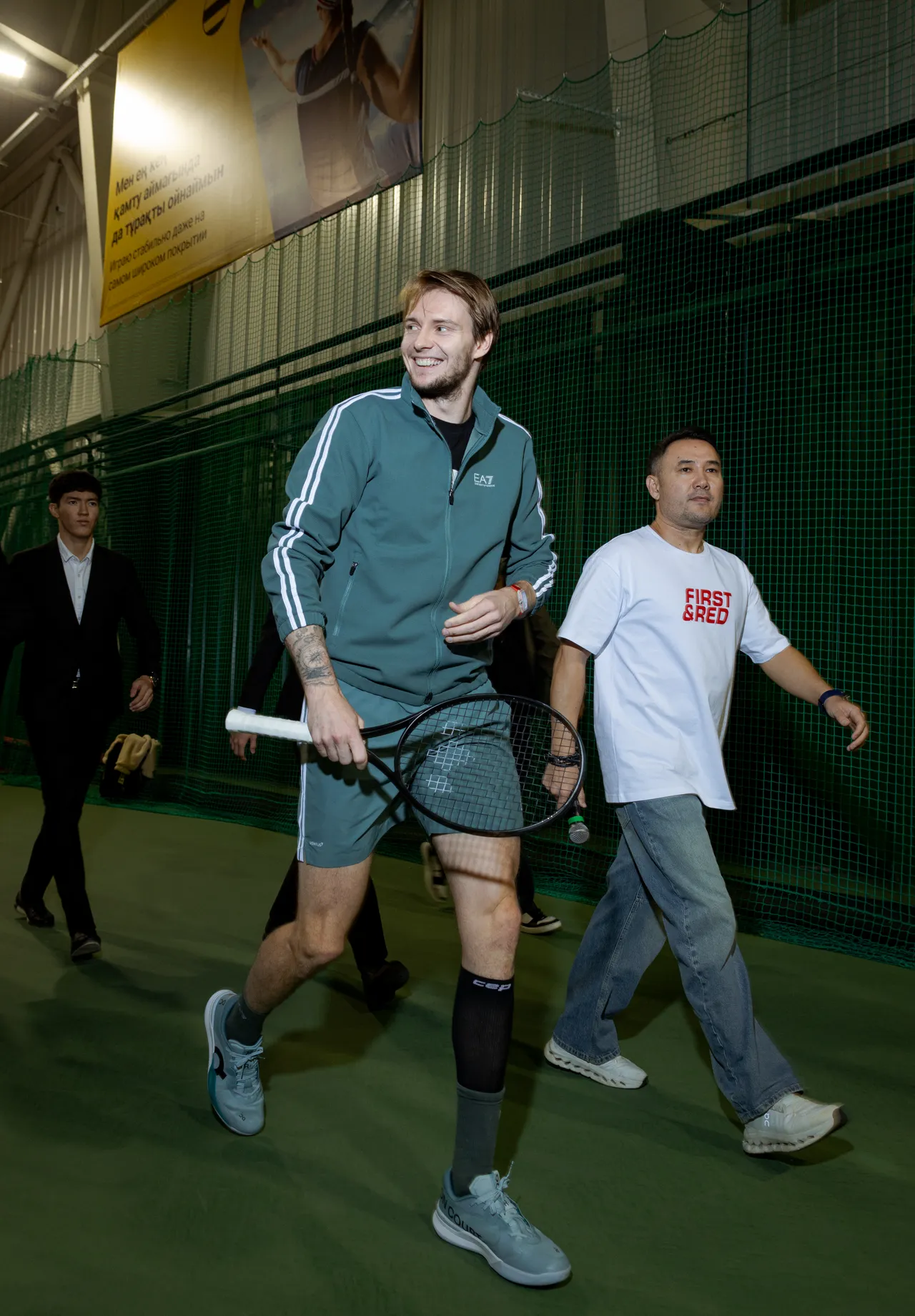
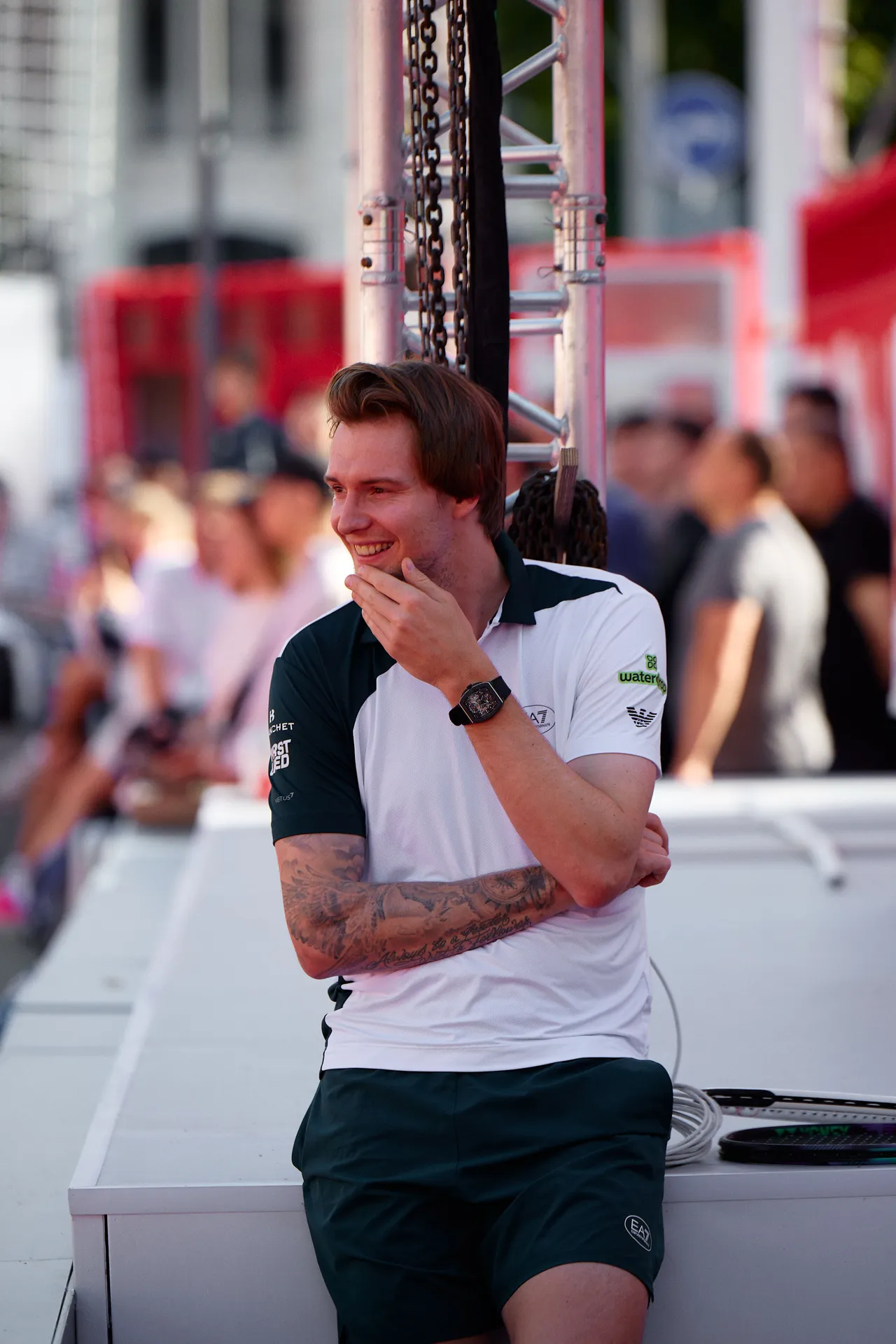
Alexander Bublik and his coach, Artem Suprunov, gathered in the new episode of the Tea with Bublik podcast to delve into several intriguing subjects: Do Sinner and Alcaraz represent the current benchmark in tennis? How did Artem manage Alexander's difficult period? Did Suprunov feel like confronting Bublik after their match? What prevents Bublik from becoming a coach for children? And what will the sport of tennis look like a decade from now?

- Duration
- Family friendly
- Yes
Transcript
How can you tell if your child has a bad coach? A coach is just a stage in a player's life. We trained and nothing worked out for us . So you didn’t even have the thought that this could be the end? I don't think I'm the most calm person, and I think you agree with me . And he tells me: “Don’t go near Artyom.” He says: “It seems to me,” he says, “that he will beat you now.” For me, this is the best match in the history of Trenes. The Russian coach is relatively bad. And why should I work with him when I leave for Spain? It's better there. We achieve the slightest results and after that we start going around saying that we know everything and you should come to us and listen to us. How difficult is it to train me? And just A, hi everyone. Welcome back to another episode of the Tea with Bagel podcast. Today my guest is my coach, my friend, winner of eight ATP tournaments, one of the most titled coaches of the Russian Federation, Artem Suprunov. Artem, hello. Hello. I've always been interested, as you and I have been working together for a very long time. I've known you for a very long time, you have a special coaching philosophy, and I always wanted to know, yes, even I probably haven't asked you such questions, what makes a good coach in your opinion? That is, we will not talk about bad coaches now, we will talk about good ones. What are, let's say, three or five aspects of a good tennis coach? Listen, it seems to me that this concept of a good coach is still a little underdeveloped, most likely. What I'm getting at is that someone might think, you might think I'm a good coach, but another player might say the opposite, that he doesn't like me. Therefore, here the coach is like a person. And most likely, you must somehow, at the first moment, find this vibe of work, communication. And then, perhaps, it will become clearer. That is, I must suit the player. Yes. Both mentally and from the sports side. A good coach, I would say, is a coach who gets into the player’s head. That is, the player has a vision of how he can play, how he should play, and the coach begins to work from this point on . Yes. And from what age did you say that it was time to approach the way? That is, at what point does a coach stop being a mentor and supervisor, or vice versa , let's say he doesn't stop being a supervisor, yes, a person who slaps the hands of a child or a junior and harshly directs him, well, let's say, drives him into some kind of framework so that he becomes better. And at what point does he become more of a friend or comrade there? And at the same time, it’s as if they have a process. It's very simple why I say this. I just read the news that Juan Carlos Fera, who just won the coach of the year award, said that when Alcarazu becomes vulnerable, he stops being his coach and becomes his friend. And at what point does this transition occur from a coach who slaps hands and drives the player into a framework, right? Yes. When he can become his friend. At what point does this happen and at what level? That is, so that it would be clearer to us. It seems to me that this is, in principle, possible to do both at junior and children's ages, because, well, how are you going to expose yourself? For me, a good coach should be able to communicate with the child. And already there, at 12, at 13 years old, with a player, with a child, he can differentiate this. That is, both a friendly moment and a working moment. That is, again, these are different visions. Some people think differently. That is, I believe that, in principle, it is possible to work with a child without hitting him on the hands or physically punishing him in any way. On the contrary, I am against it. That is, I will try to build a dialogue on the court, and I will also try to build it off the court, so that we have this understanding. And I think that this is, in principle, possible. I believe in it. So, walking in single file with a five-kilogram weight around the courts as punishment is not your method. This is not a method. this. That is to say, I don’t think that physical exercise is a method of punishment. That is to say, I am against it. That is, physical activity should be enjoyed as pleasure, as a thrill. That is, how can be expressed here in many words. And some people may even have a childhood belief that physical activity is like a punishment. That is, and maybe the person will not even want to work hard later, even go to the gym, because he will understand that it was like a punishment from childhood, and this can simply discourage him from wanting to do it. do something, some kind of physical exercise, go to the gym, play some different games there. So I think we can do without it. Well, you had a similar situation, we discussed that as a child you were punished with physical exercises when you misbehaved on the court. I just gave this example , that I gave it. I didn't say it, but I accepted it, it's just interesting for people, that it's like you went through this too. I, yes, the example was exactly about me. In principle, I communicated there with colleagues and tennis-playing friends. Someone told me the same thing, exactly the same thoughts , that there is no desire afterwards, that is, to actually go to the gym on a regular basis, because in childhood it was like a punishment for us. And that is, it remains with me, as it were, yes, and not only with me, I just heard this from colleagues too, from friends, that there is such a moment that Yes. That is, you and I often discuss, for example, yes, that I, for example, personally, am unlikely to be able to be a coach at the children's level, yes, that is, as much as I love, yes, as if I could even help, yes, some juniors with whom we train, but you always told me that you would not let me near children at the coaching level. You outlined it for me in a small, yes, so to speak, key. The third one is also suitable for the everyday life, that everything was good bullish, yes, friendship and camaraderie, yes, probably, that's what we'll call it outside the court. But here is a children's coach, here is a good children's coach, why do you, for example, say that you won't let me near children, but at the same time you always say that I can help some juniors there at my level and so on and so forth, but there are no children. That's why, please explain . Well, because most likely, first of all, your own discipline as an athlete may not be suitable for the discipline that needs to be instilled in a child in childhood. That is, we are saying that you count one thing at a time, that some kind of training process or some kind of upbringing or whatever it is that is needed there, so that the child listens to you. Well, it’s very difficult to teach a child. Well , when you look at a six-year-old child, how do you explain it to him? That is to say, you were, in principle, very good at this. When you communicate with children, I often see that you can explain the basic concepts of technology to a six-year-old or seven-year-old child. And then at that moment your children begin to have children, you even talked about your daughter, yes, that she took my son, yes, who also seems to be growing up in a shady family, he can’t hold a handle in his hands. I don't understand how to explain this to anyone. And your daughter, for example, can, yes, because you somehow explain to her that one can’t, but the other can, right? So it turns out to be very interesting, right? That again, we are returning to the previous question. A good coach may be suitable for some people and not for others. And the same thing happens in childhood, that a child is, of course, simpler in childhood, because, in principle, when a child comes to some sections, training, lessons, he will still listen to an older person, that is, a teacher, a coach. He will hear better than he does in adolescence, 14-15 years old, and even more so, maybe even after 18. Yeah. Therefore, it is easier to lay some kind of foundation there, that is, for the child. And it’s not so easy to do this later, but in children’s terms, we’re talking about six 5-year-olds and seven years old. Until what time? So until what time? You also need to pawn good things, you can even pawn very bad things. And then the player, or rather the child, will no longer be able to play well, because we taught him incorrectly. How to lay the correct one? That is, so that the people who look there understand how to determine it at this age. So, from your experience, yes, there, roughly speaking, you are currently, probably, the most titled coach that is on tour among the Russian Federation, yes, among Russian coaches. You are the only one who works in men's tourism now. That's for sure, at that level. And only there Boris Levich Sopkin has more experience than you in terms of touring. Zhenya still works with Karen, so Zhenya is new, but Zhenya Donskoy just arrived with Karen. Well, that is, he was there for five years and Boris Vovich was there for 30 years. Roughly speaking, I spent 50, most likely, right? So how can people understand that this is good and this is bad? Here it is in simple language. Why don’t I, for example, understand? I just can't understand. There are different methods, that is, there are different academies, that is, everyone has a different approach. That is, when I worked there at the academy, I worked for 2 years with this age group, I had 10 groups ranging from years to families, that is, we tried to stick to the same methodology. That is, we had 10 or 11 coaches on the team, and somehow we tried to teach everyone the same technique, so that our coordination exercises would be the same, that is, But still, the system is important. The system is very important. It should be a must-have in every academy. That is, there is a head coach who directs the rest of the assistant coaches, sparring coaches, and others, he directs them under the same system. Is there a right or wrong system, or does it have a name? That is, I would say that, for example, I don’t understand, if you tell me now, I’m very interested, but I don’t understand anything. So which system is correct? That is, it does n’t exist as such. You constantly look at the result, that is, you look at the distance, you look, that is, the academy has been working there for 10 years, that means that most likely a lot of children aged 4, 5-6 years came there and you look after 10 years at what the outcome will be . That is, there are juniors who have grown up in this academy, that is, there are players, yes, you always look at the result. That is, this is true both in children's tennis and in adults. That is, it can be determined this way. This is probably the main concept by which a coach can be defined, most likely by results, merits, that is, what the coach has achieved with a particular player. That is, roughly speaking, in order for a parent who wants a coach or a child who wants to play to understand whether he will get the right coach or not, he needs to look at the results. How much ? Well, 10 years is a long time , right? Yes. How can I find 10 years? Everything can change in 10 years . Well, if it’s shorter, let’s say, over a five-year period, for example, a child came to a conditional coach at the age of 10, yes, there’s X, and after 5 years, at the age of 15, for example, he plays well. Does this mean that this coach can help every player or does it really mean that the player makes the coach or the coach makes the player? It seems to me that this is precisely the basis, that again there someone can consider 90% of the tennis player to be a good coach. Ah, but it won’t help this particular player, because they won’t get along, that is, they won’t understand each other, they won’t find a common language. That is, this player needs a hot-tempered coach, but this coach, on the contrary, is calm. And it was always precisely his calmness that gave the player some kind of confidence, that is, somehow motivated him. But this other player needs the exact opposite. That is, so that his coach would constantly encourage him, so that he would push him somewhere, that is, constantly somehow, perhaps, motivate him more emotionally. That is, and again, this is returning to the first question, that a good coach is a very elastic concept and it still has not been proven, it seems to me, what a truly good coach is. Well, yes . It just always seemed to me, you and I often discussed this, that a good coach is one who, let’s say, you showed results with me, right? That means no one will ever take it away from you. Everything you won with me, we did together. I always tell you that it seems to me that in order for them to say, for example, that Artem Sprunov is a coach who shows results, you have to show a good result with someone else after me . Yes, for example, if we take Boris Ochepkin as an example, he had, it turns out, Misha Yuzhny, then he had Zhenya Donskoy, he probably had some other players , yes, well, conditionally, that is, he shows results with a large number of players at a high level. Yes. So, could this be the very measure of a good coach over a long distance, even across two careers, right? That is, let's say, well, your career is longer than my coaching career. That is, I played, say, 10 years, you and I work there, it turns out, five, I will play there, let's say, another 5, that is, my career there is 10-12 years with you, yours will continue, you will only be 30, 6-37 years old, that is, you are still young, that is, roughly speaking, during your coaching career you can work in three careers. Well, let's take it that you won't be fired there or you won't leave some player yourself. That is, in this period, after one player, it is probably difficult to say whether a coach is good or not. After a certain number of players and successful cases, so to speak, can we say that the coach is successful as a person, that is, as, probably, a product, so to speak, most likely, yes, this is coaching activity. After how much? After one player, probably yes, you can already somehow start to just talk. And conclusions can probably be drawn only after you have proven the result with at least one more player after the result. The result, at the very least, is that we always look at the rating. Well, yes . And if you see, you started working with a player, he was, I don’t know, three hundredth in the world, and then he entered the top 100 with you. That’s a good result. That is, for every coach, I think every coach will be happy. That is, when a player is 25 years old, he becomes number three hundred, and then he enters the top 10,000 with this very coach. I think this is a very strong result. This is a clear result, as a new coach has arrived, completely changed the training process, perhaps added tactical approaches, and this player has made significant progress. That is, it is precisely we, I think, all of us, both the players and we, the coaches, who are looking at all of this. This is first and foremost. And, of course, I support this, that a coach can’t show one result and stop there and go around saying that that’s it, like, I’ve won this game. No, it doesn't work that way. You are a good coach. In my opinion, he should show results constantly. He must be constantly motivated. That is, he cannot stop one day and say: “That’s it, I’ve achieved everything and that’s it.” That is to say, no, for me it doesn’t work that way. What is your motivation as a coach? That is, where do you find it and what are you generally striving for as a coach. Specifically, you. The first thing is probably the emotions when you win, when your protégé wins titles. I just wish every coach could feel this, because these are really great emotions that motivate you, like, damn, it’s great to work and experience this. That is to say, I wish, yes, for every coach to experience what I experienced there eight times already. And even some others, maybe, I’m not just talking about titles, I’m talking about some emotional matches. That is, this is precisely what encourages you to continue, that I want to achieve such results, I want to experience these sensations again and again. That is, for me this is one of the main driving forces. That is, the engine is in emotions, that is, for you, you are not very concerned about money, you are not concerned about conditional fame, yes, some kind of coaching fame, what they will say about you, that Artem Suprunov has achieved something there, that is, for you, emotions are more important, pure emotions, yes, as a result of work. I love my job, yes, and when I experience these emotions, that is, it just, well , encourages me to continue, that is, I want to experience it again and again. Well, in any case, you and I can probably say that we got lucky in some ways, right? You and I won eight titles there in 5 years. We played, I think, how long? 14 finals besides this one. In general, we played, yes. How do you stay motivated in moments like the one we had this year, when from the middle of last year until, say, Turin or Rolangaros, I did n't win anything at all. And even, yes, I talked about it many times there, that I called you and told you that if the result doesn’t come, I’ll take a break from my career. To which I think you lied to me when you honestly told me, "Yes, brother, no problem, take a break, it's your career, do what you want." These are the real emotions you experienced then, when you probably didn’t know that I would call you and tell you about it, right? So, suddenly after the match I called you and said that that’s it, I’m tired, I don’t want to, I don’t understand how to stay motivated in this, and what did you really feel then? Listen, it’s also very interesting when work is interesting. Not only when everything is good with you. That is, it’s interesting even at that moment when everyone in the Duma is already saying that everything is fine, like this is this player, we’re writing him off, he’s not the same anymore, and you’re trying to work it all out again, to change something in the training process, in a conversation with your player. And that is precisely a completely different job. That is, we had to go back again. That is, we were kind of holding on to some level, and then it happened that you fell. And another challenge, it’s about these same emotions that we just discussed, that I wanted to continue in this same direction, as if this is my life, and I wanted to continue and experience it all again. Therefore, regarding the conversation, I answered you very honestly. It was such a very honest conversation that I remember it down to the last word, that I understood what situation you and I were in there together and basically accepted this moment, that maybe it would work out now. I believed that it would work . I didn't believe what we were saying there about taking a break after Mubledon, but I didn't believe it. That is, I would think that we will still remain, that is, in a normal rating, in normal positions, we will change something, because we have changed, yes, a lot of times before, and everything, everything will be, in principle, normal. But what happened there went beyond the objectives . And at exactly another moment, if it hadn’t worked out, then most likely in my thoughts it was like, well, we’ll take this break, well, for 3 months, there, I don’t know, half a year, as long as you want, and then we’ll go back to the same place. That is, I never thought that Alexander Bublik was finished as a player. Even if when you told me this, that everything, brother, like I, well yes , I feel like I’m done, my career has gone to sleep. I didn’t believe it, because I see you as a player and what happened 5 years ago, what we can improve in now, how we need to work. And so, yes, it did n't even cross my mind that we were finished. That is, I had such thoughts, I voiced them, I voiced them in the press, I voiced them to you in personal conversations. Was there a moment when you thought that you, as a coach in this case, in working with me, were finished, and that you wanted to give it all up? I think there was. I don't know about you. And I don’t think you and I have raised this topic . Maybe, if only in states when I might not remember, yes, that we raised this topic. So, tell me better, sober-mindedly, yes, let's say, have you had moments when you thought that everything, that the point of no return, had already begun? Listen, these moments happen, I think, in principle, every coach has these moments , when he might feel at some point that, well, that’s it, I’ve probably exhausted myself, that is, I’ve already given him everything, he already hears me completely differently and, perhaps, doesn’t take some of my advice, and you think that , well, that’s it, most likely, for him it’s just, like, a coach is just a stage in a player’s life, that is, and stages can be different. That's probably why I had such thoughts. And here was the moment, that just oh, he's dodging, as he says somewhere, where, where, somewhere, somewhere, your words influenced me, that we still, that is, have not achieved everything together, that we still have room to grow, both for you and for me, and somewhere, most likely, maybe even you motivated me in this regard, when you call it. Well, it was about time. You, you yourself, you, I think, were telling Anna about this, that we were talking in Rome , when I bought tickets after the match and came to tell you that that’s it, I’m flying. But before that, before this, let’s say, we will have Rome , we need to tell, we need to tell that there was a time. Tell me, Ilya, I can tell you what it was like in Rome, yes, there was almost a point of no return. That is, how it was that we simply didn’t understand each other at the match, I don’t know. This most likely did not happen during the match itself, but rather , most likely, it was already happening before, because there were no microphones near yours, near your box. Yes, yes . And it’s good that there was no camera that captured me, how I left, with what look I had in general. But as you said about Zhenya Donskoy, Zhenya Donskoy met me later near the shuttle when I was getting ready to leave. And yes, then it seemed that that was it. That is, before Rome, there was no moment when you and I were losing match after match, week after week, and at the same time we were training together. We trained with you every day, we didn’t do any nonsense. We trained and nothing worked out for us. That is, you did n’t even have the thought that this could be the end. The thoughts were precisely because this period was too long, probably seven months, when you only won a couple of matches in 6-7 months. That is, this is already some kind of distance. And we take this into account that this has already been there, it turns out, for the fifth year of our work, and it turns out that you haven’t shown results for six months. This might mean something, might lead to some thoughts, eh, might lead, that is, to the head, that maybe I’m just saying, maybe this is all, that is, you already need something else, something new, some other, completely different coach, that is, you need, that is, not like me, completely calm, as they tell me that I am calm. I don’t know, honestly, I think I’m not the calmest person and I think you agree with me . I think it's far from the calmest. It's not just that everyone says I look very calm there. But no. Have you ever had the urge to grab me after a match? Here in Rme it was just like that, you can’t really grab hold of it, but just... Yes, I’m saying, it’s just pointless. I wanted to make a pass to the legs. Our physiotherapist just told me, I told him, I left the match, I beat , I think, Roman Sfulin, and he told me: “Don’t go near Artyom.” He says: “It seems to me,” he says, “that he’s going to beat you now.” And at some point I left the Courts. I left the Courts to avoid the rain. Usually, well, sometimes coaches leave matches and then we sit there in the locker rooms or we just sit there and watch TV and it shows six courts. Two out of six courts were kicked out. Two, yes. Yes. Or this one left there himself. And we sit together, the two of us, the three of us, discussing. Damn, like, how can you play like that there? Why did you play like that? That is, I start some discussions. And then I wait for you after the match, you come out, we talk. And this time it happened that I just left the mountain and just went straight to the car and drove to the hotel and started packing my things and buying a ticket. So you mean you didn't watch that match? While I was driving to Shatli, I was driving to Shatli alone, and the driver was sitting there watching this match. I asked him to turn off the sound, he said: "No." Alexander Bublik is playing, I can't turn off the sound. And this is my favorite tennis player. I say: "I understand you, in short. And you turned away at one point." Yes, yes, yes. I could hear what was happening by the sound. Yes. Well, then, naturally, I watched it on repeat, yes, because when I came home, Jeremy told me, he says, no need, don’t go near him yet. But then I said: “Well, if you had clapped for me then , I wouldn’t have responded. I would have endured it.” I would have definitely tolerated it, because, well, I was wrong, of course. Well, it’s like, again, it’s like at some moments I’m not there, at others you are. And we always understood each other . And that’s why it seems to me that even for the period of time that we’ve been working, few people on tour have worked for that long. A little, yes, very, very little. That is, it could be 10 people, 15, it’s probably just 5 years at most, because it could even be, it seems to me, even less. And how can I preserve this from your side? On my part, well, after all, this is not my interview, yes, I will not tell my side, as on your part, as advice, yes, let’s say, let’s say there is a certain player and a certain coach sitting now, who thinks: “I would like to work for a long time.” And the player says: “I don’t want to change coaches either.” Well, even if they don’t even know each other yet. Here's how to maintain this relationship with a player from the coach's side, when, let's say, he's going through a long losing streak, and he's losing month after month, so that he still wants to rise up with this particular coach and, roughly speaking, prove to himself and everyone around him that, after all, we are a good team. What I told you, yes, that you can leave if you want, but only when I return to the positions I stood in. That is, I would not let you go under any circumstances, as it were, until we return. That is, then I was like, you know, when we got back into the top twenty, into the top ten, you see, I already said, when we got back into the top twenty, I said: “Now that’s it.” That is, whatever you want, I say, go away. Well, if, as if, you have Da-d-d-d, if titles mean nothing to you , you can leave. Yes. Here. That is, how to forgive through this difficult routine, yes, our good relationship and so that the coach does not say to his player: “Yes, you are finished , as if you were finished, I am no longer interested in you, I will go work for others .” no matter what the player does. It also seems to me that this is directly, I will say this way, that it probably depends on both sides, because it cannot be that two people should hold there, let's call it a relationship. That is, two people must maintain a relationship, and if I have even the slightest doubt somewhere, you will start to doubt too . This will not lead to anything good. I often tell you about this when we work together, we have some points there, yes, when we come to something , I tell you that I sometimes , well, I tell you, I look at you. This, by the way, is a very important point, yes, that I look at my coach, and he tells me something , but I, for example, don’t believe it. I tell you, I tell him: "Brother, I just don't believe you." That is, I don’t believe what you’re telling me now. I see that you yourself don’t believe it. Yes. sometimes, you think that you need to convey to your player in a completely different way, that is, and well, when we are together almost 24 hours a day, you already see, probably, when I want to jump off a little or go around some areas in order to somehow try to trick you, but this can be very, yes, difficult. So it seems to me that it is from both sides. That is, first of all, probably the coach, again, he should not, I will speak for myself, that he should not stop at some achieved goals or, again, if there are no results, he should not give up and he should just encourage his player. That is, it is very important that there is warmth between the coach and the player. Human relationships go beyond what they necessarily have to be like off the court, that is, off the court and on the court it is not necessary. Definitely, definitely, definitely. There is no other way. Well, as far as we can see, if you take everyone who has been working there for a very long time, they are all like friends, like family, that is, the human element is above all else, even in, well, roughly speaking, in a world of huge amounts of money, results, hard work, yes, there are victories and defeats, the human element still comes to the forefront. This way you can maintain some kind of relationship. It seems to me that there are very few people there who think about money in general. No, I just outlined the general picture of our world in which we live. Yes, these are big fees, this is a victory, this is a defeat, this is just a nice bonus. But it’s the relationships that are, I think, more important. That is, for both the coach and, it seems to me, for the player it is the same. I don't agree with you and No, I agree with you. I just immediately remembered that phrase that every time money is spent where it should be, Artem Romanovich Spurnov says: “Money is dust on the path of life.” He says that I, what is money, he says. That's why, yes, that's why we don't have them. That's the problem. I wanted to go back. You just explained it to me, yes, so to speak, in a more accessible language. Perhaps, perhaps, the viewer will understand that a good coach is like water. It takes shape. Yes. Roughly speaking, it tries to fill the player with this form and help him. That is, he must constantly adapt, constantly. So, roughly speaking, tell me, when you and I finish working together, no matter how it sounds, yes, sooner or later this will happen, then you will have to adapt to the new player and, perhaps, change yourself, completely turn yourself around. Or do you think that a coach should stand his ground and say: “ I trained Bublik like this, he played, and now you will play exactly the same way.” It seems to me that here, first of all, a good coach must adapt to the player, because all players are different, that is, you cannot say the same thing there, there is a talented player, and there is just a hard-working player, and you cannot give them the same work with them using the same method. You have to change, you have to change in the moment. Maybe if you need time to think about how you will do this, don’t immediately jump in and agree to work with him, but rather think carefully and understand how you will act. Because if I were to go from you to some other hard worker and work with him the same way I did with you, then, well, 99% of the time nothing would work out between us . That is, I’m just me and I, and he, we’ll just waste time and Uh-huh. so my opinion is no. Here, first of all, in the present time, maybe it was different before, but maybe at one time it seemed to me that the coach chooses his player, but now everything has changed very much, and, most likely, the coach needs to adapt to the player. What about the methodology? You told me earlier that the academy’s methodology should be uniform and everyone should follow it. That is, roughly speaking, it turns out that from a certain age only the coach must adapt. That is, you shouldn’t look for a good approach to each of your fifteen promising, different twelve-year-old children, even if they are 12 to 16 years old . At what age should you do this? Or should you start looking for an approach from the age of 12? That is, roughly speaking, you have a boy who or a girl who has not yet achieved anything in this life, yes, like in sports, and she already, for example, tells you: “I do n’t like this, I won’t do this.” And you have to adapt. Or at this point you should still apply your own methodology, yes, which you, uh, promote in your academy, yes, or no. Here is a question. I'm interested in this. This is a very good question. You and I might have even touched on this before in personal conversations. Here you need to have, of course, some sensitivity, as to at what age this should happen, already in some individual moments, approach the child and say there: “No, everyone has such a grip, but it is comfortable for you to play with this grip, and well then continue,” because you must see that it is precisely this grip that is more comfortable for him to play with. That is, he won’t be able to play differently and won’t be able to develop there as well. That is, again, this is most likely something that could already happen closer to adolescence, 15-17 years old, maybe even eighteen. But what are we talking about 12 years? There should be the same methodology in the academy, because that means everyone is in the same boat for the child, roughly speaking. Well, again, I worked at the academy with very young children. That is, I, well, I saw how they work in academies in Europe and America, when everyone goes through the same period and everyone does the same thing . You are 12 years old or you are 16 years old. Well, yes, they work for a person's watch. Very, very much so, yes. Well, and another thing is that they have a lot of tennis players playing. Well, you and I often discuss this, too, that it turns out that they are trying to install equipment here. That's why we're always wonderful, we were always the first girls, the first boys at all ages from 12 to 16 years old, and then this transition, it happens very badly , right? Maybe there is something wrong with the system. What do you think is wrong? Well, that is, even if someone looks now, someone, maybe someone is also worried about this question, like you, that is, how do you think, why do we have great kids, 12, 14, 16 years old, and then just at 16-17 years old you watch how he, roughly speaking, maybe even still there in the world's top twenty as a junior, but you understand that he simply has no chance of playing there at even a conditional level of the top 150, yes, there, well, we don’t take, yes, lower, that is, at such a more or less decent level. That is, when this moment is missed, when there is a young little star standing in front of you , yes, at 14 years old with a contract with Nike and AMG, for example, yes, as is usually the case with us, with the Wilson racket. Yes, yes . And after 3 years he can no longer win one futures contract and stops playing altogether. So who is missing this moment and why is it missed here more often than there? Well, it seems to me that there are different points there why this is being missed. Because , in principle, I haven’t seen an academy in Russia where even two or three people train and perform very well in international tournaments. For example, there aren’t four people in the same academy who are in the top 2 of the ITF. That is, I honestly haven’t heard. Maybe there is such a thing, of course, I don’t know, but I haven’t heard of such a thing. So, again 200, do you mean juniors? Juniors, yes. 200 IT, so that they could train with each other in the same place. And as often happens, as I already did, where I met juniors, you talk to them , and by the age of sixteen they already had, I don’t know, 5, so many coaches, that is, it’s already a lot. And it's possible that someone could have made some kind of systemic error that went wrong, because you see him as a junior at 14, and then you see him at 16 and you don't understand how that's possible. You saw him clean, you saw him, you saw potential in him. And after 2-3 years you see it and you understand what went wrong, who allowed it to happen. That is, such examples are very common among us. It seems to me that it is precisely because there is no clear system of some kind. Yes. And again, regarding the academy, I simply haven’t heard this most important thing: that the best tennis players in Russia train in the same academy. That is, the absence of a certain base, the absence of a certain system, and someone is talking about one thing, another. That is, everyone is in different places. It’s not like everything is in one place, like, for example, there in Italy in Pyat, like there is someone in Olyn, in France there is Utsngi, in Mortaglu. Yes. That is, new people come there, there are a lot of juniors. Well, for example, if we take St. Petersburg, yes, where you and I live, there is none of this there at all. That is, we have a general spread. It's probably better in Moscow . So, in Moscow there are some academies, yes, so to speak, where they train. That is, well, look, that is, the lack of a system, that is, the lack of a system and the lack of some kind of overall picture, yes, that is, a coaching one, roughly speaking, there is a hypothetical academy X, in which, I don’t know, 300 children, 400 train, and they all train the same way. And this system has been tested, and it will give what is most important, that it is tested, because we are looking, I say, at the academic academy there. This is just a perfect example for me because all coaches perform the same function. Here we are, one day we play with one sparring partner, the next day with another junior sparring partner. And they each have a coach who says the same thing , shows the same technique , the same strike. And just like that, everything is very clear and there is no scattering whatsoever. That is, one person plays with this grip, another with that. And the coach shows exactly the same thing. It's the same system, yes, and we know how many tennis players have graduated from this academy. Quite a lot, especially at the junior level and moving on to the adult level, yes, that is why there must be a system, that is, if we can draw the following conclusion, is it always possible here and there in my generation, yes, there among Dania, Karen and Andrey, yes, everyone left early, yes, that is, everyone there at 16-17 years old left already, and some even trained abroad earlier, yes, there in Spain, in France. I was probably the only one who trained here for a long time . You could say that I trained there until I was 18, until I was 19, before I moved to Kazakhstan, that is, as a player, I was taught to play tennis here in Russia. Is it possible, well, let's say, that now some parents or some children will look at us. Do you think it's possible to develop a top-100 tennis player in Russia in 2025, whether it's on the ATP or WTA circuit, or do you still need to go to a leading academy? I think it is possible. I believe in this, again, now touching on the process and our coaches, that is, this myth that there are no coaches in Russia, that is, everyone says this, but honestly, this is not true, because I have colleagues there, friends, acquaintances with whom I communicate about tennis, and they are well versed in tennis. We simply have this temptation in Russia to earn money: you can go and earn big money in the scum, or you can sit in Moscow or St. Petersburg, work 9 hours a day, and simply earn more than on tour. On tour, I mean with players not in the top 100, but below that level, because you need to work there first and there’s no point in leaving. It turns out that here, yes, the coach has everything he needs to make a good living here. For what? So you think that coaches lack the motivation to work somewhere for less money, but with the prospect of becoming a good coach? 100% this is a fact. This is a fact for me. That is, when I talk to our coaches, this is a fact. He says to me: “Why should I leave for 3,000 dollars a month when I’m with a player?” Are you speaking correctly? Just so people understand that you are not telling the coach to go and coach in Italy. No no, I'm talking about the player. Why should I leave, roughly speaking, for a tournament and come back? The sixth-ranked player in the world offered me to go with him, start working with him, travel with him all over the world, that is, strive for something for 3,000 dollars a month. And he says to me: "Why do I need this when I went into the paddle, left for amateurs and earn 500,000? Well, simply for what? On the one hand, I can kind of understand him, but on the other hand, I kind of can't, because again, here you need to find for yourself your inner feeling, whether you need it or not, whether you want it or not. If you don't want it and you go there, you'll tell the player: "Well, pay me 10,000 dollars, and I'll go with you." You'll only work with him for the money, nothing will work out for you. I don't believe in that . It should come from something else. First of all, you, you should have a desire to help someone. That is, that's what I think. And money is the next thing. You can suffer a little and not earn money. And in any case, as if you and I often discuss a large number of tennis matches. Uh, you and I rewatch our matches, watch matches of colleagues, we always try, yes, to learn something there. Is there any match in the history of tennis that you can take as a basis and say: "Well, you'll sit them down there, of course, let's imagine that you have an academy, you'll sit your coaches down and say: "So you're watching this, this is the benchmark match for how tennis should be played , let's say, today." Yeah. Is there such a match? And in general, is it possible to explain to someone based on one match what tennis is in its final part, so to speak? Yeah. Well, most likely, I'll say right away that based on one match you probably won't be able to explain everything there, what you want, uh, to get heard. Ah, but in principle, such matches exist. Well, again, there are different generations of tennis. That is, until this year, I thought that I, for example, had such a match inside me. That is, I always told everyone to watch it, whoever asks me what match I should You need to watch it, I say, watch it. The 2012 Open final, Nadal vs. Djokovic. I mean, for me, it was, well, just a mega-match, the kind you could sit kids down and tell them about tactics, show them technically, how they move, where they play, and what shot they transfer to, how they serve to what points. I mean, it was simply the number one match for me . Ah, but this year, of course, that's changed. I mean, the Rolance final is, well, for me, I don't know, maybe I'm being unfounded, but for me, it's the best match in the history of tennis. And can this match be used as an encyclopedia for me, for, roughly speaking, yes, even for players who are in the top 20, top 30, or whoever is in the top 150? Can you sit a player, who's in the 80s, down in this match and say: "Look where they play." I mean, the very idea is incomprehensible, that someone from the 80s won't learn to play in those The points that Yanik or Carlos play, right? He'll never, well, maybe he'll learn 10-15%, yes, but I mean, can we take this match right now and use it as an encyclopedia of what tennis is like in 2025? I think that should be done, again, in the current times, what kind of tennis we're seeing now, and where it's heading. This match can be used as a guide, and even top-20 and top-30 players can learn a lot from this match . That's why, for me, this is now the number one match, as I said, in the history of tennis, because with such two opposites, you can learn something from both. It's probably the best I've ever seen, maybe even Casarta, because, well, it was just a phenomenal match. And where did you say tennis is heading in 2025? What do you see tennis will be like? Well, if we take, yes, there's 2015, yep. Now it's 2025, it's changed colossally, Yeah? You don't have to be a genius to understand that. What do you think tennis will be like in 2035, and where will the change in the slowdown of courts, and their appalling quality, the colossal slowdown of courts, take us? Where will this lead, and what will we need to do to stay relevant for the next 5, 7, or 10 years? We can only guess here. Well, I don't think anyone could have predicted what tennis would be like in 2012, what tennis would be like in 2024, or 2025. It seems to me that if you look at Djokovic now, he's playing with the current generation, and he's suffering on the court . If you take, I would say, this year's match, the Roland final, and the 2012 Australian Open final, well, you can see how people play, that is, they play correctly with their heads, that is, they play with a safety net from the line, that is, they don't make mistakes, their rallies are going at 20, 25 shots each, and you open the 2025 Rolangaros, you watch the match, and you see how easily everyone, both the first and the second, just hits the nines. Just hits the nines with all their might. And that's a huge difference, although only 13 years have passed. Maybe for me it doesn't seem like that much, I mean, but in 13 years, it seems to me, tennis has changed a lot. That is, 52 Grand Slams have been held in 13 years, four a year, that's 52 Grand Slams. It's clear that Siner and Alcaraz are there, they stand out and are different from the rest. That is, now in the tour, most likely, it's Siner, Alcaraz, and then there are the rest 100%. That is, although, but still, I came to the following conclusions: they look at Siner, Alcaraz, and them. And I see how young players, yes, not even young ones , who have been on the tour for 5-6 years, They change their game, they somehow change their approach, change tactics, change the position they take on the court, and it all goes in favor of these two players. So you think that, roughly speaking, now, well, probably even we can say that in any case, we look at these matches and say: "Okay." That is, if this is not how we should play, it is clear that probably none of us will be able to play like that, but we can get closer to them at least, yes, a little, yes, add 10-15%, 20%. That is, this will already be a small step, you will already feel it, that is, you and I have seen some things that one of them does, and tried in the same way to see what will come of it. That is, some things worked, some didn't, but you still try, you look at the best and draw conclusions from them. And at the moment in the tour in the top- There's only one coach in Russia who's been working there for more than five years— you. And right now, Evgeny Donskoy has joined the Karen team. Why do we have this problem that even our juniors have a hard time making the transition to the adult tour, and the same thing with coaches? Why can't they make the transition and work in the same numbers as the Italians, the French, the Americans with their top players. Why does n't anyone hire our guys as consultants, assistants, coaches, and so on ? First of all, I said that there's a point here, that there's a temptation to work, all sorts of scoundrels, and we have a lot of amateurs in the country. And it's much easier to work here, throwing in padel or playing with an amateur, than to work on tour. That is, but on the other hand, we also have this issue that everyone says you have to leave here at 15-16 years old. That is, and maybe they're leaving, maybe, from a good coach in 15-16 year olds, but they come for a system—a system that an academy in Russia can't give them, but one that can be provided in Spain, or Italy, or America. So, we can't say we don't have coaches. There's probably no system, because if there were a system, no one would leave, and there wouldn't be this myth that we need to leave here to play well. So, naturally, there's the issue with the bases: you come to Moscow, drive 30 minutes to the courts, train, play tennis, and then you have to drive 30 minutes again to do general physical training, some kind of fitness. You waste so much time on the road. This, of course, is a huge disadvantage. That is, uh, in Europe, everything happens in the same place. You train, do your tennis training, then immediately go to the same base, do your fitness training, go there, have lunch, and then go back to the same place. Rest there in your room. I haven't heard that here, and that's why I think it's the biggest drawback. You're talking about a lack of system. I still want to, I'm interested in the fact that our guys aren't being hired from a personal perspective. On the other hand, our parents decide, everything works out for us, they make the decision, that is, not the coach. That is, if the coach says, "Let's do it this way, let's take me," and a sixteen-year-old kid goes with his coach to an academy in Spain, but that doesn't happen here. Here, they just say, "No," we go to Spain and stay there. So, maybe some coach wasn't given a chance, and they missed out on a good coach. This coach could have become, you know, the best in the country, I don't know, or he could have achieved better results on the world stage, but he simply wasn't given the chance. Do people leave good coaches in the same way as bad ones? That is, roughly speaking, Well, maybe the parents concluded that this was a bad coach. Well, if there were results, for example. I mean, I'm talking specifically about the transition, that, well, okay, let's say, okay. Everyone has a different understanding of the result in their head . I mean, maybe the parents didn't see this result, but there was a result. The child was growing, he was improving, but he didn't improve immediately; in six months, he grew three heads, and he progressed gradually, but he advanced with this coach, and the parents wanted instant results. And then it turns out that the junior was seemingly not bad, and the coach seemed competent with him , but the parents made this decision to take him abroad to a completely different coach. And it turns out that both he and the child didn't play well, and the coach wasn't able to do a full-fledged job with him. Well, why doesn't it work the other way around? Why don't the French sit there and say: "I'll go to Russia, it's good there." I'm talking about exactly this. I mean, I'm just, well, You know, this has always been a concern for me. And it always has been . Why not the other way around? I mean, why are we talking about people leaving a Russian coach for a French one, and not the other way around ? I mean, I think this is a problem, for example, with our coaches. It's not a problem for the parents, not a problem for the children. Because it turns out that the coach has brought an ITTF champion, an under-14 champion, to first place in the world, and then suddenly there are no results, these transferable ones. So , based on what you're saying, it turns out that in your opinion, the level of a coach, the average coach in Russia, is no different from the average coach in Italy or France. No, and here I'll say right away that it is different. It seems to me that our Russian coaches have the bar here, that is, while for the Italians or the French, it's here. So, our Russian coach, having achieved some minor results, stops and thinks that's it, he's finished this game. I mean, what is a small result? Let's just put the numbers in perspective. My coach told me that he got his protégé into the top 300. And he said, "Do you even realize what I've achieved, in terms of juniors, right?" And I was like, "Well, you're talking about juniors now, and I asked him exactly the same thing about juniors, right?" He said, "Well, yeah." So, it became a little clear to me, too. I'm talking about this bar, that ours here is a very low bar. We achieve the slightest results, and then we start saying that we know everything, and you should come and listen to us, but it doesn't work that way. So , it turns out that this isn't the parents' problem, it's the coaches' problem, who are for the majority, yes, the majority, yes. But before that, I again said that I wasn't speaking for everyone, I was speaking for some individuals who really understand tennis well, but maybe they did n't have a chance, or maybe they They have some difficulties again. They all have children, families, mortgages, and someone needs to cover these issues, and someone can't travel for 8-9 months a year. That is, there are such issues, and you can't blame them for that. But when coaches simply say that I wasn't given a chance and talk about these minor results, it turns out that it's not very clear. That is, it turns out that because there are a huge number of coaches whose minimum bar is, say, 300 ITF or 100 ITF, Yeah. The general picture is that a Russian coach is relatively bad and why should I work with him when I go to Spain, it's better there, right? That is, roughly speaking, if, in order to change this, we need to completely change the consciousness of everyone, well, the majority of coaches who work in Moscow. That is, change it completely, change the mentality, yes. Well, perhaps you're right, because you and I often, when with some strangers there We were sparring, they had some coaches, they told us about some results like... I got someone into the ITF top 100 in juniors, yes, and well, the example I just gave, this is a real one, I didn't lie at all, this is a real example, how one coach approached me and said, that is, I'm kind of standing and that and how would you stop there. We're going back to the question you asked me, what drives me, what keeps me going, why do I still want to continue working and developing after eight titles and some good season, but it works differently for them. That is, he thinks, roughly speaking, the coach thinks that if he starts walking around the courts wearing glasses and moonwalking. That's the main problem, unfortunately, with our coaches. Yes. And most of them are like that, as I understand it. So, you know more coaches than I do. Accordingly, after working as a coach for three years, he says that I should now work for 20,000 rubles per hour. You're right, right? Because when we often meet coaches from the European academies, their kids are in the top 20, top 30 in the world juniors, and they say, "Well, no, that's nothing, we need to be in the top 200 next year at the ATP so we can talk about anything." Everything is correct. And most likely, this is precisely what gives rise to our problem, which is that we need to maintain the same level of care for the players, yes, we also often discuss with you that our players, yes, those who are worth 300-400, consider themselves excellent tennis players and in general they are happy with everything. It's like we have these problems, yes, yes. Just like players, coaches also have this problem. Keep your feet firmly on the ground, roughly speaking, and don’t get too cocky at the slightest results, but constantly grow, constantly develop, and never stop at what you’ve achieved. That is the most important thing. That is, you can’t, again, I’m saying, with even the slightest results say: “That’s it, this is impossible. You’ll immediately stop being a good coach.” Yes. How can you tell if your child has a bad coach? I need a clear answer to the points of the memo for children and parents. Because when I gave my interview, Ugu. I read the comments and it was written that I did not fully cover the topic of what a bad trainer means, that I called them charlatans. What is a charlatan, right? But I want you to give me a memo. You, as a person experienced in this matter, you, of course, I am not a trainer, as such, and a trainer. Now I need to find the right words and say a little something . This is the question I ask him. The most important thing a parent needs to see is that if a coach doesn't have a sparkle in their eyes on the court, then nothing will come of it . Plus, the point that we mentioned today in the interview is that I am specifically against a coach raising his voice at a child, that he can insult him, God forbid, slap him on the hands, and generally, speak in raised tones. You can convey the right things to your child using calm words. If again, if again he has this correct thought, when we are standing on the courts, we are going through a process, we are working, and on the next court there is a ten-year-old child. And you can just hear the coach's shouts from this map, and the child just , well, he doesn't perceive it, he keeps rejecting the coach. This is exactly about that vibe that I was talking about, that no, that is, you cannot allow yourself to talk like that to either a child or a teenager. That is, you can find and select words in a normal form to convey to the child, tell him where he is mistaken and what he needs to correct. If the coach can’t do this, then you need to go to another coach. Well, how can we understand that he can’t? Well, that's exactly the question, how to understand, because when the trainer can't, he starts to raise his voice very loudly, or does. Well, let's say I don't understand, imagine, I don't understand anything about tanes. I'm sitting here in the stands, I love my little child. How can I understand that, for example, I will give my son a football game, and the coach will tell him how to play? I don't understand anything. I just want you to convey how to understand. Here. That is, I can explain as a player, yes, what I see is how a parent works with the coach, he doesn’t understand, so they tell him and the child: “This is how I do it, this is how I do it.” Let him not scream, we'll remove him. Yes, let him not shout coach. Here he is, explaining, he is saying some, well, utter nonsense. Well, I’ll explain the word “nonsense” in coaching language. From a technical point of view, you mean Yes, so that it would be easy for a person to understand. Well, most likely, it will just be very difficult for the parent, you know, because if the parent is not in tennis and he is standing there, brought his child to the coach, and the coach is standing there, pretending to be smart and trying to explain the technique, and he is talking complete nonsense, and it’s kind of hard for you to explain this to the parent, who does n’t understand at all. That is, here it is possible to go again to a coach who has at least some, maybe, merits or has at least some name, that is, at least somehow, so that he is known. That is, again, there is a resume about each coach in each club, that is, you can also just choose to go to a random coach and draw some conclusions. But it's very difficult. Well, we know that a resume is not a result and does not mean that it says any correct things. Could I, for example, from my side add there that the parent of, say, a twelve-year-old teenager can open a certain match and see what if, well, let's hypothetically take the technical aspect of the swing, for example, that the first movement is always shoulders, shoulders, the first movement of the shoulders, right? Turn your shoulders, right? Yes. That is, if your child doesn’t do this, and the coach teaches him to move one hand, then this is already a problem. This is how a parent can understand. I'll try, maybe like this or not, in principle, yes, well again, if we're talking about age, then starting at least from 12, 13 years old, of course, it's possible, but again, it's not very good when a parent starts to interfere too much with the training process. You yourself mentioned this in your interview, that tennis parents are a diagnosis. That is, our parents interfere very strongly with the training process, which does not happen, for example, in Italy or France, where we train and also live there permanently. That is, on the one hand, it may be possible for a parent to have his own opinion, but on the other hand, this is not very good. That is, if you have already brought your child to this coach, you must trust him and monitor the results over time. Naturally, what distance will we take then, let's help. I just want to know how this question came to me. I want to help Ugu. To the people, the parents who will watch this episode, to reveal this topic, to reveal it as much as possible, so that it would be easier for them, so that they would at least have, as I say, a small reminder that they would say, well, so that they, maybe, would somehow feel this moment, that is, how to understand this? The only thing a parent can see from their child's training with a coach is how well they connect. This is very basic. That is, how the work is structured, how they communicate, how they communicate, whether the coach is interested in how the child is doing behind the court, how he is in his mood, how he feels. That is, this is all very important, this training, the process, uh, does not end on the court , that is, this touch also continues in the life of communication. And poets can therefore draw some conclusions. That is, no matter how parents get involved in technology, it will not lead to anything good. And about the distance, well, at least a code and a half, that is, for the time to pass, it’s impossible to come like that, there, I don’t know, you really want to go to this coach and tell him in a month, like, that’s it, we’re going to another one. Often the trainer changes me, which is also not very good, because the child’s head will simply start to become a mess from receiving too much information. Should a coach listen to a player? Well, we know a player, let's say from the age of 14, or from the age of 15, or from the age of 16. So, should a coach listen to what a player tells him? Of course, he should hear it too. That is, if a player, uh, shares something so frank with the coach, that is, that he might not like something or, on the contrary, that he really likes something and he wants it to happen more often and more, then, of course, the coach should listen. And if we are talking about professionals already at the top 100 level, or even the top 200-300, then the coach must definitely hear his player and in some moments even listen. How difficult is it to train me? Not easy. There was simply a main question that the editorial office sent me, and they told me to be sure to ask you. How difficult is it to train me? Not easy, but interesting. This is the main driving force here. So, this was another episode of the Tea with Bagel podcast. We had a wonderful conversation. Artyom, thank you very much. Thank you, Sasha. As you may have noticed, I have a T- shirt with my phrase hanging behind me. We want to play it out among the audience. And the first one who guesses and writes in the comments my next guest will receive this T-shirt. Dear friends, since this issue will be released on New Year's Eve, I wanted to wish you a wonderful end to the old year and enter the New Year with only positive emotions.


No comments yet.