Match Center
Back to videos

Goran Ivanisevic and Magnus Norman on Tennis, Coaching, and the Future of the Game

First&Red ShowInterview

Two outstanding coaches and former champions, Goran Ivanisevic and Magnus Norman, share their insights on the transition from players to coaches, working with Djokovic and Wawrinka, the unique atmosphere of the Umag tournament, and the future of world tennis.

???? Tournament footage provided by ATP Media

Тайм коды

01:04  Chapter 1. Coaching at the Highest Level

01:24  Magnus Norman on coaching strategy and handling pressure

02:08  Goran Ivanisevic on the  challenges of moving from a player’s to a coach’s mindset

02:59  Magnus Norman’s advice to parents and young players

03:23  Fierce battles on court and celebrations off court at Umag 2025

04:30  Why the Umag tournament is special in the ATP calendar

05:28  Chapter 2. Then and Now: The Evolution of Tennis

05:52  Goran Ivanisevic on the differences between tennis then and now

07:13  Magnus Norman on rock’n’roll life and tennis

08:20  Goran Ivanisevic on why the average retirement age has changed

09:23  Chapter 3. Working with Legends

09:42  Goran Ivanisevic on Djokovic’s uniqueness

10:28  Magnus Norman on working with Wawrinka

11:18  Chapter 4. Trust, Honesty, and True Connection

11:36  How rivalry turned into friendship with Wawrinka

12:20  Honesty in friendship and tennis, and how to deliver tough truths

13:39  Learning from the player and the player learning from you — Goran’s approach

14:28  Goran Ivanisevic on his criticism of Tsitsipas

16:33  Magnus Norman’s memories of his victory in Umag

17:19  Goran Ivanisevic on the moment when the central court was named after him

17:39  Chapter 5. Passion and Purpose

18:13  After working with Magnus, players unlock their true potential. How did he achieve it?

19:51  Goran Ivanisevic on whether it’s hard to coach after Novak

21:06  Chapter 6. Tennis of the Future

21:30  Goran on the secrets of Carlos and Jannik’s success

23:02  Magnus Norman recalls his final in Umag

24:05  Magnus Norman on the new generation of players

25:03  Umag as the perfect place to recharge after matches
Присоединяйся и выигрывай!

Duration
Family friendly
Yes

Transcript

I will talk to him when I see him. I better not say what I think about him. I just say the player who is unfit mentally and physically like he is at the moment. You don't play tennis. Let the coach be the coach and you are the parent. >> In the end, one thing is the same. If you don't hit the ball, the other guy is going to hit the ball. Who has more guts is going to win the match. Dan told me, even if you think it's going to hurt me, I want you to say whatever you feel is going to make me better tennis player. >> You are there alone. When you are 2% ready, how you can play? [Music] [Applause] [Music] Behind every great player, there's a coach translating belief into results. But what does that relationship really look like? >> That's perfect. really good with the left. >> What is your coaching strategy? How do you handle the pressure and is this the right way to become a good professional? >> First of all, you need to to know who you have in front of you. So, I think that's number one. I think I'm a very good listener. I don't say that I know everything best. So, I I listen a lot to to you. And then I think I'm a quite good um motivator when it comes to self-belief. So, trust, confidence, those kind of things. Then I work hard also. I uh make up a plan with my player. I want to go from from here to here and uh and then we we work hard [Music] >> as a former player. Was it difficult to make this shift from a player mentality to coaching mentality? >> If you want to be a good coach, it's no ego. It's not about you. It's about the player. Doesn't matter what I was a good player on what I did before. You need to bury it deep down. And if you're not able to do that, you cannot be a coach. Help me that I was a player. So I can rely on some things that that I did and I tried some things on myself first and I was working more or less. It was a different time. I came in 2013. It's already starting to change a lot the tennis and you have to adapt on the things and slowly slowly I have to say the honor to coach unbelievable players. For me the switch was you know the problem. >> What piece of advice would you give to parents of younger players or kids? >> Find a coach for your kid that you trust and then take a step back and let the coach do the work. he or she knows a lot about fundamental things uh working with kids. But then it's also about chemistry of course. But but give it a little bit more time. Let let the coach be the coach and you are the parent. >> High performance coaching is often defined by intensity, focus, discipline, results. But in Umagar, that pressure exists in a setting that feels surprisingly relaxed. Because here, the competition shares space with the sea, the sun, and a festival of energy all around. This tournament is a unique mixture of a lot of different things. Obviously, tennis is in the center of everyone's attention that's been coming to this event for 35 years, but you have a lot of side events and a lot of things um has to offer that maybe some other tournaments don't. You have a very chilled and relaxed atmosphere that I hope you also enjoyed in the last couple of days. You have a seaside that gives players a feeling that they're in holiday and they're still still competing. During the event, we have a lot of side events, a lot of good music, a lot of world famous DJs. So I think this whole mixture is something that makes this place special for players as well. >> Could you tell us why um tournament is different to others on the ATP calendar? >> It's look at you have a seed there. It's a match is starting later in the afternoon gives the players to relax more. It's more like a event you know you have a parties after for everybody something. You have a great hotels, you have a great food uh tournaments take care of the players. Uh it's really you have a transportation 24 hours. Everything is for the players so they can feel really like at home and uh we have to say we have unbelievable matches here, unbelievable stories here, great players and for 250 tournament we had three years ago the final that will never happen ever in the history of tennis. Tennis isn't just a sport. It's a reflection of time. >> The game has changed, but the hunger to win stays the same. [Music] I think tennis in my time and tennis now is completely completely different. Everything is different. So >> what exactly is different? >> Everything completely everything, you know, the way they they practice, the way they eat, the way everything is around, they make much more money. Tennis is faster, records are different, clothes are different, everything is more demanding. But in the end, one thing is the same. If you don't hit the ball, the other guy is going to hit the ball. Who has more guts is going to win the match. That's why we have a ranking. And that's why some guys they never going to be number one or number five or number 10. And some guys they up there [Music] Heat. Heat. [Music] [Applause] Marat Safen once said that during your time you had kind of a rock and roll lifestyle on tier. You were more relaxed, not as professional maybe as players nowadays. things always evolve. Uh I think when we played in the 2000, the players that grew up maybe playing in the 70s and 80s and I think now the the current players are more professional maybe than we were. Everything is evolving. Uh I think Marat was an amazing character. He had this sort of vibe around himself. Heat. Heat. [Music] You played your last match when you were 32. Uh back then it was normal like average age to retire. Why do you think they have been playing longer? >> They take better care of the body prevention. They traveling with the fitness. they do more things and and uh and the age is becoming like they play unbelievable. If you see Novak with 38 is playing unbelievable. Uh they play the best tennis with 35 36. So and before we were falling apart with the 30 31 32 was like oh he's old you should retire maybe if I would take care of my body I don't say I would have not issue with my shoulder or something but but for sure I will could play another 2 three years. It's this age is going uh and they play really good. They play really good and uh there's so many things to prevent the injuries and and uh to give them couple more years longer career. [Music] When you coach greatness, you have to rise to the moment. and sometimes just stay out of the way. [Music] >> You called Novak a genius. What makes him so unique? >> Everything. I mean, he is for sure the best tennis player in the history of the sport and he is the I don't know now which place you want to put him, but top five sportsman all time. For me when I look at we have a same mentality, same language and for me it was easier to to kind of go into his mind but you cannot go too much into the mind of genius because you get lost. [Music] But we will see you practice with Stan. But how are you on the court with him? Are you talking a lot or you want him to learning from all mistakes? >> It's also one philosophy that that uh that we develop over the 13 years in order to Stan is using this hashtag trust the process >> in his Instagram post and and it's something that we that we focus on a lot. Not about uh lifting the trophy, not about winning uh not about ranking points etc etc. we focus on how he can become a better tennis player. And that's also something that I want to to throw out for kids and parents like um don't focus too much about ranking results. Focus more about the process how to become better. Always always showing up and and giving 100%. This is more important for me. In elite sport, honesty isn't just helpful, it's essential. And over time, it becomes something deeper. >> After all these times together, the highs and lows, is it more than just a professional between you and Stan? Could you call it a friendship? >> Absolutely. Absolutely. It's uh it's uh what 13 years now together. So yeah, like you say, there is so many emotions, so many so many wins, so many losses. Uh we have both been going through uh difficult times in in the private life. You know, sometimes uh we had to skip practice because you know one of us is not feeling great and we instead of practicing we take a coffee together and we laugh and we cry together. So oh there is so many emotions uh throughout this 13 years. So for sure uh it's it's more than just uh me being his tennis coach. >> How do you tell a player who is your friend? Something he might not want to hear. >> Oh, this is one of the tough tough parts when we when we go grow so close together. I think this is uh definitely become become harder and harder and sometimes it's tough to to say things if if your friend is not behaving well or if you know 13 years ago he told me in our first meeting he told me Magnus I want you to be 100% honest with me uh even if you think it's going to hurt me I want you to to say whatever whatever you feel is going to make me a better tennis player if it's on the court if it's off the court and this is something that I'm if I have something to tell him which I believe oh this this will be this will maybe hurt him I come back to this first conversation that we had in your son you remember the first conversation we had uh you told me that I want you to be 100% honest with me and now I need to tell you one thing that I feel it's hurting your tennis so I always come back to this conversation that we have and it's very honest and and he's been he's been very like respectful with this if if I have an opinion he he will listen 100% Son, [Music] >> turn on the fore end to open. >> Good. >> You learn from your player, he learns from you. It's a mutual learning. Then it's also not good. If you do everything what he wants or he does everything what I want. It's it's combination of talking. If you you know you need to ask him, you you need to you need to have good conversation, good relationship. It's like a relationship and tennis is individual sport and if you're not ready to compete and to fight on the court, you cannot be on the court with these guys. How you going to win? It's impossible. Nobody no replacement. Nobody can substitute you like in the football. You are there alone. When you are mentally 100% when you physically it's it's you can go crazy on the court sometimes. And when you're not in 2% ready, how you can play? >> And the calls you gave uh on Stephanosipas were kind of harsh. What made you criticize him like that? >> I think press made it more harsh that it is. I don't think I say something spectacularly bad. I didn't say that he is a bad player. I didn't say he's ugly. I didn't say that he is cannot play tennis. I didn't say he will never win a tournament again. I said that he's unbelievable player. I said he will be top 10. He played two years ago. He played the final of Grand Slam. I just say the player who is unfit mentally and physically like he is at the moment, you don't play tennis. And it's better to be fair to yourself, to everybody else, and just don't play because you cannot come on the court physically, mentally unfit and thinking you're going to win the matches. You need to practice and then you need to win the matches and especially in Wimbledon that is not easy. And uh he has problem with the back. He needs to solve that problem. and uh changing a record 3 days before the Halle tournament, trying the new record, this I mean so many things. I just say that he's unfit faster he goes, he will go back to where he belongs, top 10, even better because he's too good player to be at the position that he's now. True connection in sport doesn't just come from titles or tactics. It comes from shared moments, honesty, and a sense of belonging. Sometimes those feelings are sparked not just by people, but by places. For both Magnus and Goran, Umag isn't just another stop on the tour. It holds something personal. [Music] you won this tournament in 1999. Uh, has being here brought you some memories from those days and maybe some flashbacks? >> Yeah, many. I mean, I've been here playing and coaching. Uh, it's been amazing to see the tournament grow uh back in the days. Uh I I remember that I I played with Slavasburgger as a tournament director back then and uh the hotel I stayed in had no air condition and uh you know but but it was still this good vibe. The parties was there still there and I remember uh playing uh Jeff Tarango in the finals. Uh so yeah, amazing memories from from this tournament really and and it's been amazing to see this whole tournament grow to where it is at the moment. [Music] How does it feel to have the center court named after you? Well, >> it's very nice feeling, you know, when they say, you know, Goran Goran Imanich Court, you know, it's it's it's a privilege. It's honor. [Music] Even after reaching the peak, the journey doesn't stop because passion doesn't retire. you was coaching uh Robin Serling. We've coached Stan Binko for over 10 years. After um they started to work with you, they actually um could like unlock their potential. How did you do that? >> When I hear Stan talk about our relationship, Stan is mentioning that I that I helped him believe in himself. Before it was like he was doubting a little bit. He was still playing good matches. But all of a sudden he he started to not only play good matches but he started to win those big matches. I think that's the consequence of hard work uh a lot of uh a lot of talking like this and and small adjustments maybe to the game. Uh if we talk about Stan I think one of the things we started to work on in the beginning was to to try to not always go for for the tough shots for the lines. >> But he likes it. >> He loves it. He loves it. He loves it. But >> he likes Yeah. But he he also he still has and he also had a very great physique. He was fast on the court and he was very strong physically. So I told him, you need to use this on court. Not always. You don't always have to go for winners. Let your opponent go for make makes mistake and play long rallies. Use your your physical abilities and don't go always for the lines. Play with a little bit uh more margins. So small small adjustments to the game making him believe that he can also not only play close matches but also win [Music] >> after you was working with Novak with a player on who plays on such a high level. Has it become more difficult to coach others? >> I mean, Nova won everything. We won, I don't know, nine grand slams together. He broke all the record. I I I witness uh unbelievable things. I being with the best tennis player, the history. But I like to work. I like to do this job. And and and for me, it's it's uh if I going to think, oh, I was working with Noak. know how can I work with somebody else then I will never work in tennis anymore then I should maybe switch the sport but I don't think like that I my period with Novak beautiful 5 years I never going to forget we stayed friend uh we're going to always be a friends and that's finished now you know it's a present time and and I like to be on the tennis court I think I still have something to give to the tennis and to teach somebody if they want Listen and cooperate. [Music] The next wave of tennis is already here. Talented, grounded, and fearless. What makes Carlos Alcaras and Yanik so good? They >> are two completely different players and I think they have extremely normal families. >> What do you mean by that? >> In tennis family, I I never saw more crazier families. Everybody in interrupting and it's not easy for the players. These two people, they were unbelievable. Senior father didn't even come to watch Roland Garos because he was working. Alcarara's mother and father, they are two nicest people I ever met in my life. And they are so nice. You can see Alcaras is laying. He is like a little kid in the in the in the park and he's enjoying. He's laughing. He's it's beautiful to watch. Yanik is more like Noak. He's upgraded Novak and they play the similar you know when sinner grabs you you are done it's like alkaras plays with you you know and then he can go out and then he comes back but they are their environment is normal tennis is a process you never know when good things are going to happen and that's why in my opinion these two guys they're going to be one and two for next good 10 There's maybe 15. I don't know who is going to be one, who is going to be two, who is going to be in more grand slams. [Music] >> Very far. >> No, no, it's not too far actually. 1999, here you are. Look. >> Who did you play in the final? You said >> I played Jeff Tango in the finals. >> Jeff Tanga. I remember him. >> Yeah. >> Was it a tough match? >> Uh, yes it was. Uh, always tough match against him. He was a very fierce competitor. Uh, so it was a tough one. I think it was two sets though if I remember well, but the tough one. >> And here is a picture. Look, not too far from you actually. Stan Winka 2006. >> It was a good tournament. We were not working together. It shows how how many years Dan has been on the top that he can still have this motivation to always go out and Okay, play tennis is one thing. the the practice is one thing to play but to do all the preparation before all the getting ready for the the the practice you know how how tough it is and that he can still find his motivation at 40 years old I I'm I'm so I get so inspired by this >> besides uh Carlos Alcaras and Yanik Ser um people are talking about young degeneration mentioning Feka um what do you think about his game or maybe there are some other players you like Yeah, there are a few other players. Fka is already, in my opinion, established himself on the on the tour. He's going to be uh the one to watch uh the next uh the next 20 years. I think I think he can win a Grand Slam tournament and he's very important for tennis because because of the the Brazilian South American crowd that's that's following him throughout the whole uh the whole ATP tour. you saw when he played in Miami they had and all of a sudden they had to switch his court and all the people went to to his court like it was like playing in in Brazil. So he's going to be super important for tennis. [Music] Even for the best athletes and coaches, decompressing after big matches is essential. And UMAG offers the perfect platform for that. [Music] >> A place where competition and calm exist side by side. Because sometimes what happens off the court is just as memorable as the battles on it. [Applause] [Music]

No comments yet.

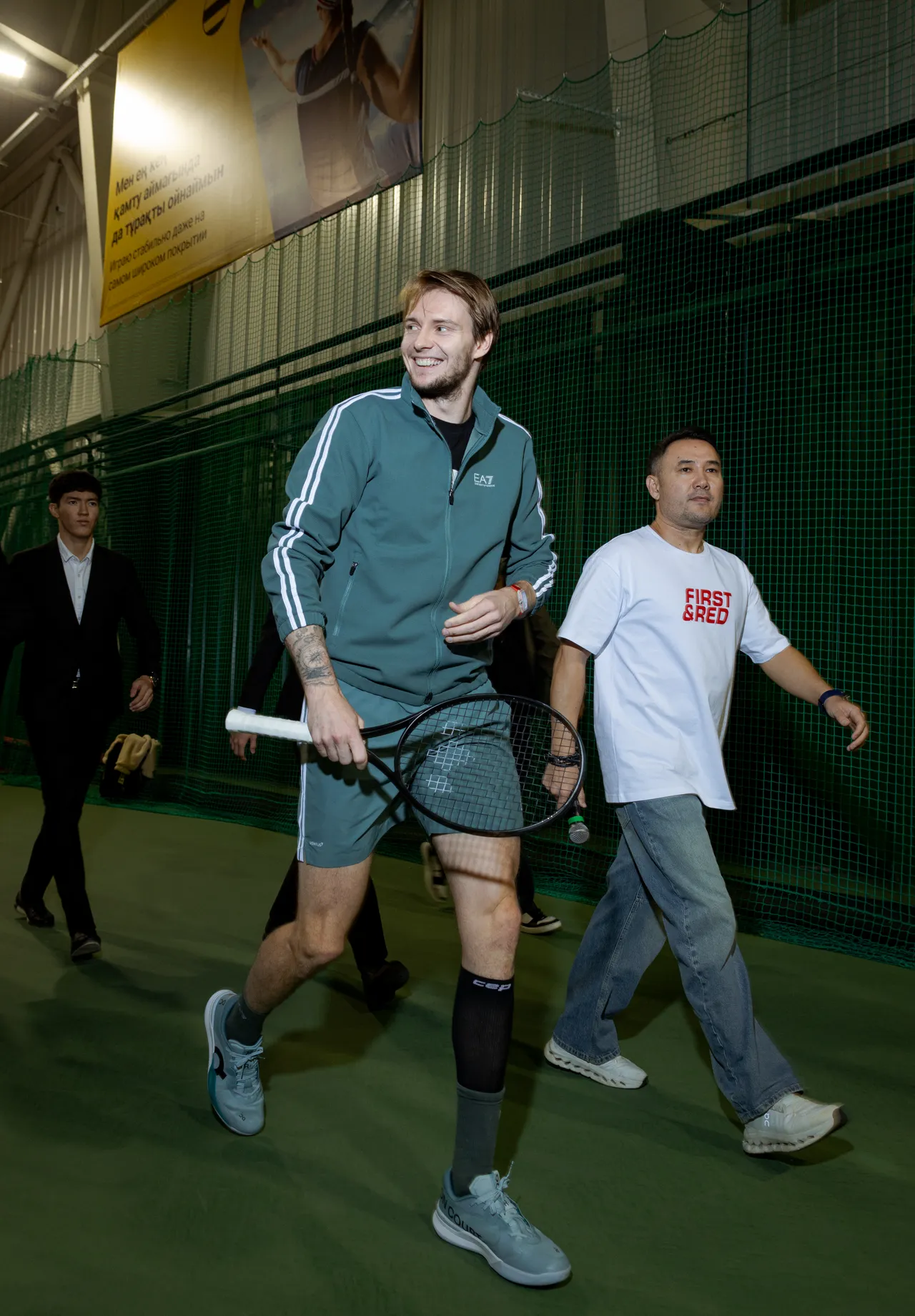
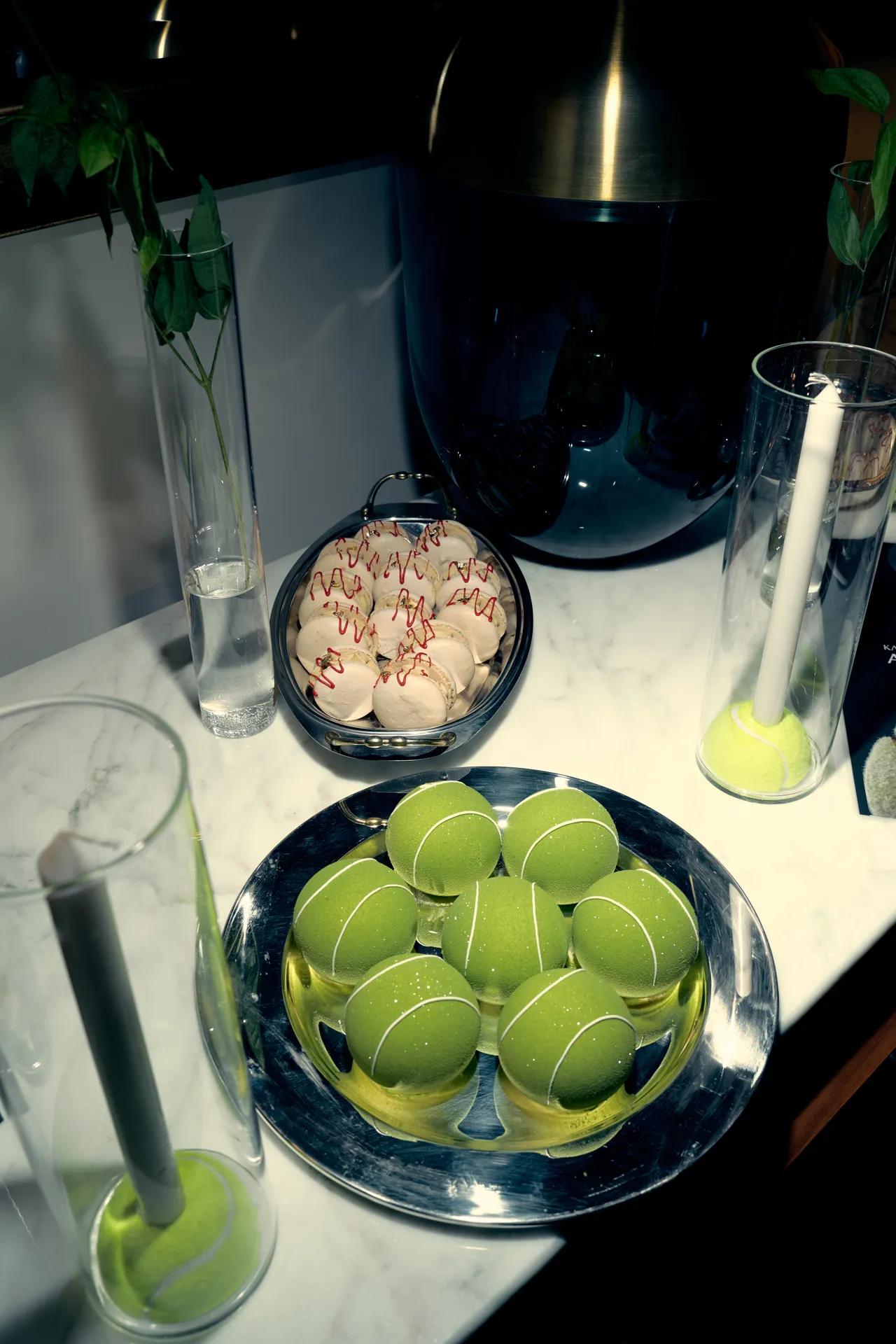
угощения на мероприятии First&RedAlexander Bublik at FONBASEKaren Khachanov at the First & Red event with fans and mediaAlexander Bublik is First&Red ambassador
All photos