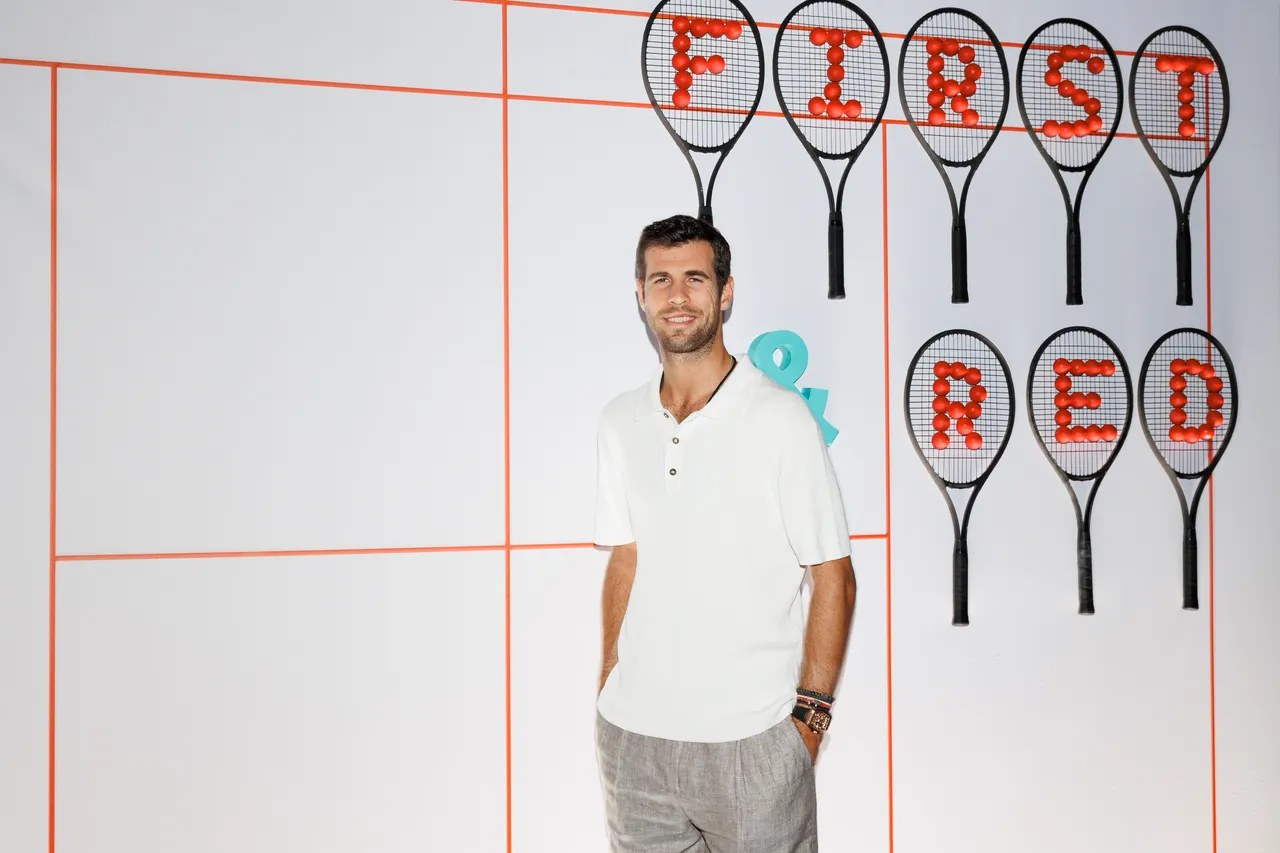
Sabalenka & Osaka’s Agent — Stuart Duguid: Everything About the Tennis Business
Anna Chakvetadze speaks with Stuart Duguid — the representative of Aryna Sabalenka and Naomi Osaka — about the behind-the-scenes world of sports, the business side of tennis, and personal stories that are rarely shared in public.
Timestamps:
0:00 – Introduction
0:26 – From lawyer to tennis agent: how Stuart entered the sports world
1:04 – How Andy Murray’s mother helped launch his agency
1:40 – Myths about the work of a sports agent
3:00 – Working at Lagardere and IMG
3:55 – What makes IMG successful
4:27 – Reasons for leaving IMG
5:12 – How EVOLVE is different from other agencies
8:14 – Robbie Williams in a cat food commercial
8:43 – Would Naomi Osaka have been more successful in tennis if she hadn’t done commercials?
10:01 – What Naomi is like in business
11:01 – Which retail platforms matter for agents
11:26 – Working with Aryna as a representative from Belarus
12:46 – How Aryna and EVOLVE started working together
13:31 – Are personal relationships with an agent important?
14:39 – Why Aryna is a good fit for EVOLVE
16:11 – Social media and agency responsibility
17:17 – Does follower count influence sponsors?
18:22 – Why EVOLVE works with female athletes
20:13 – The “Battle of the Sexes” idea: Kyrgios vs Sabalenka
21:55 – Tennis calendar and creative projects
23:42 – Kyrgios and OnlyFans
24:35 – What Nick would do without tennis
25:33 – Rumor about Nick working with the BBC
26:57 – How the sport has changed in 5 years. Has the women’s tour become more interesting?
27:39 – What should change in ATP and WTA for equality
29:11 – Advice for aspiring athletes
- Duration
- Family friendly
- Yes
Transcript
Hello and welcome to the First&Red channel. My name is Anna Chakvetadze and today we've got a special guest, well-known tennis agent Stuart Duguid. Stuart, thanks for coming. Thanks for having me. We all know you as an agent of Naomi Osaka, Aryna Sabalenka, Nick Kyrgios. Could you tell us what brought you into the business? I was a corporate lawyer in London after university — this was about fifteen years ago — and I was a very bad lawyer, and I hated it. And I wanted to change. Yeah, terrible. But how did it help you? I'd say it helps to understand business and contracts. And also, when you're meeting with a player or their parents, it helps them feel comfortable that you're not an idiot — some of my competitors could use that. So yeah, I did that in London, and then Andy Murray's mom, Judy Murray, was my tennis coach — I'm from Scotland. Really? Yeah. So I messaged Judy and said, can you introduce me to someone at IMG or Octagon or Lagardère? And she made a few introductions for me. I met a guy called Donald Dell, who was running an agency called Lagardère, which I think managed you for a while. And that's where I started my career, about fifteen years ago. From there I went to IMG, and then about three years ago I started my own company. I guess some people think that being a sports agent is just signing a player and waiting for sponsors to come. Is that really how it is? No, no, it's definitely not like that — it's the opposite. Even doing a contract, say with Nike, isn't even the hard part. The hard part is managing that contract for four years and making sure your player's happy, that she has the dress she wants, that she can be unique, that they shoot her in the right campaigns, that the messaging is correct in the advertising. So there are a lot of different things that go into being an agent, not just signing contracts. When I first started, I managed maybe seven or eight players, and I did it all myself. Now, if you take Aryna's team, there's me, there's a creative director who does the fashion projects, a social media manager, a publicist, a finance manager, an investment manager, and a couple of assistants. There are probably eight or nine people working on her business. And everyone has an important role — there's no way I could do all of that myself, because you can't be an expert in social media and an expert in PR and also be an agent. So the business has changed a lot in the time I've been doing it, especially for the top, top players like Aryna and Naomi — we actually have quite a large business team. You mentioned that you worked for Lagardère and IMG. What did you enjoy most about that experience? At Lagardère it felt like a family — we were all friends, people like Sam and John and Ken. It was a really good atmosphere and I learned a lot there. IMG was also good training — probably the most clients, and it's the biggest of the companies, so there's a lot you can learn from that network. But I really enjoyed doing my own thing with my own company. It gives the players much more flexibility. When you work at a company like IMG, they want you to do a deal, get the commission, do a deal, get the commission. My vision is to make sure they can have careers and businesses that last ten, twenty years. I'm more interested in being involved in that whole process than in getting a quick deal tomorrow. IMG is one of the most successful and powerful agencies, probably in all of sports, not only tennis. What makes it so successful? Well, legally I'm not allowed to say anything bad about them. But I think there are some good people there, a lot of good experience. There have been great players managed by them who stayed — Sharapova and Serena were there their whole careers. Others left — Roger, Rafa, Novak, Naomi, Aryna, Nick, and a few more. Can I ask what made you decide to leave? I was very happy having a safe career, health insurance, a salary — I have two kids. It was never my dream to start my own company. It was more about the circumstances with my particular players, especially Naomi, but Nick too. She wanted to start different businesses — a production company, various investments, which I work on with her more as a business partner than an agent. It was just a different structure than doing it at one of the bigger companies, which is probably less entrepreneurial. So it was really because these players were quite different and wanted different things — that's what led me to it. What makes Evolve different from IMG and other companies in the industry? I think there are a couple of things. Mainly, we're thinking long-term. A lot of the deals we do for players sometimes involve equity in the company — for example, we had a deal with a company called BodyArmor, a sports drink, for Naomi. Yeah, she was one of the first ones who actually made it big with that. Well, Kobe Bryant was the first athlete with BodyArmor, and Naomi was close after that. At the time, she could have signed with Coca-Cola before the Tokyo Olympics, or with BodyArmor. Coca-Cola was offering a lot of money, but she said: number one, I don't drink Coca-Cola; number two, if this company does really, really well, I'll make even more than I would with Coca-Cola. So in the end, we signed with BodyArmor, a hydration drink, which was eventually sold to Coca-Cola — ironically. When the deal happened, it sold for over a billion dollars, and she owned a percentage of the company. So she made much more from that deal than from anything else. Look at Roger, for example — I could be wrong, but from what I understand, Roger made more from his last two deals in his career than from twenty years of exhibitions and sponsor commitments combined. His Uniqlo deal, if the numbers are to be believed, is massive, and his On Running deal is even more massive. So we take inspiration from deals like that — you can work really, really hard and do quite well, or you can take a couple of risks and do extremely well. That was really the vision for Evolve. More recently, especially with our female clients, we have a creative director — who happens to be my wife, actually — who was at Saint Laurent and Frame Denim for a while, so her background is fashion. So when the girls have deals with, say, Louis Vuitton in Naomi's case, or Audemars Piguet in Aryna's case — luxury fashion brands — I'm not the expert there. You're not the expert, but you've got a nice watch. Well, thank you. It helps to know important people. Having a woman on the team is very helpful at these shoots — I don't want to be the one going to a Nike shoot and touching the dress or saying the makeup should be different. A forty-year-old man really shouldn't be doing that. It's great to have a cooler, female presence handling those things for our clients — I think it's a real benefit. So we do a lot of things differently. But some things stay the same — a lot of people are transacting similar deals. Right now we're renegotiating Aryna's Wilson deal, and that's something I've been doing for fifteen years and it hasn't changed that much. So some things have stayed the same, some things are very different. Yesterday I saw Robbie Williams in a cat food commercial, and I was thinking — could something that different ever work with a tennis player? Yeah, of course, if it's authentic to the player. I've had some offers — Naomi used to have a dog, and we explored doing some pet-related things for a while. I want to see that commercial — I haven't seen it yet. But I can imagine Robbie Williams and cats actually go together quite well. What drives Naomi forward outside the court? I think she's had a really interesting career and life. There was a time when she was winning a lot, and then we did a lot of commercial things, and then she stopped winning as much, and everyone said, oh, it's because she did too much of that stuff. Which, by the way, they never say about the men — I've never heard anyone say LeBron did too much, or David Beckham did too much and that's why he's playing badly at Paris Saint-Germain or wherever. But anyway, in her case, I asked her: is this too much? Do you want to keep doing this? And she said, no, I actually love it — because tennis is a big part of your life, but there's another part where you train in the morning, go to the gym, and then have the whole afternoon free. So in her case, it was: do I want to watch Netflix and play video games, or do I want to learn about business and companies, go to shoots, and try to make a name for myself in fashion? And that's how she chose to use her time — that's her right. As a result, she has a career outside of tennis. Some people would argue that maybe if she hadn't done that, she'd have won more. But on the contrary, maybe not — it actually helps keep her as sane and as focused as possible. And how is she in business — does she have time for that? I think what the really great athlete-businesspeople do is put smart people they trust in charge of handling their business. She's not on conference calls, she's not in board meetings, but she knows and trusts my opinion. So if I say something's a good idea, we don't need five hours to decide why — maybe five minutes. Do you ever fight? That's a good question. I've been managing her since she was seventeen — she's twenty-seven now — so if I said we never had a disagreement, I'd be lying. But I think that's good. I don't want to be the agent who just says, yes, you're so great, do that, do that. If she says no, I say okay, don't worry — but I think it's good to push her a little so she can learn, and ultimately she makes the decisions. If she really pushes back, it's her life and her business. But I think agents who don't push their players aren't good agents, in my opinion. Which markets are most attractive to sponsors these days? Countries, you mean? Yeah — could you name the top three? Top three markets for sponsors: USA, number one. China, number two. Then probably still Japan. After that, close behind, France, Great Britain, Australia — the Grand Slam nations for tennis players. What about Belarus? You know, I don't know politically what I'm allowed to say, but I'll give you my honest opinion. In Aryna's case, it's not perfect, but I think it was more of a problem two or three years ago. I think people understand now that there's a separation between her and politics. In my opinion, it's absolutely ridiculous that she has no flag next to her name — same for the Russian players. The idea that she's involved in any of it is absurd — she's a tennis player. I think enough time has passed that we should go back to the way things were. I think what people in the West understand now is that Aryna is Belarusian, but she's also a global, international athlete, and there's a big difference. I think people see her as a representative of the world and a global athlete rather than a niche Eastern European market, which is why I think we're going to be extremely successful with her. We've only been working with Aryna for about six months now, and if we had this conversation a year from now, you'll see her with some of the best global brands in the world — and where she's from will have made no difference. Evolve has become the third agency in two years for Aryna. Could you tell us how it all started? I don't really know her history before IMG, but I know she was there. Do you know why she wasn't satisfied with them? Let me answer diplomatically. I think there was maybe a personal relationship issue for her — that was number one. And number two, if I were to say something nice about IMG, they were probably a little unlucky with the timing. Right when the war started, it was probably harder to get commercial opportunities for her, because a lot of brands were taking a wait-and-see approach for the first year or two. So maybe she didn't get the deal flow she deserved as the number one player. You said personal relationship — is that really important in this business, having the right personal connection with your agent? You probably know even better than me, but I think that's the single most important thing. More important than a big company name? Yeah, of course. Let's not use IMG as the only example, because there are other big agencies — but say you're a young player and you're excited because you signed with Octagon. Just for the sake of an example, not reflecting reality, because I don't know much about Octagon's actual business — let's say there are ten agents there, two or three might be world-class, and some might not be so good. So just saying "I signed with IMG" or "Octagon" or "CAA" really means nothing. Who did you actually sign with? Where are they in their career? How much time do they have? How many clients do they have? That's far more interesting than the logo above the door. Coming back to Aryna — what makes you a good fit for your agency, and vice versa? I think what makes her a great fit for our agency is that she's authentic. She's amazing on social media, she relates to Gen Z, brands love her. What I really love about her, among many other things, is that I can take her to meet the CEO of Stella and they'll immediately fall in love with her. I heard she prefers tequila, no? I think — maybe alcohol-free, zero percent Stella. But yeah, that was just for the sake of an example. She's great with important business people — some players aren't as good at that. That's one of her big strengths. And I think all our players, the phrase I'd use is that they transcend culture — they're not just tennis players. Some players, even arguably the top-ranked man or some of the top-five women, are more purely tennis-focused, and that's their whole existence and their brand. But when you look at Osaka, Kyrgios, and Aryna, people know them outside the tennis court, for different things — and that's my strength. Other people are good at pure tennis, but I'm probably better at where tennis meets culture, meets fashion, meets music, meets other parts of life. Is the agency responsible for social media? As you said, Aryna is extremely active on her own account. No — both Naomi and Aryna have independent social media managers, companies that specialize only in that. What I do is oversee it — I'm involved in the process, I see what they're considering posting, and I make recommendations. But I mostly let them do their own thing. All the content is theirs, their ideas — but they'll say, hey, I'm thinking about this TikTok today, what do you think? Or maybe they'll suggest a dance, or ask which track to use, or whether a picture looks good. They're world-class at that. The companies they work with mostly handle Hollywood actors and actresses, so it's a different business model than mine — but I think that's good, I think you need that. On the other hand, Kyrgios does all his own social media — that's just him. Sometimes that's a bad thing, sometimes it's a good thing. I think people understand it's very real. Do you think the number of followers matters? In what context? For sponsors — maybe they're interested in particular platforms. I think followers definitely matter a lot. I don't think it's the only factor — engagement is really important. Take Aryna — I think she has around three million Instagram followers, and her engagement is incredible. When she posts, maybe ten percent of those followers will like it, another percentage will comment, another percentage will repost it to their stories. That, to some degree, is probably more important than the raw follower count. And then TikTok matters for certain brands, Instagram for others, Twitter can matter more for some. What about Facebook? No, not important. I can't remember the last time anyone asked me anything about an athlete's Facebook. Evolve works mostly with female athletes. How did Nick Kyrgios fit into that picture? Honestly, he probably doesn't. But the reason I started working with Nick — before Naomi exploded, I had maybe six, seven, eight clients, and he was one of them. Then when she blew up, I reduced that number down to just Naomi, because the economics and the scale were such that she was making so much money and taking up so much of my time that it didn't make sense to manage others — and out of respect for them too, since they deserve an agent who's focused on them and can give them time, and that wasn't me anymore. So I only managed Naomi for a while. Then IMG asked if I'd take a meeting with Nick, and I said he's the only other player I'd want to manage. Why? Just because I love watching him play. I've been working in tennis so long, and I love tennis, but I've seen so much of it that even if Sinner were playing Alcaraz in a final, or Roger were playing Rafa, you couldn't pay me to watch that match — I'd rather go home, sit on the beach, play with my kids, get back to work. But Nick — and I'd say Carlos now too — I actually like to watch. At the time, Nick was the only player I'd pay money to watch as a fan. So I was very interested in working with him — that's how I got started with Nick. People have very preconceived ideas about who they think Nick is, and some of that's true — sometimes he can be difficult. But for the most part he's extremely loyal, extremely humble, always been nice to me, nice to my kids, nice to my family. He's a really great person, a great human being, so I love working with him. But is he a natural fit considering all my other clients are female? Probably not. How did this unique idea come up — Nick against Aryna? How did that happen? This is very interesting, and I sadly can't say too much about it. I wish I could say more, but I'll tell you — Patrick Mouratoglou and I have been talking for years about this idea, which I'll give him credit for. He worked out scientifically that a female player moves, I don't know the exact number, but let's say about seven percent slower than the men. Ball-striking is actually not that far off if you look at the pace of forehands, serves are a little different. Especially Aryna's. Especially Aryna's, right. But movement, generally, is scientifically a bit slower. So we had this idea: if you make the court smaller on Nick's side compared to what Aryna's playing on, that levels the playing field. And we'd use the format of his tennis exhibition, UTS, where you only get one serve — so Nick can't just go out and bomb first serves, which takes that part out of the equation. So that was part one, figuring out how to do it, without thinking yet about who the players would be. And then, more recently, I realized I have the perfect players for this — Aryna, because she's the best player in the world and her ball-striking is unbelievable, and Nick, because he's the only one crazy enough to take the challenge. He says he's nervous — most of the men don't want to do it, because if they lose, they can't go back into the locker room, they'll never hear the end of it. But Nick being Nick, he's up for it. Who's your pick for that match? My pick is Aryna. Go, girl! Давай, Aryna! I'll say Aryna too. Do you think the tennis schedule is too packed for this kind of creative, fun event? Way too packed — not for this particular event, but tennis in general is too packed for the players. The top players should be playing the four Slams and maybe eight to ten Masters, and that should be it. No one cares about the 500s, no one cares about the 250s — they don't generate much revenue. If I'm a top player — and I'm only speaking for the top players here, I'd give you a different argument for the others — Sinner, Carlos, whoever, they want to play less, and they should be paid more, because they're driving far more of the revenue than the rest of the field. And I completely respect that the other players want to be able to have jobs and contribute to the tennis ecosystem. Look at the US Open, what they've done with mixed doubles. Yeah, I love it, love it. To me it makes way more sense than the traditional mixed doubles, which, let's be honest, no one cares about — sorry, mixed doubles players. I want them to have opportunities, I don't want to cut them out of the ecosystem, but it's a different sport, a different kind of event. Wimbledon, for Carlos and Yannick and Aryna and Coco, is a different style of event than the others. Qualifying too — I love qualifying, that's where you can discover some really amazing players. But it's a different event, I'm not even sure it should be connected to the main draw. I don't know, we probably don't have time to get into it — I have a lot to say about that. But in summary, I think what would be best for the sport is for the top players to play a little less and get paid a little more. Coming back to Nick — as far as I know, he'll be part of a new project sponsored by OnlyFans. Could you give us more details? He's been with OnlyFans — this is actually the second time we've renewed. We had a contract with them about a year and a half, two years ago, for him to make content on the platform. He's not taking his clothes off or anything like that — it's more behind-the-scenes content. OnlyFans is trying to expand into other areas — he's not the only athlete on the platform, or that they sponsor. They want to move away from being known only for what everyone associates them with, and become more mainstream. He was a good fit for them because, again, most tennis players wouldn't be brave — or crazy — enough to take that step. But he is. It's really just a behind-the-scenes content partnership. If Nick doesn't return to playing, what role do you see him in? TV. He's a host and commentator, and I think he's amazing — his insight is incredible. His tennis IQ is off the charts when he talks about the sport. He played his whole career without a coach, which I'm not saying is a good thing, but it means he knows the game extremely well. He's also played against a lot of these guys very recently, so he speaks with authority. His voice actually works well for commentary too, and I think he brings something very different from people who've been doing it a long time, like the McEnroes and the Andrew Castles of the world. So probably TV, though I think he needs to tone down the risk a bit — TV doesn't want a story about why Nick doesn't like Yannick every week. Is that why he's not with the BBC this year? The honest answer is he was never with the BBC. This whole story about him being dropped by the BBC isn't true. He was meant to work with them, then pulled out about two weeks ago — he'd done it last year. When the commentary list came out, he wasn't on it, so the UK newspapers wrote "Kyrgios dropped from BBC." He was never signed to do the BBC at all. We even sent a strongly worded legal letter to The Telegraph, the paper that thought they'd broken that story — even though they'd asked me the day before whether he'd been dropped by the BBC, and I told them no, he was never doing the BBC, but they left that part out. We didn't really mind, though — sometimes any publicity is good publicity, so it was fine. Now he's actually doing a show with talkSPORT, the BBC's big rival, which is putting up huge numbers digitally. And off the back of that, there's another platform in the UK, TNT, which has owned the rights to the Wimbledon women's and men's finals for years but never used them, because they didn't want to go up directly against the BBC — there was no point, since everyone was going to watch the BBC anyway. This year they're doing it with Nick. So we'll see who tunes into TNT versus who tunes into the BBC — that'll be very interesting. The women's market has changed a lot over the last five years. Yeah, incredibly so. I think women athletes are more valuable than men now, especially in the US, because there's a finite number of superstars. If you think about men's sports, you've got football, basketball, tennis, golf — so many to choose from. When you think about female superstars, it's a much smaller pool. I also think it's more interesting storytelling, and I think they work better — men can too — but I think seeing them partner with luxury fashion brands and other partners is more interesting than with men. In your opinion, what should the ATP and WTA change to better respond to today's challenges? We touched on this a bit already — I think the schedule needs to change. I think they've been trying, but they can't agree. There are so many parties in tennis with different agendas and stakeholders, which is understandable. But I think it might take someone coming in and doing something like they did in golf, with LIV — saying, look, these guys are just going to go play over here, they'll make more money — unless the tours really focus on reworking the calendar for them. Do you think the tours promote the players well enough? I don't personally think it's their job, so I don't blame them for doing a bad job of promoting the players — that's our job, as agents, and the sponsors we align with. Sometimes you'll do a deal with a brand — like our deal with Beats, we didn't do that only for the money, they might not have paid as much as a bank would, but we knew we could use their platform to make an amazing commercial and tell a great story. So we're always thinking about how to use every platform we can to make our players more prominent and tell their stories. I would never rely on the tour to do that. I would never sit back and think, oh, the WTA will turn Iva Jovic, our next player, into a superstar — no chance. We're the ones who'll do that. Do you have any advice for younger players starting out? It's really, really hard, because when I started in this business, there were maybe fifteen agents across all the companies, maybe twenty. I wouldn't be surprised if there are a hundred now, and ninety-five of them really don't know what they're doing. These are the ones going to junior tournaments, meeting a twelve-year-old kid, and saying, sign with me for six years — and the families don't know what they're signing. But is it good to sign a twelve-year-old? I know Alcaraz was signed young. I don't think it's right. Maybe there are exceptions when it's very clear — Maria Sharapova, Madison Keys. We don't represent any twelve-year-olds. Why do you think it's not right? I just think they're too young, and the families probably haven't had enough time to learn what could actually be happening. Often these contracts they sign at eleven or twelve have a clause that says, okay, if we get you a Nike deal today — which might just be some clothes, or maybe ten grand — then if you stay with Nike for your whole career, we get a cut forever, even if you leave and join Evolve or Octagon or whoever. To me, that's absolutely insane, and it's so unfair to a kid who's probably desperate to sign with IMG because they need the money, need the prestige, and think it's amazing — so they sign whatever's put in front of them. That's where you see a lot of problems later in a career, and that's where players end up fighting with their agencies. At my company, we don't do that. If a player ever wants to leave Evolve, sure, they'll have to pay what they owe for the remaining term, but I want them to be able to leave and say it was a fair, good experience. I don't want anyone in a locker room saying, damn, I'm stuck with Evolve for another two years because I signed this stupid contract with a crazy term. I'd rather that even if someone leaves, they say it was a good experience, he was really fair — that's how I want to run my business. Last question — which deal are you most proud of? Naomi's Nike deal, because she got three patches. The second one after Nadal, right? Yeah, exactly. Yeah, that was pretty special. Thank you very much for your time — it was a very interesting conversation. Thank you, it's great to speak with you.


No comments yet.