Diana Shnaider: “The headscarf is my ticket to individuality”
Rising Russian tennis star and First&Red ambassador Diana Shnaider stars in a new feature film.
Diana speaks openly about her path to a pro career, the support and influence of her family, and her unique personal style. She shares the emotions of winning an Olympic medal with Mirra Andreeva, how tournament organizers’ attitudes changed after she entered the top rankings, and the fun challenges that help fans get to know her better.
00:51 — Chapter 1: childhood clubs, moving for tennis, and balancing college with a pro career
10:25 — Chapter 2: climbing the rankings and handling growing pressure
13:30 — Chapter 3: Roland Garros, doubles with Mirra Andreeva, Olympic medal, and a new mixed doubles format
22:45 — Chapter 4: picking the kerchief and a headwear challenge
28:14 — Chapter 5: choosing a coach, working with her dad, and a rapid-fire Q&A
32:55 — Chapter 6: rest, no time for personal life, and a habit of saving money
- Duration
- Family friendly
- Yes
Transcript
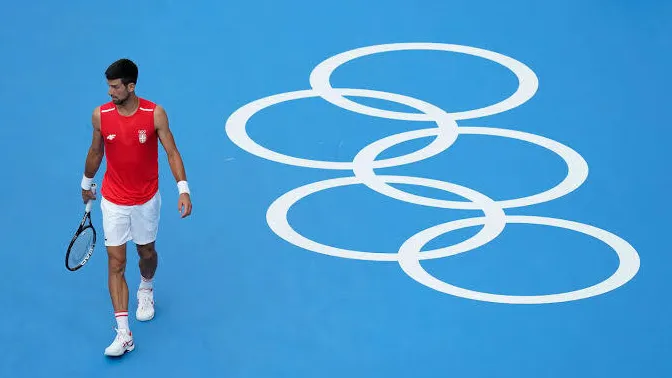
My playing style is aggressive. I try to suppress my opponent with power and some sharp angles. The same ones, cropped and shortened. I go into matches with the sole goal of winning. I like that she is completely focused on tennis. Nothing distracts her now. Tennis is what I love and where I get better and I just want to progress, improve, be better than myself and better than others. [music] before school. And I studied folk classical dancing. I played the front piano because my mother graduated from music school playing the front piano. And on weekends I also played chess and went to classes. Well, and tennis, of course. As a child, you were enrolled in all the clubs, so that you didn’t have a second of free time . Well, yes, well, so that there would be some variety, so that my parents would still want me to do something . That is, it wasn’t just like I was sitting there, sick like a fool at home. Here. And somehow the first thing I quit was dancing. There are a lot of people with whom I worked with children in a group. They stayed there to play tennis. Well, we were just fooling around , playing some other pranks , but I couldn’t, because I needed to go further and, well, dance. And I remember very clearly one day, I said: “I don’t want to go to the dance, I want to, well, stay a little longer and play on the court.” And that's all. Then there were dances, and then came the piano, because little by little I started playing tournaments. We moved to Moscow, and there was no time when school started to teach piano. Well, I still don’t play chess as well as I did when I studied there with a kind of coach, a teacher. But we still remember the basics . I taught my dad to play chess, and we used to carry around a little magnetic chessboard and play in tournaments [music] in general. Well, what's going on with children at 4 years old? Well, we tested coordination here, and caught a ball there . Then, probably, I think, at about six years old, when, well, that was the age, I trained with girls who were always older. And my coach, my first one, was one of the first who noticed that I needed to move to Moscow, where there were more opportunities, more competition. And I think he was one of the first, well, of course, my dad and he immediately knew that I would definitely be a professional and would play very well. And so, the coach who was our first in Tagliata, he, yes, immediately saw that everything would work out. [applause] The coach approached my parents and said that he saw that I could be a professional tennis player, that I could achieve something, and that he, well, he couldn’t help me here, and that I needed to go to a bigger city, where there were more opportunities, more competition, more children, and in order to be in this progress, yes, my parents decided to move just for tennis. That is, we, well, wouldn’t have moved if I hadn’t chosen tennis there. In fact, I think it was difficult for both my parents to decide, and yet I’m 8 years old, it turns out, my brother was only born, that is, he was there for a year, that is, such a time, that is, he was still very little, like, well, his whole life was there, like, all his acquaintances, everything, like, and relatives, and everything, like, everything was already like that, well , so life was sort of formed and so , well, to leave everything and move. Well, I think it was very difficult. As I remember, in general, in principle, the whole move was very difficult, because for a long time we couldn’t find a coach in Moscow. That is, there was a time when I was returning with my dad there for my one-year-old brother, we were alone. Mom was in Moscow, working, she came there literally for a day just to see us and then went back by train. That is, there was a lot of everything. Then we finally moved back to Moscow. Again, we can’t find any problems with the coach . I was returning there alone to my grandparents . I couldn't. I was a very attached child to my parents. That is, I called there every day, sobbing: “Take me away, I don’t want to be here, I don’t want to be alone, I want to be with you.” And that's all. Exactly a week passed when I was living alone, they arrived, my parents took me away by car. And from that moment on, I was able to find a good coach. And I was already in Moscow, we lived in Moscow. It’s clear that I wanted to pursue a professional career, and so did my dad. There was this complex that everyone says here in Russia and in Europe, that if you go to an American university, that’s it, your career is ruined, nothing will happen. But we just sat down with my mom, talked with the coach, and he said: “Well, we all understand that you want to go into a professional career, and we just want to help you with that.” That is, they understood my situation well and helped me in this regard. But I didn't say "Yes" right away. I say, "I need to think." We agreed that I would wait for exactly a year and we would see what kind of situation I would be in, how high the rating was, what my desire was, whether I wanted to stay longer or whether I had already definitely, well, decided for myself that I was moving on. And, probably, after Rogaros, for about a month I traveled around all these sixties, twenty-fives, alone. Well, here's one. That is, I didn’t have a credit card, that is, I carried that cash with me everywhere. There was no coach, no one to travel with. And there was no established process. That is, there was no base, nothing. It was very, very difficult. Well, in this regard, until I was about 15, I only traveled to tournaments with my dad. And then this transitional age came, and I, well, became more uncomfortable. That is, I wanted more independence. My mother helped me make the decision that I would travel alone from now on. And so, for about sixteen years now, I have been traveling to almost all tournaments alone. There she periodically returned to Moscow, trained, and then went to all the tournaments alone again. Well, maybe it was just out of pure habit that we continued like this. We didn’t have a coach in mind who we knew for sure could help us further. And I talked to my mother. My mother wanted me to go to college so that I could finally decide for myself that I was definitely ready to pursue a professional career and put everything into it. I looked at how other people live, what they study, that it’s also difficult to combine both playing and training, and still sit and take exams, so that I had an understanding that, well, nothing comes easy. And dad, well, he wanted that No, that’s it, I go to tournaments , that’s just tournaments, tournaments, tournaments. And I talked to my mom, and she said: "Yes, yes, yes, I need to make a decision. Go, and I'll call dad." He says: "No, don't go, what are you doing?" I say: "Well, what should I do?" And so I remember this conversation, I say: “Well, what should I do? What decision should I make?” And I just turned 18. My dad says to me: "Well, you're already an adult. Now, go make your first adult decision on your own." And the tournament is over. And I wrote to the coach that that’s it , I agree. I'm definitely coming here for a year to study. [music] My student life was very difficult. In fact, there were a lot of lectures that I couldn’t miss. I had to attend them, because if I didn’t attend them, my score would drop. Every weekend we would go somewhere and play some college games. And if I had a free week, I would go and play in some tournament. Difficult. I always got up like, well, during school hours, there at 7:30, at 7:00 in the morning, two lectures, maybe three sometimes a day. Then we have training, then we have UFP, then another training. That is, well, I left at 8:00 in the morning and came back at 8:00 in the evening, it was already dinner time, if I needed to do some homework for the next days, I tried to do something there, and that’s it, I just passed out. There is an opinion that if you go to college there, well, of course, everyone has their own priorities in college life, but I didn’t go to any parties at all, well, I didn’t attend a single one, as far as I know, there are people who did, but I didn’t find the free time to, so to speak, test it out on myself . It seems to me that in college there is this system of help and support for a player at a particular difficult moment for him. And when I arrived at college, I didn’t think about anything at all except that I needed to go to lectures, complete assignments and train, and do some kind of work there. You don't think about anything else. You have two things that you do 100%, and everything else is decided for you. That is, you know, it’s clear to you there, you have training at 2 o’clock, you came to training. Everything, everything else is there, all the trips, the tickets were bought for you, the hotel was booked for you, and in this regard, your head is simply not filled with anything else except some lessons and tennis. And it seems to me that in this regard, of course, it’s easy for the players. That is, they are focused only on some of their main work, improving certain strikes and progressing. It's definitely a different feeling to be in the top 50 last year and now in the top 10. The priorities are a little different, of course, and the organizers behave differently in this regard. That is, I came here and to Yutu to practice on the tent. And time is always. On the first day, I came to the practice and said: “Can I please book a class for tomorrow ?” They're like, "The schedule hasn't come out yet, we can't do anything." Then, uh, the girl answers, I think, for the seedlings. She says: "No, no, no, what time do you need, and now we will book everything." Damn, what difference does it make? Well, the difference is, of course, colossal, but, well, that's great. Well, I like it, I’m pleased, that is, I will continue to work to make it even better. [applause] Of course, I feel that after such a great season last year, there are more expectations from me this year, the pressure, well, is felt, of course, when you win four titles and have such a huge jump in the ranking, and, well, everyone expects, yes, that you will play in the quarterfinals, semifinals at every tournament there . You are everywhere, mostly seeded in big tournaments. Of course, when you're up against lower- rated players, they understand that, well, they have nothing to lose, and they'll do their job 100% to show their best. And, well, of course, I’m in a slightly more difficult position this year than last. As Billie Dean King said, Par is a privilege. Now pressure is a privilege. That's why I like it, I'm just gradually learning to cope with it at certain stages. I think confirming points this year will be a new thing for me. After all, this will only be my second full season on tour. I will learn and adapt. It seems to me that not everyone won the Grand Slam right away, not in the first year , so I will gradually find the right approach in some mental and physical terms, how to protect these points, how to earn more and then build on that. Yes, the rating changes every week, but I check, but it seems to me that they just send me everything, everything is always broadcast in the media , so I can just see it. But for me, performing in a tournament is always more important. And, well, it's related. If you perform well at a tournament, well, whether you like it or not, you improve your ranking. And I think more about how I played in the tournaments, that is, I got through well to the quarterfinals, or semifinals. Well, that means she played well in the tournament. If further, well, it’s still super [music] [applause] from myself, I probably don’t expect much. This is my third time playing professional Rolangoros . Once I made it to the second round. Last year I lost the first round. Therefore, I will be happy with every winning match and give my best to move forward. [applause] [music] [applause] Got it. [music] [applause] Come on, come on, come on, come on. [applause] [music] Lately, it seems to me, she's been doubting herself a little bit . There were matches where she was leading and then started, well, losing, yes, playing a little worse. And, uh, it’s like she lost a little bit of that confidence. In no case should you doubt yourself, continue to work on yourself. My playing style is, well, definitely aggressive. I try to suppress the opponent with power and some sharp angles, but I also try to add some unexpected elements to my game, like the same cut and shortened ones. I'm trying to work on my approach to the net so that my game is not only powerful, but also varied. I go out to matches with the sole goal of winning, and, uh, showing my, uh, best level at the moment. And, well, it’s not like I go out to a doubles match and think: “Well, it’s some kind of training, well, whatever happens, that’ll happen.” No, that is, I give it my all when I’m alone , and I go out in pairs, and I work at my maximum. When I'm alone, I'm 100% more reserved than when I'm in a pair. In my opinion, in a couple, because after all, there is a partner of peace who will support me, she makes me laugh. That is, we have more of a relaxed atmosphere. I feel more confident in doubles when I play singles. But more often than not, I get hung up on my own mistakes, on the fact that I did something wrong. And sometimes it’s difficult for me to get out of these negative emotions. And in a couple there, well, Mira sees that there is a little bit of a tight spot, and she can help me with something to make me laugh, and in this regard she lets me go. In solitary confinement, when I’m alone, I’m still working on this and learning so that I can do it myself . Miro and I, I think, are a combination of everything. and my friends, and colleagues, and, of course, definitely rivals, but not to the point of absurdity . That is, we communicate well off the court, on the court, we train, as if we know that, well, for us, well, there is a rating, we work to improve and improve it and our results, but it is not like we are there, oh, she won the tournament, but I did not win the tournament, or there we wish each other something bad and something good. No, we generally have a calm, friendly relationship. After all, we play for the same country, and we support each other. Well, as a couple we just have fun playing with each other. The Olympics, the Olympic medal is a special trophy for you. An Olympic medal is certainly a special trophy. Well, I never even thought that I would get to the Olympiad, because at that time I had, well, a low rating, something like 50 or 60 at the time when all the applications were coming in. And we have many girls who were before me. That is, I think I was the tenth one there. And, well, without a second thought, I signed all the documents that, well, they told me to. I say, "Well, I say, 'Are you kidding me?' I say, 'I won't make it.' Well, should I sign them? He says, ' Sign them just in case.' I think, oh well. And then one didn't go, another didn't go, then a third, a fourth. And so little by little we moved down the list, and it finally reached me. And, well, when they asked me, 'Well, you're making it, you're going.' I say, if I make it, I'm 100% going without, well, without anything. Well, for me, of course, it was, well, wow. I was even thinking about going to clay, to the Olympics. And then, and when we were already planning who would play doubles with whom , well, I really wanted to play in the worlds. I knew right away that we would have a connection and that we would play well together. But it turned out magically, of course. I'm not that, I cried, I cried after the final, but it was really hard to contain my emotions because we were so close, after all, when after such a painful loss, well, for you, after all, only you see one side of the coin, as it were, that you were so close and missed the opportunity, you don’t look at it from a different angle. And when we left the Court, that’s it, I just broke down, of course, there was peace there, well, peace in that regard, of course, well done. Just, well, she held on as best she could, calmed me down. She didn’t cry. She didn’t cry. She didn’t cry. She calmed me down. She said: “What are you doing? Well, I'll take pictures now. Well, the photos will last a lifetime, now you’ll ruin everything.” That’s it, she calmed me down. But we left. That’s it. Well, then Mira told me that she had already cried her own way in the hotel. But then, a week later, I looked at it from a different angle, that, well, first of all, I could have basically not made it to the Olympics and not gone there at all . It was our Olympics with the world . We never trained with each other , we didn’t play doubles. We could, in principle, have lost the first match, which we won in a tiebreak. And yet, what we managed, ah, and take this silver. But that’s worth a lot, and still, not everyone manages to come to the Olympics for the first time and take a medal from there. [music] When this new format of NuSeok came out, I, well, at first I didn’t even understand, I thought maybe some separate tournament, and then I started to come across all the articles about everyone being outraged. I, well, I went to the website, read it, and thought, well, wow. I think if I were only playing doubles, I would n't like it either, because they can't just, well, get into the tournament. And, well, the people who won this tournament last year, they're finalists, so what are they supposed to do? Well, in that sense, of course, it's not very well thought out. I do n't know, they could have made it some kind of separate tournament, again, an exhibition one , like they do at Indiana Wells, but still keep the usual rules, which have been the same for years. Even for me, a singles player, it's very difficult to get in with my current rating . So, for now, we've agreed to play with the Frenchman Arthur Fils. My rating there is currently 11, his is 14. We won't get in. That is, so, well, the whole ten, everyone is playing, and all the other eight cards have already been given away. Five out of eight cards have already been given away to everyone. So, cut, well, it's unrealistic to get in. He, yeah, Karen wrote to me, and I, well, I just, well, I told him straight out that, I said: "Damn, we won't get in." Well, because I knew that everyone would play, because it's a week before, everyone will already be there. Why not? The money is good. I said: "Damn, if they give us a card, well, let's play." I said: "But I don't think in our current situation, no one will give us a card." And I said: "I'll, well, try to look for someone who has a higher rating, so that, well, the chances of getting in are higher, because I really want to play. I had the opportunity to try my hand at mixed martial arts this year at Indian Wells. I actually did n't know he was going through it. An Australian wrote to me: "Would you like to play a mix?" I say: "What mix?" There is a mix here. He says, "Well, yeah." I say, "Well, why not?" And, well, overall it's a lot of fun, okay? This is very different from our usual female couple. Men serve so normally, so strongly. There, it seems to me, the task is that if you received the ball and returned it to the court, you have already done half of your job, you can praise yourself. And then they are there, well, everything is intercepted, they do everything there at the net. The main thing is that you basically don’t interfere with anything, don’t screw up, and that’s it. I served there and won my serve. You are smart, you did everything 100%. For me, in Russian it has always been a kerchief. It was later, when more European tournaments started, that everyone started calling them bandanas. But I don't think they have any other word except bandana, so bandana is bandana. But in Russia I always call it a kerchief. When I first started playing my first clay court tournaments outdoors, I tried playing in caps and visors, but something didn’t work out for me. So, I don't know how I served like that, but when I tossed the ball, I didn't see it. I don’t know where I was throwing that ball up into the sky , but I didn’t see that ball. And overall it didn't work out. I felt very uncomfortable and awkward. And my parents were just worried about my health, so that I wouldn’t get some kind of sunstroke or anything like that. My mother, purely by chance, saw this very scarf in some clothing store, one of my very first ones. But he looked at me like this and I thought: “Well, it covers my head, well, I need to buy it, try it, maybe I’ll like it.” And that's it, I played my first match there. Well, it was somehow convenient, everything was covered, nothing was in the way, and that’s how it went. In general, right now, I probably don’t know for a month what color the collection will be. That is, this is something that I find out very often lately. And, well, it happens that by sheer luck they just happen to match in color and, well, it turns out great. Well, of course, it would be ideal if I knew the color there in advance and could somehow prepare it so that the colors would look more harmonious. I have a specific accessory that I like, which is just so well sewn. And my mom and I buy some materials, well, certain ones, like, so that it would be speckled. This is also very difficult to find, actually, the right one. And then we simply take it to the studio and others sew kerchiefs based on this first sample. Well, in my teenage years, when I was 14-15 years old, public opinion had a very strong influence on me. A lot of the girls I played with told me, " Yeah, you look bad in it." This is not yours. Well, if you had worn a visor, it would have looked better on the court. Somehow this really hurt me, and I stopped wearing it for a while. I think I wore it for about a year, maybe even more. And then my parents told me: “Well, this is yours, people will recognize you.” And then, ah, little by little, the meeting began to meet more people who were like, "Well, we noticed you the first time and remembered you only because of your bandanas." I'm like, "Damn, okay, just one." And then at some point I just had to force myself to do it, because I felt very uncomfortable. At one time she wears it, because everyone somehow pays attention to why she wears a bandana, it’s kind of strange. Well, that’s how it is, but now, on the contrary, I feel very comfortable and, so to speak, very safe. I think that nothing can happen that would make me stop wearing it, because after all, it’s already my thing, my thing, which, I believe, brings me luck, and this, you could say, is my ticket to such individuality. [music] Diana, we have prepared a challenge for you. How good are you at playing in a bandana? Without a bandana. Maybe you look good in other hats too. Let's check now. Let 's start with the bandana. Wish me luck. I'm already getting ready to take on the challenge. I don't think I'll have a chance. Well, shall we check? I won't have a chance. Exactly. Bye, guys. Make it oblique. Where? I'm aiming for the court. Ah, oh, good. Well, by the way, that was an ace, right? Well, that's a miss. Good acting. Let's. How long will she tear me apart like this? Just like a stuntman, damn. Yeah, that's funny. Let's have the last one. Dasha Jed will receive this serve. Past. What, Dian, I had practically no chance, as I thought, to receive your serve in the kerchief, there, how many out of five I only managed one. But it seems to me that with a kokoshnik I will have a better chance. Well, I think that I will be able to show the same worthy result in a kokoshnik. Let's check now. Here she is, the daring girl from Zhigulevsk. It presses, just like it presses on kokoshniks. Okay, let's see now. Let's. Damn, about the kokoshnik. Here the kokoshnik is pressing. Accepted, accepted, accepted. Everything is okay. Damn it, it's about to go down. It's okay if it falls off. Yes and [music] But still, you were right. There is still power in the kerchief. Things didn't work out so well in the cattery. [music] I think the hardest part about finding that right coach is, well, because we're all different. Everyone has different tasks, different goals, different ways of thinking, different mentalities. Probably, in this regard, of course, it is very difficult. I think these are the main goals of everyone on tour. Find someone you feel comfortable with both on and off the court. And when you feel that you are always working on something, you are improving, you are progressing together and that you have such a trusting relationship, that, well, you have one goal, and you are gradually moving towards it together. [music] I'm looking for a coach for the whole year, because our year is long, there are a lot of tournaments, but, unfortunately, we don't have such a thing that we can train and then there are certain tournaments when we play. That means our season is too long, we can’t train for long. And between tournaments, well, you need a coach, when you can at least work on something, clean something up and at least somehow slowly improve a little. I returned to work with my dad, even though I had once felt uncomfortable. I felt like I had grown up already, some of my thinking had definitely changed, and maybe this time we would succeed. I didn't feel comfortable even now. I felt somehow psychologically uncomfortable on the court. That is, I still returned to those pre- teen years, as if they were trying to teach me something there. And in this regard, I also felt a little uncomfortable. I knew he was telling me the right things. That is, I completely agreed, but still, psychologically, there was this child inside me who did not want to agree and, on the contrary, resisted it. That is, in this regard, probably what is difficult about working with a child and a parent in any sport. The conflicting feelings of the child and the parents, that they always want to take care of them, to help, but the child is like: "I know everything myself, I can do everything myself, I'm already an adult." That is, in this regard, it can be difficult. And that's why we couldn't find the right approach to each other. No one should pull the blanket over themselves too tightly. Neither the player nor the coach. Still, it shouldn’t be like this: someone is like, “I’m the boss, I said this, and we should do this.” This should be some kind of, uh, again, trusting, equal relationship, when a player approaches a coach and says: “Well, I don’t feel comfortable with this, I do n’t like this.” The coach must explain something, some point of view. And always, both the coach and the player must come to some kind of mutual compromise, in my understanding. I'm basically a fairly good player. That is, if a trainer explains to me why I should do this and what it will lead me to , I will 100% do it without any questions. I think she will find a coach who is perfect for her. She will have no self- doubt. Well, I suspect that he wants to become the world's number one tennis player and win slams. I think she can do it . Although she doesn’t admit it, yes, in her goals and objectives, it is clear that she is an ambitious person. [music] I've never skied . What is always in your bag? Rackets. And not in a tennis bag. There's no lipstick in the tennis bag. Where would you like to play if you had the opportunity? From anywhere in the world. On Baikal, the best drink for a tennis player. Water. And your toughest opponent is yourself. If it weren't for tennis, I would have become a detective. When you lose motivation, how do you find it again? You overcome yourself and find what you are fighting for. Where do you like to relax? At sea. Favorite dish? Soup. The best track of all time. I don't remember who sings. I was made following you. A track in the player that you won't be ashamed of. Mine are all like this. The best song for karaoke. Sun of Monaco. Favorite city. And Moscow. [music] I just love this kind of quiet relaxation. Well, again, it all depends on my mood. That is, if I’m really tired and need some kind of recharge, I’ll just come to my room, lie down, watch a movie, listen to some music, or start some TV series. If I have, say, a family there, we can go for a walk somewhere together, there is a younger brother there, for example, in Dubai we went to an amusement park with him. I actually love this kind of active recreation too. I really like extreme sports there. Here. But depending on my mood, I can generally lie calmly in bed all day, but if I’m in the mood today and need to get an adrenaline rush, I can go somewhere. amusement park and drive there all day. Not as much time for personal life as I would like. For now, my only priority is training and competitions. Well, I think that if I do come to the decision that I will have a boyfriend, of course, I will find time for him, because, well, how will it be, if I have already decided to be in a relationship, still, well, I will have to make some compromises and some sacrifices, maybe, but I can’t say anything yet, because I have no experience and, well, it’s difficult for me to somehow express my point of view right now. For me, it seems to me, the most important thing is to have common interests, because when you have the same hobbies, it’s easier to have a dialogue and find something in common, like hobbies. Therefore, well, probably yes, an athlete, maybe it’s not necessary to rush into this, but I would still like him to understand this whole sports culture of ours. For me, Rome is more beautiful than Paris. And I still find people more pleasant in Rome, Italy, than in Paris. Sometimes it's difficult for me here with people, French language. Very few people speak English. And in this regard, of course, it is a little difficult for me. How can you not love such beauty? Now we will approach one of the main attractions. Well, I don’t know, the audience will judge for themselves, yes, evaluate. Well, I can’t say that anything changed dramatically when I started earning more on tour. That is, it’s not like I started buying any expensive things there, everything was there. And it seems to me that this is just such a pleasant addition to the fact that I play well, and you see that you are earning well. And, well, it's a good feeling, I like it, but it's not like I'm wasting a lot of it. I can afford to buy a lot of things that I couldn't before. Until now, there hasn’t been such a calm moment where I can, that is, sit down calmly, reflect, think about how I want to buy some big purchase, because I don’t want to just invest somewhere in order to, well, spend it on money. It started like this back in the junior tournaments, when there wasn't much money, it was like parents were paying for everything , and, well, you had to save a lot and a lot. And, well, I still have all those habits, but I think it's better than just squandering. [music] Do you think tennis is a social lift? It seems to me that if someone sees tennis as a social lift, well, that means that was perhaps their goal from the very beginning. For me, well, tennis is what I love and where I get better. And I just want to progress, improve, be better than myself and better than others. [music]


No comments yet.